


BY CHARLES ANYIAM
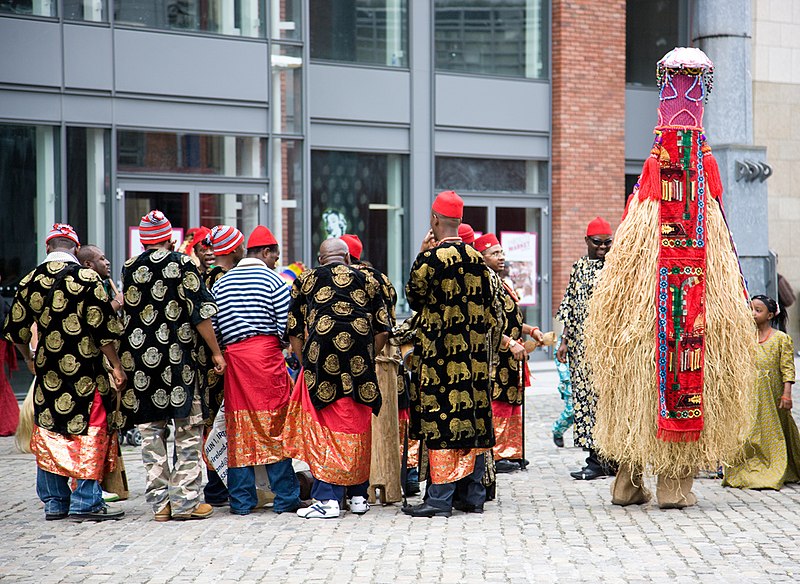
LIKE the Tutsis of Rwanda, the Oromos of Ethiopia, and of course the biblical Jews, the Igbos of Nigeria have been known to have faced existential threats.
This is no fiction. Neither is this a disputable fact. For full disclosure and transparency, and going by my last name, it is obvious that I am Igbo. And unapologetically so.
However, I will always approach Nigeria’s Igbo problem, and particularly in the context of this piece, with the sensitivity it richly deserves.
It will therefore be disingenuous and irresponsible to ignore the raw emotions that this subject matter is likely to evoke in the heart and soul of the average Nigerian.
Before proceeding, let me state without any ambiguity that I am a global citizen. A Pan African. And a Pan Nigerian.
Born in the former Eastern Nigeria to civil servant parents whose job warranted that our family live and work at different times in various parts of the region, I was fortunate enough, at an early age, to have embraced the diversity that came with this experience.
At an impressionable age, I was vicariously exposed to the sub cultures of the various ethnic groups throughout the region. For this, I am grateful.
Shortly after the internecine civil war (1967-1970), fate had me relocated to Nigeria’s capital city of Lagos.
During my sojourn in arguably one of the most exciting cities in the world then, I was further immersed into the highly diverse culture of my beloved country. That was the era when Lagos deservedly earned the title of the ‘city that never sleeps’ – a potpourri of ethnicities.
That was the moment in the history of the country when Lagos became notorious for being a fun place – a city where anything goes – the home of Cyprian Ekwensi’s mythical character in his epoch-making novel: ‘Jagua Nana’, the avatar of modern Nigerian womanhood of her time.
On her self- cognizance, Lagos was so much fun it adopted as its own unofficial anthem – the refrain from a popular highlife music song of the day: ‘Lagos life, na so so enjoyment’.
Providence further smiled at me when I joined the editorial staff of the Daily Times of Nigeria which was perhaps the largest circulating newspaper in subsaharan Africa at a time.
Under the indefatigable leadership of the indomitable Alhaji Ismail Babatunde Jose, I was fortunate to be mentored by some of the best journalists in the entire continent of Africa.
A completely detribalized Nigerian, Alhaji Jose welcomed with open arms young and old journalists who had fled back to the East, and returned to Lagos from the war torn secessionist Biafra.
As a matter of company policy, Alhaji Jose intentionally ensured that journalists from the Eastern part of the country were reinstated, recruited and redeployed into the services of the already formidable editorial team of the Daily Times.
Without the boldness of purpose of this consummate media manager, Nigerians would perhaps not have been able to enjoy the benefits from the prodigious works of the likes of Angus Okoli, George Okoro, Martin Iroabuchi, Livinus Okoroafor, Adaora Lily Ulasi, Effiong Essien, Nkem Nwankwo, Felix Odiari, Chuka Nwosu, Chinaka Fynecountry, Umoh James Umoh, Robert Dum, Stephen Iweanya, Sonny Chijioke, Tony Nzotta, and yours truly.
We were equally fortunate to have been wholeheartedly welcomed back by our non- Igbo colleagues, some of who are no Names such as Henry Odukomaiya, Areoye Oyebola, Segun Osoba, Tony Momoh, Sam Amuka, Tola Adeniyi, Gbolabo Ogunsanwo, Samuel Babatunde Osuntolu (better known as ‘Esbee’), Toyin Makanju, Ben Lawrence, Titus Soyombo, Dapo Adeniriola, Bayo Rotibi, Tunde Harrison, Abadina Coomassie, Bola Adedoja, among several others were on hand to welcome back their Igbo colleagues.
On their own, these returning Igbo journalists forged ahead without missing a beat, and as is they never left. The Daily Times family was one big, happy family.
When the Daily Times formally died in the year 2004, it seemed to me that the Nigeria to which I returned post civil war had also died.
By 1986, I saw the handwriting on the wall. And I fled the country with my family.
As a journalist who had been fortunate to enjoy a front row seat to major events in the country at the time, I could sense by many indicators, that the country was going down the wrong lane.
The economy, which is usually the first place to look, had taken a licking.
Subsequent military regimes had taken a sip from the poisoned chalice offered by the International Monetary Fund and the World Bank. Cost of living had skyrocketed. Ethnic tensions and jingoism had become more widespread.
Lopsided appointments became commonplace – square pegs in round holes. Meritocracy was out the window.
To many of us, it was least surprising that fringe militant groups based on overt ethnic and sectarian differences had sprung up literally in most parts of the country.
Watching closely from overseas as a journalist, I was convinced that the prognosis was not looking good.
The political system had been hijacked. Tribal loyalty had eclipsed national pride. And the Igbos pleaded marginalization. There have facts and figures to support their claims.
Developmental strides in the Igbo-dominated states have literally stalled. And an unscientific study suggests that there are more Nigerians of Igbo origin domiciled overseas than any of the other ethnicities.
The Igbos had fled home. Home was no longer welcoming or safe.
On a personal note, and as one who has travelled extensively around the continent and to other parts of the world, I can authoritatively confirm that there are at least three to four Igbos among every five Nigerians I meet on the streets of Johannesburg, São Paulo, Conakry, Brazzaville, Luanda, Lome, Houston or Atlanta.
Back on the home front in Nigeria, emergency contractors held sway. Ten percenters have upped the ante and now demand for 20-30 percent of the loot. The ease of doing business index has worsened. The brazen among the country’s nouveau riche now have the nation in the jugular.
Contracts which were signed and awarded are said to be blatantly abandoned while mobilized funds disappear into offshore accounts overseas.
Unemployment numbers soared and jobless youths have become increasingly desperate, and are willing tools in the toolbox of the criminal minority.
As I write, Nigeria is on the ropes. Ethnic violence is on the rise.
Sad to say that there are no ascertainable solutions to the Igbo problem or the problems of the other ethnic groups and sub groups such as the Hausas of Northern Nigeria.
The Hausas cry domination against their Fulfude-speaking Fulani neighbors. This has exacerbated the herder-farmers crisis. The Igbos have also not been spared the assaults from the largely Fulani herders who are routinely armed with deadly assault weapons.
A random poll conducted recently by a group of independent media groups in the US showed that most Igbos are uncomfortable with their prospects in the affairs of Nigeria. A number of them are opting for a loose federation or an outright breakup of the Nigerian Union if the authorities are unable to guarantee safety for Igbo lives and property.
So far, the current administration of President Bola Ahmed Tinubu seems clueless about how to resolve this intractable problem, not only as it relates to the Igbos, but as it applies to the whole Nigerian geopolitical conundrum.

