


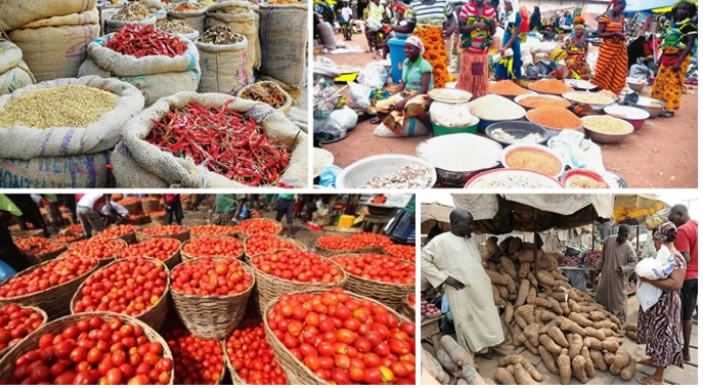
NIGERIA’S persistent food crisis is no longer just a national concern; it is a ticking time bomb that threatens the very foundation of the country’s social and economic stability. Despite its vast arable land, rich natural resources, and agricultural potential, Nigeria remains one of the most food-insecure nations in the world.
According to the Food and Agriculture Organisation (FAO), more than 30.6 million Nigerians across 26 states and the FCT face the risk of acute food and nutrition insecurity between June and August 2025. This is an alarming reality for a country that once prided itself as the “food basket of Africa.”
The revelation by ActionAid Nigeria bears a sobering truth that food insecurity in Nigeria is not merely a result of poor harvests but a culmination of years of neglect, insecurity, climate change, and policy inconsistency. The organisation’s Country Director, Andrew Mamedu, speaking at the 2025 World Food Day commemoration, painted a dire picture of rural communities under siege by banditry and communal conflicts.
From Benue to Niger and Plateau, thousands of farmers have been displaced, farmlands destroyed, and crops left to rot. In Delta State, major food-producing communities are facing similar insecurity threats. When those who feed the nation cannot access their lands, hunger becomes an inevitable harvest.
We must confront the hard truth: insecurity remains the single greatest threat to Nigeria’s food system. The continued violence in the Middle Belt, once the heart of Nigeria’s agricultural production, has crippled the supply of staples like yams, rice, and maize. These are not isolated incidents; they represent a nationwide pattern of displacement that has stripped millions of Nigerians of both their livelihoods and their dignity.
Beyond insecurity, poor investment in agriculture due to chronic under-funding and bureaucratic inefficiency, as revealed by ActionAid, that many state governments release less than 25 per cent of their agricultural budget, has further deepened the crisis. This failure to prioritise agriculture is indefensible.
Equally worrisome is the widening poverty gap. The World Bank estimates that 139 million Nigerians now live below the poverty line. In rural areas, three in every four people face extreme deprivation, and this limits productivity and economic growth.
We must also confront the issue of climate change, which is silently eroding Nigeria’s agricultural base. Erratic rainfall patterns, drought, and flooding are becoming the new normal, threatening both crop yield and livestock survival.
Therefore, boosting food security in today’s reality means investing in climate-resilient agriculture, improved irrigation systems, drought-tolerant seeds, sustainable farming practices, and green technology for smallholder farmers. Nigeria’s small-scale farmers, who produce over 70 per cent of the nation’s food, must be empowered through access to credit, extension services, and climate-smart innovations.
We commend ongoing efforts by Delta and some other state governments and private sector players investing in mechanized farming, storage facilities, and agro-processing zones. However, these efforts remain fragmented and small-scale compared to the magnitude of the crisis. What Nigeria needs now is coordinated national action, one that integrates government, civil society, and private investment into a clear roadmap for food security.
Furthermore, transparency and accountability must guide all agricultural interventions. The National Assembly should intensify its oversight role to ensure that agricultural funds are not lost to corruption or bureaucracy. Too often, farmers never see the benefits of government programmes designed for them. It is time to redirect every naira of agricultural spending to those who truly till the soil.
While we commend ActionAid for highlighting this truth and calling for accountability in agricultural spending, we also echo its call for a National Poverty Summit, one that will harmonise the scattered policies on poverty alleviation and food production into a unified, actionable plan.
The organisation has reminded Nigerians through this year’s World Food Day theme, “Hand in Hand for Better Food and a Better Future,” that the solution lies in collective action. Every citizen, policymaker, and farmer has a role to play. If Nigeria can secure its farmlands, properly fund agriculture, and empower its farmers, then we will not only conquer hunger, but we will reclaim our rightful place as the food breadbasket of Africa.

