


BY ISAN CARLOS / RITA OYIBOKA / JUDITH OBIANUA / AMAYINDI YAKUBU
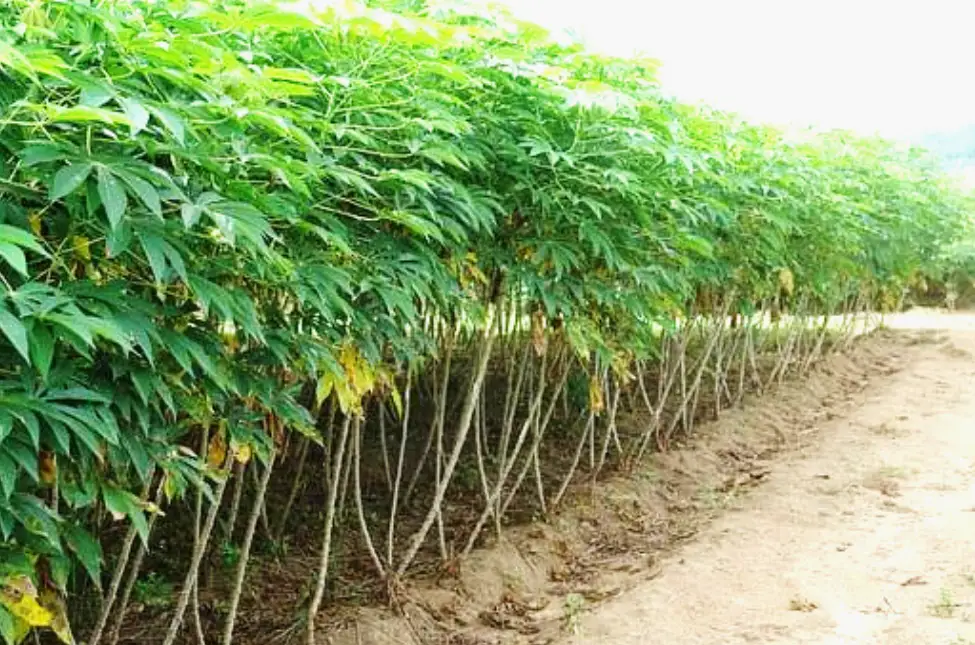
THE first light of dawn breaks over the sprawling cassava fields of Ogwashi-Uku, Delta State. The air is thick with the morning dew and the earthy scent of tilled soil, a reminder of the countless hours farmers like Madam Victoria Morka have poured into their lands.
She walks along the rows of cassava, her hands running over the dense, tuber-laden plants, imagining the harvest that will sustain her family and pay for her children’s education. But when the produce is finally ready, and she takes it to the market, reality hits like a bitter storm.
The price of garri, her primary source of income, has dropped dramatically. A basin of processed cassava granules (garri), which was sold for ₦35,000 at this time last year, is now sold for ₦10,000. Similarly, 20 tubers of yams, which were sold for ₦60,000, are now sold for ₦25,000. The math is simple, yet devastating: after months of backbreaking labour, fuel for processing, and payments for labourers, the profit is all but gone.
The above excerpt continues to highlight the current financial hardship and growing lamentation among farmers, particularly those who used their savings, borrowed various loans to invest in crop production from thrift societies (meetings/Osusu), friends, or directly from money lenders for farm cultivation.
What prompted many farmers to seek loans was the significant increase in the prices of food crops, particularly staple foodstuffs such as garri, yams, and rice, among other essentials.
Across Nigeria, this scene is repeated daily. Farmers are caught in a vicious cycle where production costs continue to soar while market prices plummet, leaving them struggling to make ends meet. For some, the choice is stark: continue farming at a loss, or abandon the land altogether. The crisis, which reached a peak in 2025, is not a simple problem of economics; it is a complex, multi-layered struggle involving government policies, global market forces, and infrastructural shortcomings.
A Market Out of Sync
The root of this crisis lies partly in the disconnect between supply, demand, and policy interventions. In the first half of 2025 alone, Nigeria imported agricultural products worth N2.22 trillion, a 22.65 per cent increase from the previous year. Maize, rice, wheat, beans, and millet flooded the market, arriving under a 180-day duty-free window implemented from July to December 2024. While the government argued this would stabilise prices, local farmers saw their produce undercut by cheaper foreign staples.
Maize, which was previously selling at N60,000 per tonne, has now fallen to N30,000. A 50kg bag of local rice dropped from N75,000–N80,000 to N55,000–N57,000. Simultaneously, bumper harvests of maize, millet, sorghum, and beans overwhelmed local markets, which lacked adequate storage facilities. Farmers warned of “cobweb effects”: high prices in previous years encouraged overproduction, only for subsequent price crashes to discourage future investment.
In September 2025, President Tinubu’s directive to “crash food prices” via a Federal Executive Council committee, intended to make staples more affordable, further disregarded market realities and the voices of those tilling the land.
Rising Production Costs
While market prices fell, the cost of farming climbed steadily, squeezing profit margins. Fertilisers, essential for high-yield crops, now cost N36,000–N40,000 per bag, yet average application rates remain below the recommended 50kg per hectare, standing at only 30kg. Seeds, herbicides, pesticides, and fuel for irrigation, petrol now reaching above N800 per litre, have tripled in cost.
Labour, once relatively affordable, has become a scarce and expensive commodity. Youth migration to urban centres has created shortages, and profiteering from previous harvests has inflated wage demands. Farmland rental has doubled or tripled in many regions, adding another financial layer. In northern Nigeria, herder-farmer conflicts have destroyed crops without compensation, discouraging farmers from investing in future planting seasons.
Only 45 per cent of farmers use improved seeds, and fewer than 30 per cent have motorised irrigation, leaving dry-season farming virtually unsustainable.
Some of the farmers told our correspondent that their worst regret is that while the prices of food crops continue to decline, the cost of labour has continued to rise, as most labourers, popularly known as Aboki, particularly those from the northern part of the country, whom they described as their major source of farm labour, fail to understand the current economic challenges in the country.
From one farmer to another, different stories have continued to emerge, all pointing to the fact that many farmers who solely depend on farming as their only source of income are no longer financially at ease.
Some others, particularly those in rural areas, said that despite the fall in the prices of produce, access to potential buyers has continued to pose a serious impediment, as most buyers are also facing challenges with thrift fund disbursement.
Our correspondent gathered that in Alisimie Community, Agbor, Ika South Local Government Area of Delta State, there was a case involving a woman (name withheld) who threatened to take her own life by planning to drink insecticide as a result of her inability to remit the loan she borrowed from a meeting on the day of disbursement.
The woman, a mother of four, had borrowed money from the group (meeting), of which she is also a member.
She was said to have invested the money in acquiring cassava plantations at a time when the price of garri in the market was high. Apparently, she had hoped that before the disbursement day, she would have processed the produce and fully remitted the money.
However, unfortunately, she was unable to realise her investment at the time of disbursement due to the falling price of the produce. Therefore, she planned to take her life on the day of the meeting’s disbursement.
When she was called upon to repay her loan, she told them that she had kept her money in the bush.
Her response raised suspicion, which made the chairlady ask one of the group’s members to follow and monitor her movements. That surveillance paid off, as it helped to foil her suicide attempt after she later entered a provision store and asked the trader to sell insecticide to her.
The actions of the woman assigned to monitor her also helped in signalling the trader not to sell the dangerous substance to her.
According to other farmers, the issue of market prices has pushed many of them into penury, as some had cultivated over ten acres of farmland with different crops. Meanwhile, the farmers are reluctant to harvest their produce because of the challenge posed by the prevailing low market prices.
Some farmers have begun to reconsider the need to continue farming, since the prices of farm produce have become unprofitable in the market. Others plan to change their occupation from farming, as their investments are no longer yielding commensurate returns or profit.
Speaking on the phone, Mr Ofulue from Igbodo said that they are struggling to cope with the recent drop in food prices. Despite bumper harvests, they are facing significant challenges, including low returns on goods.
“I am into tomatoes. I do both early and late farming. Prices of tomatoes dropped this festive period because we are in the season of tomatoes. In the North specifically, this is their own season, making it hard for farmers over here to recover costs.
“High production costs as well are another challenge we are facing. Rising costs of fertilisers, seeds, and labour are making it more difficult. Getting a loan to farm is a very big risk with the current situation of things. You are not sure of the outcome, considering the way food prices are dropping. Loans are not the alternative. There is a need for improvement in infrastructure, storage facilities, and market support to help farmers benefit from their produce.
“I am still into yams, cassava, and corn. Though corn does not really do well in late farming, we will keep pushing,” he said.
Post-Harvest Losses and Infrastructure Gaps
Even when crops survive the season, Nigeria loses 40–50 per cent of harvests annually, valued at N3.5–4 trillion, due to poor storage, transportation, and processing. Roads riddled with potholes, a lack of cold chains, and the absence of rail links tie food prices to diesel costs, making staples cheap at the source yet expensive in urban markets. Farmers often resort to distress sales, selling to middlemen at low prices to avoid total spoilage, or abandoning crops in the fields entirely.
In Wukari, Taraba State, farmers are grappling with a deepening crisis that threatens not only their livelihoods but also the sustenance of their families. Speaking to our reporter, two local farmers shared the stark realities of farming in the current economic climate.
Mr Tsonkeni Bisen did not mince words when describing the challenges confronting farmers.
“Almost 90 per cent of farmers are now suffering because what they invest in farming, they cannot recover even 70 per cent of their investment,” he said. “From now until next year, and possibly even this year, many people will stop investing in farming because it is just very poor. They cannot sell.”
He explained that the costs involved in farming, fertilisers, chemicals, and other inputs are not being recouped. “Most are suffering from a lack of funds. It is a serious hardship. Some families cannot even feed themselves properly, let alone pay school fees or meet other expenses.”
Mr Bisen called for government intervention: “We are saying that the government should assist farmers with fertilisers, chemicals, and other inputs. They should look into prices and at least bring them down so that the farmer can cope. Even though it may not solve everything immediately, it would help.”
Looking ahead, he expressed concern over the sustainability of farming under the current conditions. “Most farmers will have to collect credit before returning to their farms because they do not have money. Feeding their families is a huge challenge. Some may even stop farming altogether.”
The logistical difficulties compound the financial strain. “Some farmers cannot even carry their farm produce home because they have no money for transportation. Fuel is also a significant concern. I know a farmer who left part of his rice in the field because paying labourers to harvest it would result in a loss. So, he decided to leave it there.”
Mr Yakubu Agyo Navokhi echoed similar frustrations, highlighting the collapse in food prices as a key driver of farmers’ losses.
“Compared to previous years, farmers are just managing. That is the only thing they have been involved in,” he said. “For example, a bag of rice this year sells for 25,000 Naira, unlike previous years when it went for 60,000 Naira. If a farmer invested 700,000 Naira, he would not even get half of it back. Almost 90 per cent of farmers are operating at a loss.”
Mr Navokhi urged the government to take decisive steps to ease the burden. “The government should assist farmers by providing chemicals or subsidising fertiliser prices. They should ensure that the costs of inputs are affordable and examine the prices of goods overall. Without intervention, farming in Taraba faces a very bleak year.”
As farmers prepare for the new planting season, their calls are clear: without targeted support and practical measures, the backbone of Taraba’s agriculture could collapse, leaving families hungry and the farming sector in disarray.
Crop-Specific Losses
The economic toll on Nigerian farmers becomes painfully clear when examining the figures crop by crop. Maize farmers, for instance, faced average production costs of N726,000 per hectare, yet could only generate revenue of N685,440, leaving them with a loss of N40,560 per hectare; production itself declined by 2.8 per cent in 2025.
Rice growers fared only slightly better, with costs of N750,200 per hectare against revenues of N729,980, resulting in a shortfall of N20,220 per hectare. Cassava and garri producers saw market prices plummet from between N12,000 and N15,000 per bag down to just N6,000, forcing processing operations in Bayelsa and Delta to grind to a halt. Other staples, including beans, sorghum, and millet, were similarly affected, suffering from market gluts that kept prices consistently below production costs.
Regionally, farmers in the South-South (Delta, Bayelsa, Edo) contend with import-driven price crashes, flooding, poor roads, high inputs, and insecurity. Northern farmers face crop destruction from herders, labour shortages, and debt cycles that hinder mechanised farming transitions. Nationwide, while maize shows a deficit of 11.43 million tonnes against 12.2 million tonnes demanded, rice surpluses are heavily dependent on imports, highlighting systemic vulnerabilities.
Farmers Speak Out
Social media platforms amplify the frustrations felt across the countryside. On X (formerly Twitter), farmers report investing heavily in staples like maize and rice only to face price collapses. Post-harvest losses are cited as the “greatest threat to food security,” forcing farmers to inflate prices of surviving produce, yet even these measures often fail to cover input costs. Farmers voice concern over imports and poor distribution systems, pointing out that despite owning land, they lack buyers, storage, and logistics, leaving them in poverty despite their relentless efforts.
Speaking with Madam Victoria Morka in Ogwashi-Uku, she admitted that the recent drop in food prices, especially garri, has really affected the local farmers.
“Cassava is our major occupation here. We cultivate cassava and process it into garri. But now the price of garri has really dropped. Imagine selling a bucket of red garri for ₦1,200, while white garri is sold for ₦1,000. A bucket of rice is ₦3,500, which is the local rice I am talking about that we local farmers can afford.
“The only farm products that are a bit expensive, we don’t farm them. Like palm oil, we use it to mix garri. A bottle of palm oil is ₦1,900. A bottle is used for one basin before you will pay for the engine that will process it, only for you to sell and make little or no gain. It is not easy. We are finding it difficult to survive,” she said.
Government Policies and Critiques
Government interventions, including subsidies, extension services, and mechanisation programs, have been slow to reach the field. While the National Agribusiness Policy Mechanism (NAPM) claims to coordinate price stabilisation and support for 214,000 farmers, bureaucratic delays hinder effectiveness.
Critics argue that import waivers, aimed at curbing inflation, actually exacerbate the crisis by undercutting local production. Many farmers call for targeted subsidies on fertilisers, chemicals, and seeds rather than forced price reductions that result in losses.
Without intervention, the consequences extend beyond the farm. Reduced planting in 2026 could trigger shortages and further inflation, with ripple effects on education, health, and family stability.
With only 5 per cent of farms irrigated for dry-season cultivation, dependence on seasonal rains compounds vulnerability. Analysts warn that unless farmers receive practical support, affordable inputs, storage, mechanisation, and transport infrastructure, the agricultural sector faces a potential collapse, threatening national food security.
Toward Solutions
The path forward for Nigeria’s struggling farmers is complex and requires a multi-pronged approach. Providing direct subsidies and credit support, such as fertilisers, improved seeds, and essential chemicals, would help offset soaring input costs and ease the financial burden on farmers.
Mechanisation is equally critical, with greater access to tractors, motorised irrigation, and other machinery reducing reliance on scarce and expensive labour. Investments in storage infrastructure, building silos, establishing cold chains, and expanding processing facilities would help minimise post-harvest losses that currently drain farmers’ income. Improving transport networks, including better roads and rail links, would ensure that produce reaches markets efficiently, cutting costs tied to fuel and logistics.
Finally, policy interventions must actively include farmers’ voices, ensuring that import regulations and other government measures are aligned with the realities of local production and the livelihoods they support.
For Farming in 2026
From the cassava plots of Delta to the rice paddies of Taraba, Nigerian farmers confront a stark reality: effort no longer guarantees income, and sweat no longer ensures sustenance. Rising costs, collapsing prices, inadequate infrastructure, and policy missteps form a gauntlet that threatens livelihoods and national food security.
The stakes are high. The harvest is in. But in Nigeria today, the yield is more than just maize, rice, or cassava; it is a measure of survival against the odds. For farmers across the country, the question remains: can they continue to sow seeds in a market that refuses to reward their labour, or will the fields fall silent, leaving the nation to confront a hunger it could have prevented?

