


BY OGORAMAKA AMOS/RITA OYIBOKA/JUDITH OBIANUA/PRINCE EJAKPOMEVI
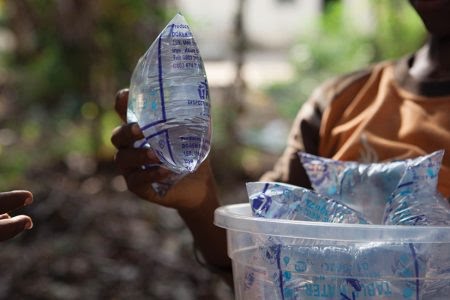
For many Nigerians, access to safe drinking water has become both a daily necessity and a growing financial burden. As public water systems remain unreliable in several communities, households are increasingly dependent on sachet and bottled water, an expense that continues to rise alongside the cost of living.
Given that a bag typically containing multiple sachets of water can be consumed throughout the day by a household, daily spending can quickly add up, especially for families already grappling with rising living costs. To this end, The Pointer engages Nigerians to get their opinions on the matter.
A civil servant in Asaba, Mr Andy (surname withheld), said he is a father of four children and risking their health because of the financial situation of the economy would be unwise.
“Frankly speaking, I don’t buy the idea of drinking tap water simply to avoid the financial burden. Also, my wife and I prioritise the health of our children. So whatever it may cost me, I make sure that we have at least 10 bags of sachet water for the week, which I spend around N4000.
Another civil servant, Mr Godwin, believes there isn’t much difference between sachet water and tap water. “Most of these companies use tap water and sell it to us because they feel it’s healthier, but because of the high cost of items in Nigeria, we don’t really have a choice but to buy and drink it.’’
Similarly, a shop owner, Mrs Innone, explained that accessing portable water poses many problems as most compounds in the neighbourhood have their own borehole.
“Finding potable drinking water isn’t much of an issue since we mostly pump our own water, but the major issue is whether you can regularly treat your water tank to avoid dangerous bacteria from entering your system because the water coming from the ground isn’t always clean at all. So you have to regularly treat it, “she said.
‘’Honestly, the water we buy and drink, we drink with faith because you cannot tell how they are producing it or even where they store it, so I just drink with faith and carry out my daily business, said a market trader, Mrs Nwoye.
Likewise, another trader, Mrs Chigozie, who spoke with our correspondent, shared a similar experience, “When you see the water hawked along the street under the blazing hot sun, you wonder what the heat is doing to it, but because you don’t want to die of thirst, you just buy and drink and continue attending to customers, “she said.
She added that the authorities must monitor water producers closely and consider rebuilding public water infrastructure. ‘’Water is a necessity, not a luxury; it’s not enough to provide water occasionally; it must be reliable so families can depend on it.
In an interview with The Pointer, mother of two and primary school teacher, Mrs Blessing Okotie said, “I honestly didn’t realise how much I was spending on water until I tried to track my daily expenses. On a normal workday, I buy sachet water almost every time I feel thirsty.
‘’Sometimes I have to take water in a bottle to work because there’s no guarantee you’ll find clean drinking water anywhere you go. Around my area, one sachet is ₦50, and sometimes you get two or three for ₦100, depending on the seller.
‘’I do not understand why people will hike the price of water. Before the day ends, I can drink three to four sachets without even noticing. That’s roughly ₦100 to ₦200 daily just on water alone. If the weather is hot, it’s even hotter. That is why people buy water in bags, but will you carry a bag of water to work when you don’t even have an office?”
She continued, “Access to potable water is honestly poor. Even the borehole water is not something you can confidently drink directly. Most people only use it for bathing and cooking. For drinking, we rely on sachets or bottled water because at least you assume it has been treated.
“But to be honest, many of us still worry about safety. Sometimes the sachet water tastes different, or you see particles inside, and you begin to wonder about the production process. You just drink it because you don’t have options. Water is basic; it shouldn’t be this complicated or expensive.
“The government needs to go back to the basics. Functional public water systems would reduce health risks and also ease daily living costs. If clean pipe-borne water becomes reliable again, families will save money, and even small businesses will benefit.”
Also speaking, businessman and Agbor-based landlord, Mr Tony Emegha, said, “In my house, we tried to reduce how much we spend on buying bags of water, so I invested in a filter connected to our pumping machine pipe.
‘’The system filters the borehole water, we fetch it into containers and store it inside the fridge for drinking. It has helped us manage costs because buying sachet water every day is too expensive.
“What we really need is constant electricity. That is the main problem. When there is no light, the pumping machine cannot run, the filtration system cannot work, and the water cannot stay cold in the fridge. Once the power supply fails for days, we are forced to go back to buying sachet water again.
‘’A bag of sachet water now sells between ₦400 and ₦500, depending on the area, and it finishes quickly in a family setting. Imagine a family of six surviving on one bag of water; that means you will be buying a bag every two days. If you are not careful, in a week you will be spending close to N2000, multiply that by a month and then a year. Even though one sachet is ₦50 or sometimes ₦100 for two or three, the cost adds up faster than people think.
“Accessibility to clean water is still a struggle. Yes, boreholes are everywhere now, but having water is different from having safe drinking water. Many people don’t trust untreated borehole water because of contamination concerns, especially in crowded areas where soakaways and boreholes are close to each other.
“I want the government to focus on stable electricity and public water supply together because the two issues are connected. If there is steady power, more households can treat and preserve their own water. Right now, the reason many of us still buy bags of cold water daily is simply that electricity is unreliable. Fix power, and you automatically reduce the cost of living.”
Meanwhile, a trader in the Okpanam market who only identified as Peace noted, “As a trader, I spend the whole day in the market, so buying drinking water is unavoidable.
‘’Most times I pack water to the market, but you cannot avoid buying, especially when it is hot. Some days, I also buy bottled water if I feel unsure about the sachet water being sold around, and that one can cost ₦300 or more for just a bottle. When you calculate it for one month, it is a serious expense for something that should be basic.
“Safety is another concern people don’t talk about enough. Sometimes, sachet water is exposed to the sun for hours or stored in places that don’t look hygienic. That bucket used to sell the water might even be unwashed for days, not to mention where it is being produced. The government should enforce stronger monitoring of water producers. Markets should have taps with clean water. That is not so big to accomplish. I don’t completely trust the water I buy. Sometimes it tastes different or looks a little cloudy, and you hear stories about fake sachets being sold in the market, but you drink it, hoping nothing goes wrong, because you don’t have alternatives.”
In Port Harcourt, Nurse Chinelo Okafor, who works at a private hospital in GRA, said she spends at least ₦800 daily on water. “I can’t joke with water,” she says firmly. “In the hospital, we see too many infections — typhoid, gastroenteritis, cholera cases sometimes. So I’m very careful.”
Chinelo estimates she spends between ₦600 and ₦800 daily on bottled water. “I usually buy two big bottles — the 75cl ones — at about ₦300 or ₦350 each. Sometimes I add a sachet or two if I’m very thirsty.”
At home in Rumuodomaya, her compound relies on a borehole. But she does not drink from it. “The water looks clean, but that doesn’t mean it is safe. We have oil pollution issues in Rivers State. Sometimes the water smells metallic. I use borehole water for bathing and washing, but for drinking, I stick to bottled water.”
“In this city, it’s easy to buy water. But it’s not easy to access safe water freely. You must pay for it.” On safety, she remains cautious.
“Some sachet water brands are not properly processed. I’ve seen factories. Hygiene is sometimes questionable. Government needs stricter monitoring.”
She advised, “The government should revive public water systems. Every developed city has pipe-borne water. Why not Port Harcourt?”
Also, a 300-level student at the University of Port Harcourt, Tamuno Briggs, laughed when asked about bottled water.
“Bottled water is for big boys,” he jokes. “Students survive on sachet water.”
He estimates spending about ₦300 to ₦500 daily on sachet water.
“A sachet now goes for ₦50 or ₦60, depending on location. I can drink six to eight sachets a day because of the heat.”
Tamuno lives off-campus in Choba. His lodge has a borehole, but he does not trust it for drinking. “Sometimes the water is brownish when the pump is first switched on. We boil it occasionally, but honestly, most times we just buy pure water.”
“You can find pure water everywhere — junctions, bus stops, campus gates. So access is easy. But the quality? That’s the problem.”
He recounts falling ill once after consuming sachet water. “I had stomach upset for three days. I don’t know which brand caused it. Since then, I try to buy only familiar brands. Subsidise water production or regulate the price.”
Another respondent, Ibrahim Musa, a commercial bus driver who plies the Rumuokoro –Mile One route daily, said, “I dey use up to ₦1,000 or more daily on bottled water”.
“When you dey drive under this sun, you need water. I dey buy chilled bottled water at bus stops.”
He said he avoids sachet water while driving, because it distracts him, “e dey hard to open as I dey drive, Bottle is easier.”
“Water dey easy to buy. But to see clean water for house no easy.”
He told our correspondent that he lives in a rented apartment in Elelenwo with a shared borehole.
“Sometimes the water smells like iron. E dey rusted too. My children dey drink sachet water.”
“We dey hear say some companies dey do fake water, Make Government check them well well.”
Similarly, a civil servant, Blessing Peters, said that in her household of four, they spend about ₦10,000–₦15,000 monthly on drinking water. “That’s roughly ₦700 to ₦800 daily when you calculate it.”
They buy bottled water for guests and sachet water for daily use.
“Our borehole water is used for cooking after boiling. But for drinking, especially for my children, I prefer packaged water.”
“You can buy water easily. But consistent clean tap water? It’s almost non-existent.”
Blessing worries about regulation. “NAFDAC numbers are printed on sachets, but how many are truly verified? “That’s the major issue.
She believes the state government must prioritise water infrastructure.
“The government should invest in modern water treatment facilities. It will reduce disease and save families money.”
Meanwhile, a sit-at-home mom, Eberechi Amadi, who manages a household of six in Rukpokwu, said, “With four children, you cannot depend only on sachet water. It will finish your money.”
She estimates spending ₦400–₦600 daily on sachet water, but supplements by boiling borehole water.
“I boil and filter some water for drinking. But when NEPA takes light, it becomes difficult. You cannot trust everything you buy. Some sachet water tastes funny. We have water, but not safe water. Borehole is expensive to maintain.”
“The government should provide community water tanks where treated water can be fetched freely.”
Meanwhile, a 26-Year-old entrepreneur who runs a water business in Woji sees an opportunity in the water situation. He said he spends nothing on drinking water personally because he takes from his stock — but he understands the economics.
“A bag of sachet water has increased significantly in price. Production costs — diesel, packaging nylon, treatment chemicals — are high.”
He admits quality varies among producers. “Some factories cut corners to reduce costs. Not all, but some.”
“The government should provide steady electricity and regulate production strictly. If production cost drops, retail price will drop.”
David believes the solution is structural. “Water should not be a daily financial burden. If the government invests properly, sachet water won’t dominate like this.”
Spending ranges from ₦300 to over ₦1,000 daily per person, depending on lifestyle and occupation. For families, the cost can reach ₦20,000 or more monthly — a significant expense in a struggling economy. Access to purchasable water is easy. Access to government-supplied potable water is not.
Safety remains a lingering concern. While bottled water often inspires more confidence, sachet water — the most affordable option — carries doubts about production standards and storage conditions.

