


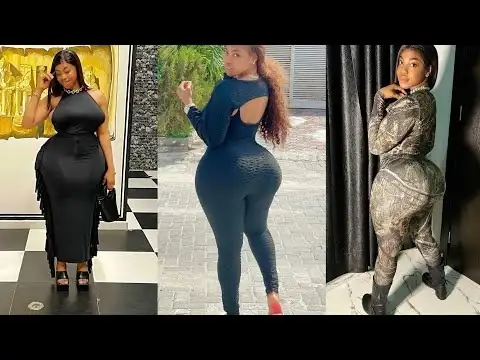
I think everyone remembers the first time they saw a BBL in real life. Or maybe I am the only one. Mine happened on Nnebisi Road, near the Interbua roundabout, while I was riding in a tricycle. The ride was ordinary until… I saw it.
You don’t need anyone to tell you what a BBL is; it announces itself long before you ask questions. It was enormous, almost architectural, like a perfectly rounded sculpture hewn from marble. It sat just below a delicately sculpted, impossibly tiny waist on an almost-white woman who walked with the slow confidence of someone very aware that all eyes were on her.
In Nigeria today, BBLs have become a kind of currency, a form of social and aesthetic capital, especially in the entertainment and influencer economy. They are not just about curves; they are about visibility, validation, and in some cases survival in an industry where the “banging body” is rewarded almost as much as, and sometimes more than, talent.
The tragedy of Elena Jessica, known to her fans as Leenah Doll, recently forced this conversation into the open. The Nigerian socialite and TikTok influencer reportedly underwent a second revision BBL in early 2026. Her first procedure had initially been successful, but like many who enter the cosmetic cycle, satisfaction proved temporary. She sought more.
But the human body has limits. Clinics reportedly turned her away because her skin had become “too tight” for another safe fat transfer. What followed was a series of complications. She developed severe pain. There were financial struggles tied to the surgery and its aftermath. Post-operative care was reportedly inadequate. Eventually, sepsis set in.
She died.
Social media exploded. Grief mixed with anger. Tributes poured in alongside criticism. Her twin sister’s emotional viral video served both as a memorial and a stinging indictment of the system that allows these surgeries to proceed with minimal oversight. And yet, despite moments like this, the BBL train shows no real signs of slowing down.
Many Nollywood actresses and influencers openly celebrate, or quietly undergo the procedure. Names like Uche Ogbodo, Angela Okorie, Bam Bam, Tonto Dikeh, and Onyi Alexx frequently appear in conversations about cosmetic enhancement. Some later reverse their procedures. Others embrace them openly, presenting their curves as symbols of confidence and empowerment.
The debate surrounding BBLs is therefore not as simple as critics versus supporters.
On one side are those who warn about bodily risk, financial ruin, and the psychological toll of chasing an artificial ideal. On the other side are those who insist on bodily autonomy, the argument that a woman should have the right to modify her body if she wishes. In industries where appearance directly affects career opportunities, they argue, cosmetic surgery can function as a professional investment.
Both arguments carry weight.
Nigeria’s cosmetic surgery industry operates in a grey zone. Regulation is weak. Oversight is inconsistent. Clinics appear overnight, advertise aggressively, and compete for clients in a market driven by aspiration and insecurity. The result is a cosmetic economy where risk is sometimes downplayed, and profit takes centre stage.
I tread carefully here because I am not an expert. But one thing is obvious: almost every woman, at some point, has looked in the mirror and imagined adjusting something about their appearance. A smaller waist. Lesser weight. Fuller hips. Smoother skin. Cosmetic surgery simply monetises that universal impulse.
And the ecosystem around it is booming.
Beyond surgery itself lies an entire marketplace of supplements and shortcuts. Herbal teas promise “miracle waist trimming.” Pills claim to redistribute fat to the hips and buttocks. Injectable concoctions circulate quietly among beauty enthusiasts, marketed as subtle body enhancers.
Perhaps the most striking thing about the BBL trend is not just its popularity but its uniformity. Walk down a Nigerian street, scroll through TikTok, or spend five minutes on Instagram, and the pattern becomes obvious. The curves are nearly identical. The hips swoop in the same dramatic arc. The waists shrink to the same improbable size.
It is almost like an assembly line.
If your BBL looks exactly like the ten that came before it, it becomes difficult to argue that the procedure is purely about self-expression. Do we all just want to look like each other? There are also valid arguments that BBLs are mainly for the male gaze and a necessary weapon in the arsenal of ladies of the night. If we start to talk that one, we fit nur comot for here.
Perhaps the most disturbing aspect of the BBL industry is the surprising levity surrounding it. For a procedure that involves cutting, fat extraction, transplantation, and manipulation of living tissue, the casualness with which it is marketed is astonishing.
Influencers advertise clinics as though they were promoting hair extensions. Promotional deals circulate online, discount packages, referral bonuses, and even incentives that resemble “bring one friend and get it free” offers. It begins to sound less like a serious medical decision and more like a beauty sale.
You would never see heart surgery or a kidney transplant advertised this way, if at all. Those procedures carry an aura of gravity, caution, and professional restraint. Cosmetic surgery, particularly BBLs, often does not.
Yet medically speaking, BBLs still involve invasive surgical risk.
That contradiction is frightening. The seriousness of the procedure is pushed quietly into the background because the aesthetic outcome is glamorous. The dangers are treated as footnotes. But the truth is simple: BBLs can kill.
At the end of the day, however, BBLs are likely here to stay. Clinics have been booked far into 2027. For those considering the surgery, the best advice may be the simplest: pause. Research. Reflect.
Read about the procedure. Ask about the supplements. Listen carefully when doctors warn about risk. Your body is not a trend, and trends have a habit of fading long before their consequences do. Even more importantly, try to love yourself and your body.
And if someone ultimately decides to ride the BBL wave, it should be done with information, self-awareness, and a great deal of caution.
Because, despite the glamour, the BBL is no joke. It can boost confidence. It can open doors. It can certainly make jaws drop. But it can also cost lives.
And the cruel irony of the entire industry? For many people, the reward for one BBL is simply the desire for the next one.

