


One young lady wrote a short note after the session, because I asked them what they want to be in the future, expressing her ambitions to be a paediatrician and a surgeon inspired by Ben Carson, noting that although it seems hard, she must succeed even without her father’s support.
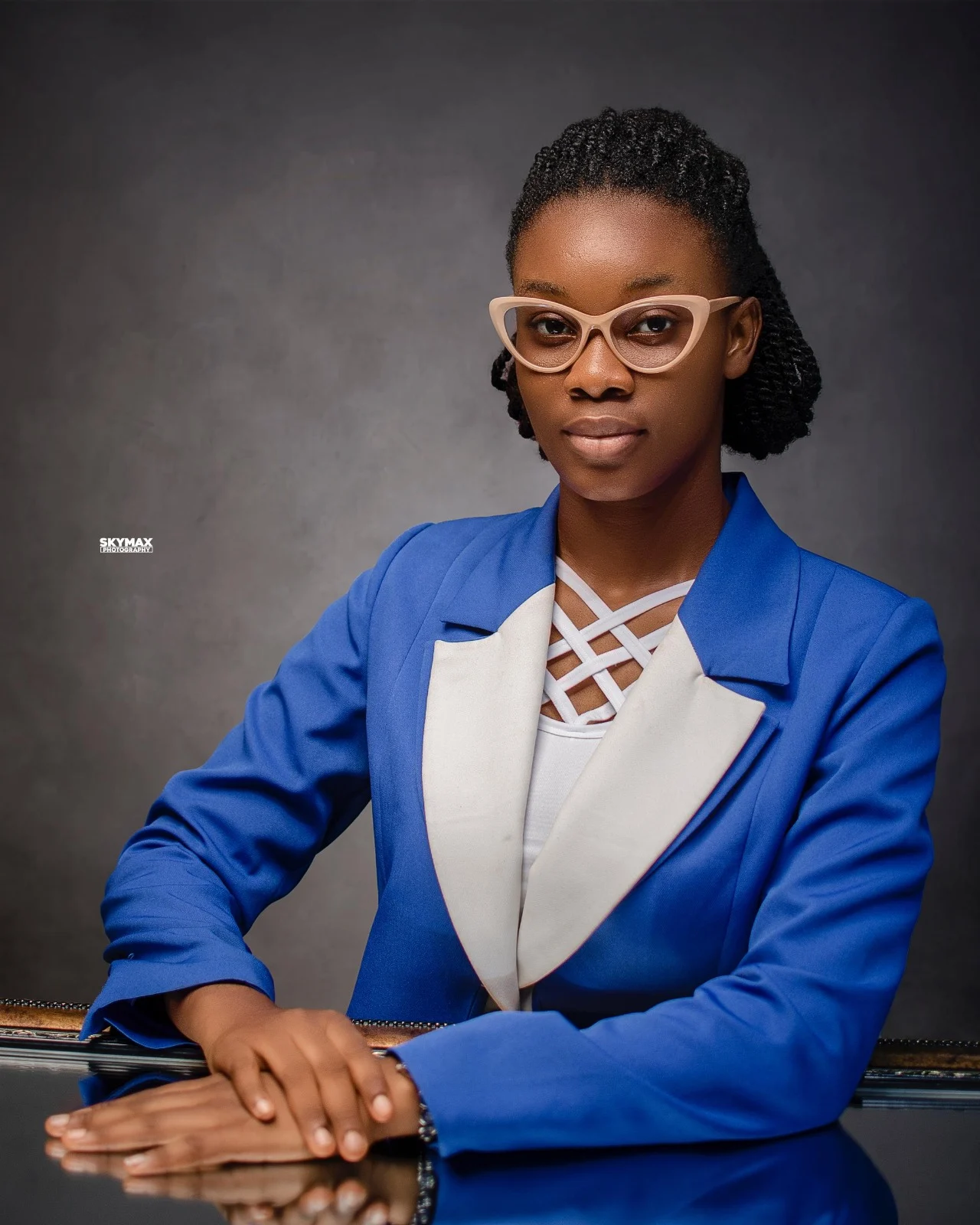
This moment captures the essence of mentorship and social impact, principles at the heart of Tabitha Akor’s work. In this interview with Rita Oyiboka, Akor opens up about her journey from a Mass Communications graduate to a journalist, social impact advocate, mentor, and entrepreneur, detailing how her experiences have shaped her commitment to youth empowerment, education, and national development.
Can you introduce yourself to our readers?
My name is Tabitha Akor.
And what is your professional focus?
I am a journalist, and I am committed to social impact.
Do you work with an NGO, or do you run one yourself?
Yes, I currently serve as the Head of Corporate Communications for the Diplomacy and Corporate Communications Conference, where we train and equip professionals and students with the knowledge and skills for diplomacy and multilateral engagement.
Could you take us through your educational journey and early career?
I studied Mass Communications at Ahmadu Bello University, Zaria. After that, I worked as an intern with the Nigerian Television Authority (NTA) back then in Kaduna, where I had the opportunity to enter the field. We went into the field to cover reports. From there, I worked with ABN TV, where I also had the opportunity to cast and present, and I was able to participate in press briefings, including those with the Abia State Government. That was in Abia State, where we spoke about governance and the relationship between the government and the people. You know, there is no democracy without the people. I believe that was a defining moment for me, having to speak with the governor and ensuring that there was actually a link between the government and the people.
All of that boils down to my being in communication. Being in communication made me begin to look beyond that aspect, and that was where my journey into social impact began.
How did this pathway lead you into social impact work?
I looked at communication from this perspective because when there is no communication, there is no society, and when people stop speaking, they stop existing. I reflected on this and asked myself how communication could be properly utilised, especially within diplomacy. When you talk about diplomacy, you are talking about dialogue, negotiations, representation, peace, conflict resolution, and related matters.
I would also relate this to my observation of society generally. My journey into social impact came from looking closely at society and asking what problems needed solutions. I looked at society back then, when I was in the North and asked what was on the ground and what I could do as a young person. How could I contribute as a youth to ensure we have a stable and sustainable system and also foster national development?
I remember growing up as a teenager in the North, because I lived there and was born and brought up there. Growing up, I witnessed firsthand what unrest and conflict were about. In the North, you have the intersection between Christians and Muslims. Initially, we lived in peace and harmony. There was so much unity among us until the seeds of tribalism, religion, and ethnic rivalry came into play, tearing apart the fabric of unity and the love we once shared.
From that experience, I observed that peace is truly essential, and that as young people, there is a great deal we must do to ensure national security and contribute meaningfully to society.
It generated the understanding that peace is not just the absence of war; it is also the presence of systems. By systems, I mean institutions and policies that work, development goals, quality education, poverty reduction, gender equality, and similar structures. When all these systems are in place, equitable, and functioning effectively, the standard of living improves, sustainability is achieved, and, in the long run, there is a meaningful impact on the nation as a whole.
That was how the journey began. I started to look at young people and ask what inclusive role we must play to ensure that we contribute and promote peace, especially through diplomacy. As I mentioned earlier, I serve in corporate communications, working at the intersection of corporate communications, diplomacy, and politics, while also ensuring that national interests are protected. So, as youths, what can we do in diplomacy? It comes down to how we communicate and engage in dialogue.
When you consider the evolution of technology and the rise of social media, you realise that social media is a very critical tool in the hands of young people. We must learn to use it wisely for dialogue. People can use social media to spread hate speech, cyberbullying, and many other harmful practices, and these can even undermine national security. I want to see young people become more inclusive in the affairs of our nation.
We should not be present without having a stake or without being part of the decision-making process in our country. I believe there should be policies and systems that intentionally include young people, enabling us to make decisions that concern us. People often say youths are the leaders of tomorrow, but I believe leadership is now, and our future is now.
You are also the founder of the Ideal Woman Mentorship Platform. What inspired its creation, and what has it achieved so far?
First of all, the Ideal Woman was born when I was on campus. However, it did not begin as the Ideal Woman. It started as the Priestly Ladies Community. We initially began as a prayer group, simply coming together to pray. Later, I received the vision, I believe this was after school, around 2023, and I thought about expanding the Priestly Ladies Community into a mentorship platform where women could come together.
The Ideal Woman was born out of my desire to embody what an ideal woman represents: a value-oriented woman, a leader, a change-maker and a role model. It began with a personal decision to see myself as that woman, right down to the hashtags I use on social media, all reflecting “The Ideal Woman”. I told myself I am that woman. Many people draw inspiration from me, and I believe we can all grow together and, in turn, inspire others.
The goal was so that we’ll be able to speak to ourselves as women. We need to understand our current eminence. Challenges and how best we can also relate to the world, impact the world, and then change certain narratives regarding us as women, and then how we can all grow together. We’ve had sessions, seminar sessions, and talks on identity and leadership.
You also identify as an entrepreneur working in food security and agricultural sustainability. Could you tell us about that initiative?
When I was on campus, a group of people and I started producing Tom Brown. It is a combination of millet, groundnuts, soybeans, and quite a lot of combinations just to make it really rich, and then it has a lot of health benefits. So we started that out back then when I was on campus. And we started that out back then when I was on campus. And now, what we wanted to do then was to ensure, you know, there are in the north so many persons do not take advantage of what they have. We have a vast, large land.
We work directly with farmers to source raw materials, which helps curtail waste. Often, people have crops and do not know how to process them further into other products. We collect these materials from local farmers and produce fortified cereal, Tom Brown, from them. During Ramadan, students, for example, use it to break their fast. It is very rich and wholesome.
During my service year, I had the opportunity to pitch this initiative during a business grant competition, and I emerged as the winner. However, due to recent hikes in prices, production has temporarily halted.
Across all your ventures, what stands out as your most significant achievement?
The overarching goal remains society and youth empowerment. Under the Diplomacy and Corporate Communications Conference, we have trained over 500 youth and professionals in diplomacy, even though the we are looking out that in the next two to three years, we will have trained 3000. I also volunteer with the Project Educate a Child campaign, distributing educational materials and advocating for quality education.
In addition, I have contributed to national integration and development through training and mentorship, particularly focusing on youth awareness and societal campaigns in schools. Establishing the Ideal Woman initiative also stands out as one of my proudest accomplishments.
In all your endeavours, what would you count as a particularly potent moment?
During my service year, I was invited to speak at a conference in Abia State. We engaged with young girls, distributed sanitary pads, and discussed careers, leadership, and self-development. One young lady wrote a short note after the session, because I asked them what they want to be in future, expressing her ambitions to be a paediatrician and a surgeon inspired by Ben Carson, noting that although it seems hard, she must succeed even without her father. I maintained communication with her and, at one point, assisted with her school fees. We are still in touch today as she prepares for her exams.
This experience reminded me how critical it is for young people to have mentors and role models. The mistake her parents made in marriage was affecting her in her dreams. Her father, whom she would have viewed as a ladder, is absent and feels unconcerned. Often, young people want to succeed, but the absence of guidance can leave them feeling uncertain or emotional. Decisions made without considering long-term effects can impact not just the individual but also their family and society. Empowerment, mentorship, and foresight are therefore essential.
What are your hobbies and personal interests outside of work?
I have several hobbies. I enjoy critical thinking and analysing things, understanding why certain systems work, why some processes succeed, and why others fail. I also love to read, sing, and engage in creative expression. Above all, prayer is a necessity for me. These activities help me reflect, recharge, and maintain focus on my personal and professional goals.
What are your goals in your advocacy journey?
Under the Ideal Woman, we are looking to start going out for outreaches in schools just to extend the fellowship with them, to speak with them, to sensitise them on personal/menstrual hygiene, and we’re also looking to reach out to widows.

