


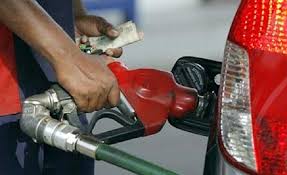
By Emmanuella Oghenetega
For residents of the Federal Capital Territory, daily survival has become a cruel arithmetic. On one side, the price of petrol and diesel has skyrocketed to over N1,000 per litre, driven by global crises and domestic policy shifts. On the other, electricity supply has collapsed to historic lows, with the entire neighborhoods plunged into darkness for days at a time.
Together, these twin crises are crushing ordinary citizens, civil servants and staffs of private organisations who are now finding it extreming hard to make it to work due to the very high cost of transportatiion fare, ordinary business men and women whom because of the light crisis had to depend on generators as an alternative source of power to their businesses, and now have to deal with the hike in the prices of diesel and petrol, to list a few.
FCT residents are navigating a reality where both fuel and power have become luxuries they can no longer afford.
For Bello Ahmed, a welder in the Garki area of Abuja, each morning begins with the same grim calculation: how much of his already thin profit margin will be eaten by diesel, and whether power will stay long enough to complete a single job.
“Generator fuel alone is N8,000 every day now,” Bello told the pointernewspaper. “Before, one tank lasted two days; now, it finishes in a day. My profit? Gone. Last week, I lost five big jobs because power vanished mid-repair”.
His story captures the double tragedy now playing out across the Federal Capital Territory: as fuel prices skyrocket to over N1,000 per litre and power supply collapses to record lows, ordinary citizens are being squeezed from both ends, forced to choose between feeding their families and keeping their businesses alive.
The Fuel Crisis: Paying for Wars They Did Not Start
The price of Premium Motor Spirit (PMS) has climbed relentlessly in recent weeks. As at today, March 11, 2026, prices vary widely depending on the fuel station and location, in the FCT hovering between N1,075 and N1,400 per litre, and Diesel now sells for as much as N1,450 – N1,750 per litre in some depots .
The trigger? A geopolitical crisis unfolding thousands of miles away. The escalating conflict between the United States, Israel, and Iran has disrupted shipping through the Strait of Hormuz, through which approximately 20 per cent of the world’s crude oil supply passes daily . Brent crude surged past $102 per barrel in early March, with analysts warning prices could exceed $115 if disruptions persist .
For residents of Mararaba, on the outskirts of the FCT, the explanation rings hollow.
Nasir, a commercial bus driver, sat in a queue stretching nearly a kilometre at an NNPC station in Nyanya. “Just last week, I was managing. Now they tell us because there is war between Israel and Iran, and because America supports Israel, the price must go up again,” he said. “What does that have to do with us in Abuja?” .
His math is devastatingly simple. “I used to buy fuel for around N700. Now we are pushing over N1,000 and above. My transport fare? If I double it, my passengers, civil servants, traders, students, cannot pay. If I don’t, I go home with nothing” .
In Angwa Katsinawa, Ibrahim, a retired civil servant, “Since 2023, when President Tinubu said ‘subsidy is gone,’ we have been on a rollercoaster to poverty. Now this war gives them the perfect excuse to finish us off” .
The Power Crisis: Darkness as the New Normal
Compounding the fuel nightmare is a sharp deterioration in electricity supply. Data from the Nigerian Electricity Regulatory Commission (NERC) shows that grid-connected power plants operated at only 36 per cent of installed capacity in January 2026, a 12.2 per cent drop from November 2025 .
The reasons are multiple: gas supply constraints, pipeline vandalism, foreign exchange shortages, and unpaid debts to gas suppliers in trillions of naira. Hydro plants at Kainji, Jebba, and Shiroro dams are also recording reduced output due to lower water inflows .
Between November 2025 and February 2026, the national grid suffered at least **four major collapses. On January 23, generation dropped to 0MW, a complete system failure.
Across the FCT, residents are bearing the brunt.
In Lugbe, Emeka Uba, a welder, described going two to three days without power. “For almost two to three days, we may not have power supply in my area and I don’t have the money to buy fuel for the big generator I have. I am planning to quit this business and look for an alternative where I don’t need electricity to do my job,” he said .
Irene Amah, a cold room operator in Lugbe, faces an even crueller reality. “Due to poor power supply, my goods are always going bad because of the nature of my business. I am thinking of quitting than running at a loss” .
In Kubwa, Angela Pam operates a small retail shop selling minerals and water. Her area had been without power for two days. “I don’t know what to do. This small business that is helping me to feed myself and my family, no electricity to continue with it. If I have to buy ice block every day, there will be nothing left for me”.
Amos Osahon, a fashion designer in Kubwa, said his business suffered during the festive season. “Many of my customers went away angry as I could not meet their demands”.
In Kuje, Samuel Ozigbo described a system of rationing that makes planning impossible. “Power supply is being rationed and even on days we are supposed to have electricity, we will not be given” .
The Economic Devastation: Businesses Collapsing
The combination of expensive fuel and unavailable power is proving lethal for small businesses.
Anwar, a tailor in Mararaba market, sat idle at his sewing machine. The provisions shop beside him was dark. “My neighbor cannot afford to run his generator today. He sells cold drinks and water. If he has no light, he has no business. If he uses a generator, his profit is gone because diesel is over N1,000 in some places” .
Yakubu, a caterer on Abacha Road, described a cascade of costs. “I cook with gas, but the price of gas goes up because the dollar is high and the market fears the war. I transport food to clients, but fuel for my van is now this much. The government tells us it is ‘market forces’ and the war in the Middle East”.
The numbers tell the story. Tunde Olatunji, a phone repairer in Lugbe, saw his daily earnings halve from N30,000 to N15,000 due to poor power supply—a reality mirrored across the FCT .
Women Bear the Heaviest Burden
In a striking development, many women in the FCT have been forced to convert their private cars into informal taxis “kabu-kabu”, simply to survive .
Mrs. Jane Nwaogara explained: “The economic hardship is biting hard. I have so many bills to pay including my children’s school fees, feeding, utility and medical bills. Above all these is the increasing cost in pump price of petrol. My salary cannot settle all of these, so I need to find additional income” .
Mrs. Blessing Okafor, a mother of three operating along the Lugbe to Area 1 route, said she started conveying passengers earlier this year. “Things are very difficult now. School fees, feeding and house rent are not easy to handle with just one source of income” .
Mrs. Erica Ekah noted a growing trend: “More female drivers, in their very posh cars, are beginning to flood major junctions where we park to also pick passengers. People are really struggling these days. The economy is happening to everyone and no one is ashamed anymore” .
The Heat Factor: When Darkness Meets Scorching Temperatures
The suffering is compounded by extreme weather. In February and March, residents across the FCT reported that intense heat has made sleep impossible .
In Orozo, Edna Awe said power has not been stable for months. “The unstable power supply has left me exhausted and frustrated. The intense heat has made sleeping comfortably a daily struggle”.
Edna, described residents going two to three days without electricity. “Children are unable to sleep comfortably at night. Even when families resort to using generators, the noise makes it difficult to rest” .
She painted a haunting picture: “Members of my household are forced to remain in their corridor until about 1 a.m. just to get some fresh air before going indoors. The practice exposes us to security risks”.
Why the System Is Failing
The causes are structural and deeply entrenched.
On fuel: Despite the Dangote Refinery operating near its 650,000 barrels-per-day capacity and reducing Nigeria’s refined-product import bill by over 50 per cent, domestic prices still track global crude movements because the refinery sources much of its feedstock internationally .
PETROAN has warned that if the Middle East crisis continues, the impact will extend beyond pump prices to affect foreign exchange stability and inflation levels across the country .
On power: Generation companies are technically insolvent. Dr. Joy Ogaji, CEO of the Association of Power Generation Companies, stated that GenCos have received only about 35 per cent payment since 2015 under the Multi-Year Tariff Order. “Persistent non-payment has rendered most GenCos technically insolvent and severely constrained their ability to invest in capacity maintenance and expansion” .
The sector is weighed down by over N6.2 trillion in unpaid receivables, with gas suppliers owed more than N1 trillion .
Hajia Jamila Umar, NESI Consumer Advocacy Coordinator, warned: “The consumer should not serve as the shock absorber for systemic inefficiencies” .
The Human Arithmetic That No Longer Adds Up
For residents across the FCT—from Garki to Lugbe, Kubwa to Kuje, Nyanya to Mararaba—the arithmetic of survival has broken down.
Transport fares have risen, but passengers cannot pay. Generator fuel costs have tripled, but power remains unavailable. Small businesses fold daily. Women who never imagined driving taxis now do so to feed their children. Families sit in corridors until 1 a.m, exposed to security risks, simply to escape the heat .
Sadiq, a university graduate who drives for a ride-hailing app, parked for the day because 70 per cent of his earnings would go into the tank. “They talk about the crisis in the Middle East. But we have a crisis here. It is a crisis of hunger. Until the US, Israel, and Iran stop fighting, we suffer. Until our government decides to fix our refineries, we suffer. We are just pawns” .
As he spoke, he scrolled through his phone showing a fraction of his usual earnings.
“Tell them we are tired,” he said. “We are tired of paying for wars we did not start” .

