


BY GODFREY UBAKA
A particular narration in Orature has it as part of the pathos of Africa’s creative repertoire that with the advent of Christian religion in the traditional African setting, a fellow named Okafor was told reassuringly that the new religion had transformative powers as it had to do with life circumstances. The account has it that he was overtly and evidently dissatisfied with the state of things in his life and family and had desperately yearned for a platform that can engender change or what is usually called a change of story. He therefore honoured the invitation to worship with the believers of the ‘New Way’ and set out to be part of their meeting with high expectations.
Okafor was however utterly and dismally disappointed when upon entering the church hall, a liturgical chant of “As it was in the beginning, is now and ever shall be, world without end”rent the entire atmosphere in an emphatic religious solemnity that made the perceived message sink deep into his already depressed psych even as the congregation followed up with a chorused echo of Ameeen!. Okafor was said to have rather quickly resolved that the new religion was not for people like him but for those who were interested in maintaining and retaining the status quo.
People like him needed a change of story rather urgently and should not be held down by any dogma or religious hypocrisy of things remaining the same way they had always been. There was nobody handy to explain to Okafor that the chant was a central creed of the new religion affirming that God is in fact the unchanging changer of situations and circumstances and that He remains the same yesterday, today and forever.
Also, His standards of relating with man remains unchanged. His first time in the Christian assembly Incidentally became his last. Okafor’s earnest and uncompromised desire for change can be contrasted with the account of the ‘brave’ man of Umuahia who with his bare chest, proven record in community wrestling bouts and sharpened machete in hand, attempted to resist a train from passing through his father’s land turned into a rail track.
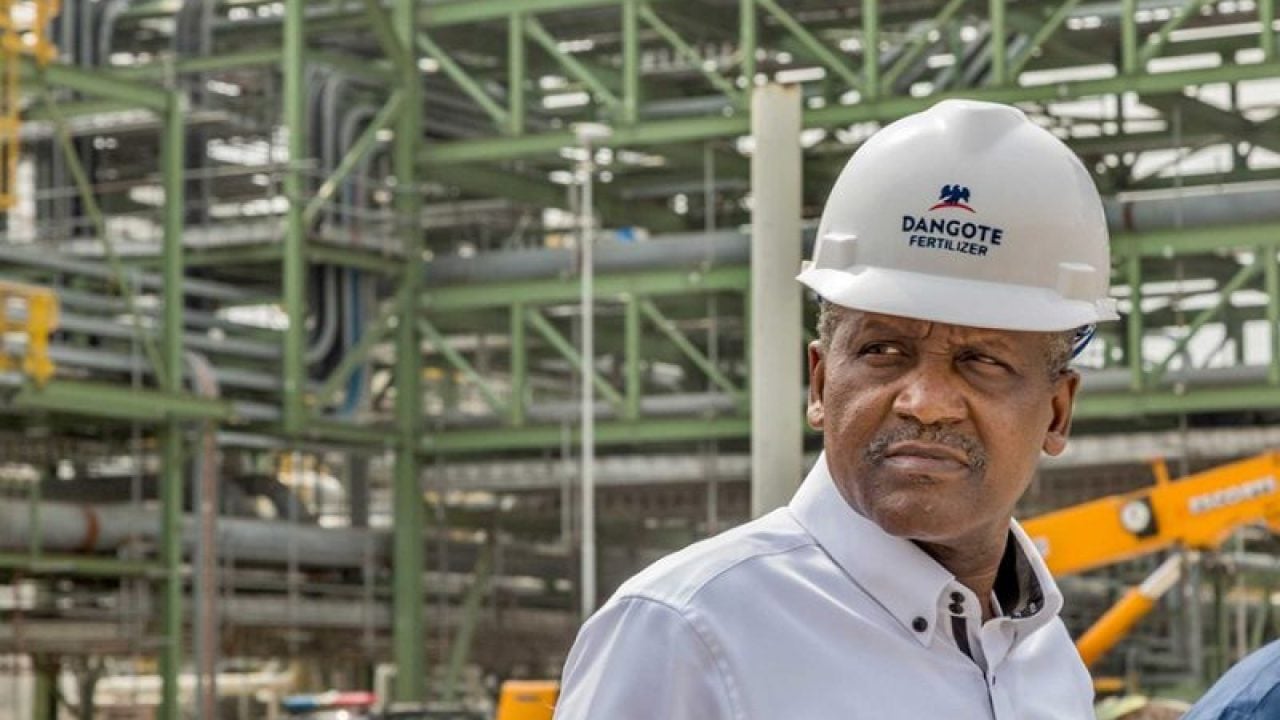
His end was pitiably tragic as his attempt at gallantry turned to foolhardy. I had reason, last week, to reflect on Okafor’s dilemma with the Christian liturgical creed and the tragedy of the ‘brave’ man of Umuahia who was resisting a change whose time had come as I followed up with the PENGASSSAN – Dangote trade dispute. At the centre of the dispute was the freedom of employers to operate their businesses without unions and the right of workers to unionise. The petrochemical company was said to have fired some 800 workers for engaging in trade unionism. Dangote has since promised to rehire the affected staff. While the dispute lasted, labour dubbed Dangote refinery an anti-worker institution operating as a State within a State.
Nigeria’s trade union and international labour laws allow workers the freedom to join or refuse to join a trade union while also granting employers the liberty to disallow unionism in their organisations. There should therefore be a middle road understanding. I also had reason to reflect on Nigeria in the days of NITEL when access to telephone was restricted to a few and how the immense possibilities in the Communication industry were unlocked and lifestyles transformed with privatisation.
I also remembered the years ,NUBIFE held sway in Nigeria’s Labour movement and how the privatisation of the banking subsector has changed that narrative. I have also observed with keen interest how ASUU’s presence in Nigeria’s 149 private universities has been watered down for quality academic interactions and a predictable academic calendar. This started when the first private university that came onboard in 1988 made it a policy that their lecturers should not be part of ASUU. It is indeed a good development that the Federal Government waded in and some form of truce was agreed on as at Wednesday .Truth however is that workers have the right to unionize but the private sector employer also has the right to regulate or outrightly disallow union activities.
Nigeria’s moribund national refineries all have active unions collecting dues from members yet the refineries have refused to be turned around and fuel importation amidst subsidy racketeering persisted. The members continue to earn salaries and even get promoted without working, while the unions and their leaders continue to profit from dues and levies. As all those are going on, Nigeria’s economy continues to bleed under the throes of fuel importation which continues to weaken the value of the Naira.
By calling on members to disrupt gas supply to Dangote Refinery, PENGASSAN was out to frustrate if not kill the $20 billion investment. This is not just unpatriotic and economically disastrous but has the capacity to discourage other investors whose investment can turnaround the nation’s economic fortunes. Nigeria’s economy needs to work once again. Truth be told ,no investor will be in a hurry to invest in any country where a union leader can with a snap of pronouncement so easily destroy a multibillion-dollar private investment without due diligence. A private establishment that provides direct employment to close to 4000 Nigerians deserves to be protected. The federal government should therefore do everything within the confines of the law to protect the Dangote Refinery from economic saboteurs and misguided parasitic interest groups under whatever guise.
The workspace is changing and Labour should do less of that chant of ‘As it was in the beginning, is now and ever shall be world without end ‘ The truth, very profound in all its ramifications is that the workplace dynamics is fast unfolding along the change trajectory and the imperatives for labour remains undeniably self- evident. Nigeria has had a bitter story of organized sabotage against systems that work. But for the resilience of the Dangote group, that $20 Billion refinery project could not have seen the light of day.
The times indeed are changing and Labour leaders should demonstrate sensitivity to corporate vision and sustainability beyond the penchant and attachment to membership dues and royalties. The point needs to be clearly made that employers have the right to refuse the existence of trade unions in their businesses, and a staff member has the right to walk away from any employer who doesn’t want unionism. A worker should be rewarded based on valued productivity not nuisance value in disruption of productive operations in the name of unionism.It is however heartwarming that with the intervention of the Federal Government the declared strike was eventually called off. Parties should commit to the agreed resolutions.
Let’s not forget in a hurry that there are interest groups who feel shortchanged by the success story of the Dangote refinery. These include some of the groups that were determined to maintain import dependency, artificial scarcity, and profiteering at the expense of ordinary Nigerians. The import and subsidy cartels are lurking by the corner to see how the Dangote investment initiative can be frustrated. Nigeria should not be taken back to the days of import dependency.
Labour position has always been that the unions remain vital “to secure better welfare and fair pay.” Private investors are admonished to factor these in from the outset while setting productivity benchmark for workers.
The Dangote Petroleum Refinery was commissioned in 2023 with an installed
capacity of 650,000 barrels per day. Incidentally it has been enmeshed in series of recurring disputes with oil sector unions. The dynamics of the Nigerian workspace however presents a choice between a vibrant union in an inactive PortHarcourt , Kaduna or Warri refineries and a functional Dangote refineries without an active union platform for its workers. I sure will not hesitate a moment to chose the later, so let Dangote be.

