


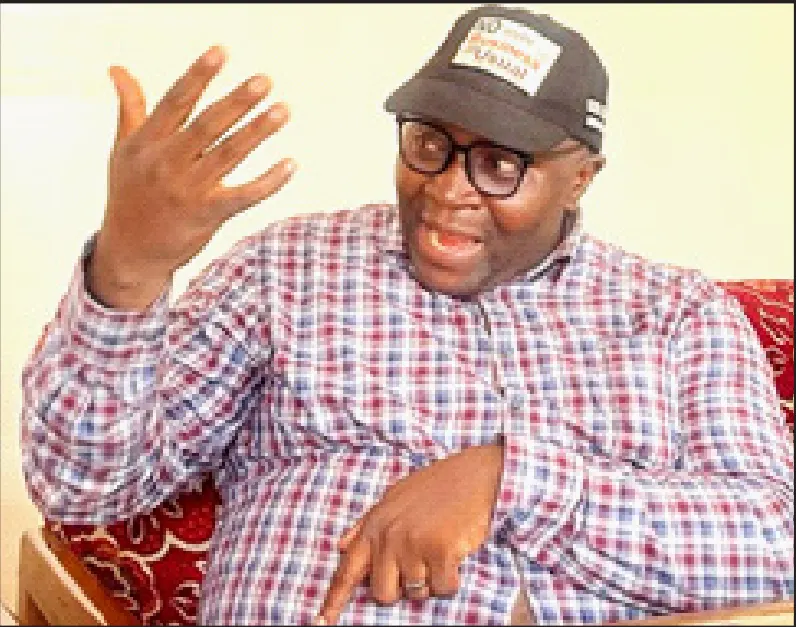
THE role of civil society groups in modern governance has often been misconstrued by certain actors to mean antagonism and unruly confrontation. In this interview with the coordinator and founder of the Forum of Delta State NGOs, Deacon Okezi Odugala, he champions a different perspective, one driven by genuine concerns for development. Among other things, the foremost civil player in the state calls for collaboration and mutual engagement between civil societies and the government for truly sustainable development. Excerpt
Can we meet you, sir?
My name is Deacon Okezi Odugala. I’ve been a civil society player since I was 17 years old. I took an interest in entering the sector because I hail from the Isoko nation, precisely from Oleh, and you know the Niger Delta issues that border around oil exploration and the aftermath environmental issues, the agitation that came from the community.
So, I found myself born in an environment where, behind my secondary school, was an oil well, and inside my secondary school, you could see the oil pipeline crisscrossing. Then they used to have surface pipelines, but now they have underground pipelines.
I was growing up to see a disconnect between a land that had resources and a devastated people. It gave me a lot of questions: what is happening? Then we began to hear about Ken Saro-Wiwa and the Kaiama declaration. The oil companies were living in prosperity, and the communities were in poverty. So it was, visible, and that led me to enter the turf of civil society engagement.
I didn’t come from the background of those who were involved in militancy. I believe that my background was asking questions, engaging, and finding solutions. How can we do it better? Because I believe that even if you go into conflict, fight and violence, you will come back to the round table. So why not begin to interrogate these issues and begin to see where the gaps are?
At 17, I entered the sector of civil society. And again, I wanted to travel outside to Canada, so I worked with the Canadian embassy to process my visa. Unfortunately, it was the week I was booked that Kudirat Abiola was murdered. That led to the Canadian government closing the Air Commission in Lagos, but I had an encounter with the Canadian Embassy. They gave me a lot of literature because I started asking questions.
I wanted to find out how it is done in other parts of the world, so I discovered that Canada has two areas they don’t play with, which are human rights and environmental sustainability. I entered the thematic area of the environment. I started the Environmental Watch Group. That was the first civil society group I started.
I was going around communities, printing flyers, coming up with press statements and engaging with oil companies and oil-bearing communities. I began to find that the oil companies were doing business, and the people in the communities didn’t know much, so they (the oil companies) were just for profit-making. That was really something I found very challenging, and we decided to address these issues by engaging with them.
Google to find my encounter with Ajip when they wanted to build a fuel station in my mother’s town, Iri. I think that’s one of the largest gas gathering stations in West Africa. They didn’t want to do an Environmental Impact Assessment (EIA) because, like I told you, we started finding out international best practices.
How does the Forum of Delta State NGOs ensure advocacy remains constructive and responsible rather than confrontational?
Civil society organisations are registered, but there are some that want to be independent, like Friends of the Earth and Greenpeace. These international NGOs did not rely on registration from anybody for legitimacy; they earned public trust. They don’t relate to the government. They receive funding from donations from individuals. So you have a mixture of different kinds of civil society organisations. Even Boko Haram can be described as civil society because they believe in a cause; they claim Western education is bad. Anyone pursuing a cause falls within the broad sector of civil society.
But today, what we have is what is called civil society self-regulation in Nigeria. You cannot stop people from forming groups around what they believe in, but the Constitution guides their operations. The Sustainable Development Goals (SDGs), which Nigeria signed onto in September 2015, came about because the Millennium Development Goals failed. Why did they fail?
Governments believed they alone could deliver development to society and the people. That approach failed. Governments returned to the drawing board at the United Nations and asked what had gone wrong. They realised they had not engaged the civil society and had not engaged the private sector.
The SDGs, therefore, emphasise development that is not only for today but also for tomorrow, and such development must be based on partnership. This is Goal 17. That is the framework within which civil society now operates.
Civil society engages stakeholders constructively, identifies gaps, and serves as the watchdog of society. When those gaps are identified, civil society proposes solutions. That is why in the Western world, you see what is called social entrepreneurship. There is also the concept of Corporate Social Responsibility.
The essence of governance is to create happiness for the people. Any political leader occupies office to serve the people and create happiness for them. That happiness begins with the fundamentals, education, healthcare, social amenities, and infrastructure.
Civil society is not meant to fight government but to partner with government to ensure these systems work. The watchdog role of civil society is to say, “Government, you can do this better because this is where the gap exists. We can partner with you.”
The private sector exists to make a profit, but profit-making must not harm people. Businesses must give back. CSR connects directly with social development. There is a relationship between social development and CSR. For example, in Dubai today, the government provides housing, free education, free healthcare, and social welfare stipends, measures designed to create happiness for citizens, something Nigeria has not yet fully implemented.
Civil society exists to ensure these concepts are articulated and implemented. When someone wakes up and believes that insulting a governor makes them relevant, that person is not contributing to sustainable development. There are radicals in different shades, but Nigeria now seeks a civil society self-regulatory framework. Civil society leaders across states gather in a General Assembly where the principle is clear: civil society actors must be exemplary. If you are a civil society practitioner and do not lead by example, you lack credibility.
For instance, if I come to The Pointer under the concept of open governance and ask to inspect your records, to understand how resources are used, I must first demonstrate accountability within my own civil society ecosystem. Civil society must practice self-regulation before speaking to the public. Only then will practitioners be seen as exemplary and sustainable. Organisations that ignore these principles eventually fade away.
What is your relationship with the government?
It is a partnership and constructive engagement. Today, I serve within government structures as an appointed member. I sit as a civil society representative on the Delta State Contributory Health Scheme Board.
Civil society conducts advocacy and monitoring; the purpose is to contribute. I have also served on the Procurement Council. During former Governor Ifeanyi Okowa’s administration, I challenged the Delta State NEWMAP erosion control project funded through a World Bank loan. I wrote him that Uduaghan just left, and when he (Okowa) was sworn in, the state was in so much debt, yet within three months, the government sought a $500 million loan for the NEWMAP project.
I asked simple questions: who was consulted and how were project sites selected? I wrote to the state Commissioner for Environment at the time, requesting information. I also wrote to the World Bank, stating that due diligence and stakeholder engagement processes had not been properly followed. I raised 10 specific points, not to oppose the government, but to ensure procedures were correctly followed.
The World Bank recognised the issues as valid and invited me to a teleconference to clarify them with my group. They subsequently communicated with both the Federal Government and the state governor because community engagement had not been adequately conducted.
There must always be pre-project engagement to obtain feedback from the people. Without this, projects are often abandoned or vandalised because they do not reflect community needs. The government cannot simply build a market somewhere without determining whether it meets local needs. Community engagement is essential.
When the World Bank came, they confirmed the concerns, and funding was to be halted until proper engagement occurred. The governor then initiated consultations. During those engagements, officials said there was no budget for such meetings. I responded that civil society was not requesting funds; we would organise the engagement ourselves.
The goal was dialogue, to identify gaps, dot the I’s, and cross the ts. The role of the civil society is not to antagonise the government because they are also civil society actors. Neither the government nor civil society knows it all, so we have to sit at a round table to address gaps. The result is that the project became a lasting legacy because proper processes were eventually followed.
Afterwards, I unexpectedly heard my appointment announced on the radio. I had not lobbied for it. Delta State has increasingly become citizen-friendly by integrating civil society into statutory government bodies so that diverse perspectives contribute to governance and improve outcomes for citizens.
What is the role of civil society in this electioneering period?
As elections approach, civil society also plays a role in civic responsibility. We conduct advocacy, encouraging eligible citizens to register and vote. We interrogate candidates and their manifestos, asking what their social contract with the people is.
I chaired the civil society Situation Room during the 2023 elections. Politicians cannot simply make grand promises; those promises become documents used to track performance. If you cannot keep your social contract, then you are a fraud, what people popularly call a “Yahoo boy”. If you cannot honour your social contract, then your words are like those empty promises: I will do this, I will do that. That is where civil society comes in.
Civil society takes those promises, which are called manifestos, keeps them, and uses them to track government performance. Civil society carries out advocacy, conducts project monitoring, and engages the government whenever gaps are identified.
There are times when I engage the government directly through my phone. Let me give you an example. One day, I attended a programme at ASCON, and while travelling along the Badagry Expressway, I observed a very poor and unfriendly waste management situation. Later, when I returned to Asaba and was driving towards Ibusa, I noticed that the Ibusa road was overgrown with weeds. I quietly took photographs and sent them to the Permanent Secretary of the Ministry of Environment, who is now the Head of Service, Dr Mininim Oseji. I pointed out that the access road was overrun with weeds and reminded her that we have a Ministry of Environment, and that as the engine room of the ministry, the area should be kept tidy and properly maintained.
Today, the governor has intervened on that road, and improvements have been made. As you enter the capital now, you can see the ambience created by solar street lighting and environmental maintenance. The question is: did I come to the media to shout about it? Did I use it to attack the government publicly by saying Asaba was dirty or calling out the Permanent Secretary by name? No.
There is a way to communicate a message that encourages improvement, and there is another way to pass the same message that makes a person defensive and resistant. Civil society is part of the governance process. We are partners working towards a better society and towards creating happiness for citizens.
Do you have factions among the civil society groups?
Every society naturally has factions. In every community, even within families and among one’s own children, differences will exist. That is natural. Over time, like grains and stones being separated through a natural process, genuine actors and others will distinguish themselves through their work. Your work is what proves sustainability.
As I said from the beginning, civil society is not-for-profit. I serve on boards without a salary; I only receive sitting allowances for meetings. You will not find my name anywhere requesting contracts from the government or asking to be sponsored for trips because I am in civil society. I have never done that.
So what is the motivation? Passion. Without passion, it is not sustainable. Some people simply register civil society organisations without purpose, and such efforts cannot endure. When I established the forum of Delta State NGOs, bringing together NGOs, CSOs, and faith-based organisations, we created a unified civil society community. I served as the founding coordinator for about six years. After that, I insisted on elections because there had to be a democratic process. Elections were conducted, executives emerged, and the handover process was transparent and public.
However, people often have personal agendas, which is why one must always ask whether actions are selfish or selfless. At one point, an individual attempted to write a memorandum seeking government support to the tune of ₦70 million without consulting the executive council. Government House intervened, and discussions were held with the Senior Special Assistant on Civic Engagement and civil society leadership. Even members of the executive were unaware of the proposal. The matter eventually went to court, but it was dismissed due to a lack of evidence. The process strengthened the structure and credibility of the civil society community.
Today, the civil society community in Delta State remains credible. Those who emerged merely as factions have faded away because nature has a way of rewarding integrity; your actions eventually speak for you.
Factions will always exist, but they should not distract from genuine work. Society will always contain both genuine and fake actors. Whenever a genuine product exists, counterfeits will appear. As Bishop Adeboye recently remarked, you cannot have a fake ₦2,000 note because none exists, but you do have fake ₦1,000 notes because genuine ones exist.
Tell us about civil society’s relationship with labour in the state.
Politics and labour, we are partners. Labour organisations are part of civil society groups. If you look at everything we do, we engage labour actively. We have a very robust relationship, even with The Pointer and the Nigerian Union of Journalists (NUJ). We also maintain a very good relationship with the Nigeria Labour Congress (NLC).
If our shared purpose is to make society better, then we are partners. But anything outside the purview of improving society means you do your thing, and we do ours. Partnership works because when labour collaborates with us, we bring our knowledge together and achieve better results.
Recently, I organised the Delta State Environmental Sustainability Award, an environmental conservation initiative. Labour representatives served as members of the technical committee that reviewed submissions. So, we maintain continuous engagement.
Most times, you will see advertorial messages on the front pages of newspapers. I have personally paid for many of those advert placements in The Pointer, encouraging citizens to keep Delta clean and not vandalise government property. I paid for them myself, not because the governor gave me money. When those messages go out, the impact is significant.
During Okowa’s tenure, we went to 23 local governments to monitor road projects. We observed that even while the government was constructing roads, residents were dumping waste into drainages. We engaged community leaders and reminded them that they also have responsibilities. The government cannot manage waste for you while you destroy drainage systems and later claim the government has done nothing.
We went around communities explaining this civic duty. The problem persists. Just recently, I saw a video online that when Joan Onyemeachi served as Director-General of the Capital Territory, she removed shanties built on major roads like Nnebisi. I responded to that post, and I repeat, until regulators perform their duties without fear or favour, and until we speak truth to authority, these problems will continue.
I just saw that the current DG of the agency, Chief Patrick Ukah, was saying that they want to bring down those shanties. Environmental degradation is caused by citizens themselves. That is why we continue daily engagement, encouraging people to become responsible.
What can you say about the present administration in the State?
In 2015, we engaged the government during the transition to a new administration. We published our position, stating clearly that we would hold the government accountable for implementing the social contract.
Sometimes, even within civil society, we ask ourselves: what is our honest impression of this government? When projects directly affect people’s lives, the people themselves speak. We are not saying everything is perfect, but there has been a clear departure from what existed before, particularly from the period before the second tenure of Governor Okowa to the present administration.
Previously, shoddy jobs were common, and roads washed away after rainfall. You cannot continue doing poor-quality work because it wastes scarce resources. If a properly constructed road can last 20 years, why build one that fails quickly?
I once issued a press statement criticising unknown contractors, companies you cannot profile, claiming to be road contractors. We practice what we call “name and shame”. We investigate first, gather facts, and then engage authorities respectfully.
I must say I am happy with the governor’s responsiveness. Governor Sheriff Oborevwori has become a civil society Governor. Sometimes, before you finish raising an issue publicly, action has already been taken. That makes criticism difficult because responsiveness improves accountability. When good work is done, it benefits everyone. Still, the government must do more, as in the MORE agenda.
We need legacy projects, especially in the digital space. I would like to see a Delta Internet City. The first thing that shocked me when I attended a UN conference in Dubai was the Dubai Internet City. Nigerians are talented technologically.
The government should therefore invest not only in roads but also in digital innovation and agriculture. Agriculture remains the biggest business; it knows no politics, neither the All Progressives Congress (APC), nor the Peoples Democratic Party (PDP), nor the Labour Party (LP). You cultivate the land and reap results. Our forefathers understood this. No farmer goes hungry.
With modern technology and environmentally friendly farming, not harmful GMO practices, we can feed ourselves. A nation that cannot feed itself faces social instability.
Do you suggest the government replicate this in Delta State?
The governor is doing a lot, and credibility matters. He understands local realities and can replicate successful models from elsewhere. There is nothing wrong with adapting good ideas.
However, the Niger Delta Development Commission has largely failed in delivering legacy projects. Why can we not develop metro rail systems across the South-South region or establish ferry transport through our waterways? Lagos has successfully implemented railways and ferry services. Years ago, areas like Epe leading into Lagos were undeveloped, but today development has transformed them, and the environment has been made conducive for investment.
We must also change this “gbege” and “I nur gree” attitude. The government alone cannot provide everything. We must create an enabling environment for businesses and investors. When investors come, youths become engaged. If young people lack economic opportunities, negative influences emerge, including the “get-rich-quick” mentality.
Speaking about investors, and from a civil society perspective, what is your view on the issue of “deve” in communities as it appears to be affecting investment?
When I was building my house in Okapanam, I knew what I went through. An agency was established under an existing law signed by the present governor, although the law originated during the tenure of the former governor when the agency was created.
My position is simple: once laws have been passed, they must be implemented. Those who violate the law must face due process so that punishment serves as a deterrent. Government, the judiciary, and enforcement agencies must enforce laws without fear or favour. If you go against the law, you must face the consequences. If you can commit the crime, you must be ready to face the penalty.
The laws already exist, and robust laws have been enacted. What remains is proper implementation. Anyone who unlawfully collects money or violates regulations should face legal consequences. We even paid a courtesy visit to the Speaker of the House of Assembly and advised that there are already many laws in place; what is needed is effective enforcement and unbiased judicial interpretation.
Unfortunately, politics often interferes. You see favouritism, “this is our person,” “that is our brother.” Someone illegally blocks a road or builds where they should not because of political backing. Once one person bends the rules, others follow, and respect for the law collapses. That is why leadership must be exemplary.
Even Aliko Dangote stated that when he established his refinery in Epe, nobody disturbed him. If such an investment-friendly environment existed consistently in Delta State, industries would have flourished here.
We must support government efforts while the government also engages other sectors. Civil society will continue advocacy within this ecosystem to ensure accountability, investment growth, and sustainable development.

