


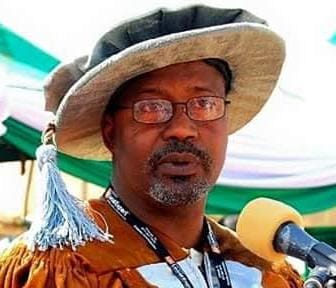
THE growing misuse of honorary degrees in Nigeria has become a troubling reflection of the country’s weakening respect for academic integrity. What should ordinarily be a symbolic gesture; an institution recognising an individual’s outstanding contribution to society, has increasingly degenerated into a transactional, politicised, and, at times, fraudulent affair.
The National Universities Commission’s (NUC), recent findings have reinforced what many have long suspected: the value of honorary degrees is being eroded not only by unaccredited institutions that have turned them into commercial commodities but also by legitimate universities that have lost sight of their ethical obligations.
According to the Executive Secretary of the NUC, Prof Abdullahi Ribadu, the Commission’s investigation into the abuse of honorary doctorates uncovered practices that are nothing short of alarming.
Sixty-one institutions and professional bodies were scrutinised, revealing thirty-two organisations operating effectively as degree mills. These include unaccredited foreign universities, unlicensed local campuses, professional groups with no legal authority to award degrees, and other bodies that should have no business conferring academic titles.
Even more troubling is the revelation that some of these institutions go as far as awarding fake professorships. This not only cheapens the academic profession but also contributes to an environment where titles can be purchased, fabricated, or bestowed with no regard for merit or academic contribution.
The Commission’s concerns highlight a wider cultural problem, which is the growing obsession with titles and status symbols in the country. Instead of honorary degrees retaining their intended purpose, the recognition of distinguished service, they have become collectors’ items. Many individuals who receive such awards immediately begin addressing themselves as “Dr”, despite having no doctoral training, research background, or scholarly accomplishment.
Ribadu reiterated that honorary doctorate recipients are not entitled to the prefix “Dr” and must never present themselves as scholars, supervise research, or use the awards to claim academic authority. Yet across the country, billboards, political posters, church programmes, and corporate events routinely display individuals flaunting unearned titles without consequence.
The NUC’s findings also exposed a worrying disregard for established ethical guidelines. For instance, the 2012 Keffi Declaration, which expressly prohibits universities from awarding honorary doctorates to serving public officers, is now largely ignored as politicians, who represent the exact category that the Declaration sought to exclude, have become some of the most frequent recipients.
Universities that should be bastions of impartial knowledge have instead turned these honours into tools for political patronage, currying favour with office holders in exchange for anticipated benefits. The result is a system where honorary degrees are neither honorary nor honourable.
The complicity of accredited universities deepens the crisis. While it is easy to blame mushroom institutions, the problem becomes more troubling when reputable universities participate in the abuse. Over the years, even respected institutions have succumbed to the temptation to award these degrees indiscriminately, sometimes for financial gain, political visibility, or to maintain relationships with influential figures.
This growing culture has far-reaching consequences. First, it diminishes the credibility of Nigeria’s higher education system. Secondly, it undermines those who have earned doctoral degrees through rigorous research, intellectual discipline, and years of sacrifice.
It also confuses the public, especially in a society where academic titles often command respect and authority. Most importantly, it dampens the pursuit of genuine scholarship, as the lines between true academic achievement and ceremonial recognition become dangerously blurred.
We therefore commend NUC’s intervention as it is both timely and necessary. The Commission has reaffirmed that the legal authority to award honorary degrees rests solely with accredited universities and that the NUC itself has a mandate to regulate these awards and their use. We can only hope that the panel, already set up to examine the development, and led by Prof Kabiru Bala will restore sanity to the process. Furthermore, we hope the panel’s report will not only end at the recommendation stage, but that real enforcement will be carried out. It is one thing to issue regulations and another to ensure compliance in a system where institutions often disregard rules with impunity.
We also admonish universities to rediscover the fundamental purpose of honorary degrees: to honour those whose work, philanthropy, or service has had a substantial and positive impact on society. These awards should be rare, carefully considered, and free from political or financial influence.
There should be transparency around the selection process, and institutions must be willing to say no to individuals who see these honours as cosmetic upgrades to their public image.
Until titles are returned to those who truly deserve them, and institutions are held accountable for unethical practices, honorary degrees will continue to lose their meaning, and the nation’s intellectual credibility will remain at risk.

