


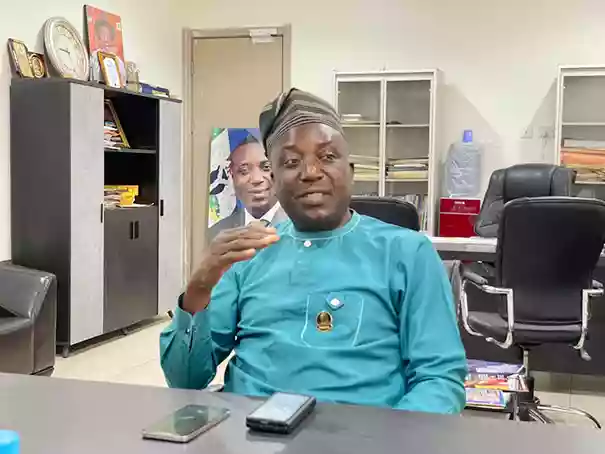
OUR Platform this Monday is featuring the Delta State Commissioner for Higher Education, Prof. Nyerhovwo Tonukari. He is a Professor of Molecular Biochemistry. In this interview, he spoke extensively on Gov. Sheriff Oborevwori’s strides and commitment to tertiary education growth and development in Delta State, the welfare of academic/non-academic staff, their challenges, the task before the newly appointed Vice-chancellors of the three new Universities and the successes already recorded, and many more. Excerpts.
As Commissioner, shall we have a rundown of the 2026 activities of the Ministry of Higher Education in Delta State under your watch?
2026 is a golden year for the Ministry of Higher Education in Delta State. We have already done a lot, and would want to do quite a lot this year. When I came in as Commissioner, one of the policies Governor Sheriff Oborevwori wanted to implement was that, all the State Universities, Colleges of Education and Polytechnic’s must conduct their convocation ceremony. As of this year, we had already held three convocations and would hold more.
Also, this year, we have gone round the institutions, on the directive of His Excellency, the Governor, to encourage students from Delta State to apply for the NELFUND. We have gone around almost all of them, except for two. We have not completed the movement yet. Those are two of the main things we have accomplished.
However, there are still many things coming up in the pipeline for 2026.
Recently, appointments of the Vice-Chancellors of the three new Universities elapsed. Consequently, fresh appointments were made. What informed the choice of the appointments?
What we looked at was this: we knew that the tenure of the Vice-Chancellors was ending in April. One ends in early May, while the other two would end in April. So we needed to plan ahead, because there should be no vacuum in the institutions.
The outgoing Vice-Chancellors have done very well, so we were looking for people to replace them. In the university system, the Governing Council establishes a selection committee. The committee consists of three persons from the Governing Council itself and two persons from the Senate. They then go out to search for candidates. They advertise the positions, and people apply. It is not just those who apply that are considered. They can also reach out to candidates nationwide to apply for the position. That is what they do, and that is exactly what was done in all three institutions.
We had a lot of people applying. I know that, for the University of Delta (UNIDEL), Agbor, more than 40 people applied. At Dennis Osadebay University (DOU), Asaba, about 21 people were shortlisted. So you can see the calibre of scholars that applied.
When I discussed this with the Chairman of the Council of UNIDEL, Prof. Emmanuel Nwanze, he told me he was very happy with the calibre of the professors who applied and that Delta State has enough talented professors to serve as Vice-Chancellors in universities across Nigeria.
But what we wanted was to pick the best of the best.
They went through the initial selection process to shortlist the candidates. After that, they went through thorough interviews. I must tell you that His Excellency, Gov Sheriff Oborevwori requested to see the detailed report, not just a one-page summary, but the full report of the scoring.
The interview panel, made up of members of the Council and Senate, interviewed all the candidates, scored them, and selected the three best. The names of the three best were submitted to His Excellency in a letter, along with the full report of all the interviews. By law, His Excellency could pick any one of the first three candidates. From there, he made the final decision and appointed the three persons who are now replacing the outgoing Vice-Chancellors.
For Southern Delta University (SDU), Ozoro, as I mentioned earlier, Prof. Sunny Awhefeada was appointed. He is from Delta State University, Abraka, and currently serves as the Dean of the Postgraduate School.
For UNIDEL. Professor Eric Eboh was appointed. He is from the University of Nigeria, Nsukka, in Agricultural Economics.
Then, for DOU, as you mentioned, Prof Samuel Aghalino was appointed. He is from the University of Ilorin. So, they were the best candidates, and they were selected. I have interacted with some of them, and I know the quality they are made of. They are very qualified to hold these positions.
With the conduct of first convocation ceremonies by the three “baby Universities” established in 2021, are there plans for advancing or upgrading their academic programmes, now, or in the future?
Right now, only DELSU offers postgraduate education. So everyone who wants postgraduate studies has to go to Abraka.
By the law of the National Universities Commission (NUC), if you do not produce graduates, you cannot admit postgraduate students. If you listened to what the Vice-Chancellor of DOU, Prof Ben Oghojafor, said during his remarks at the convocation, he mentioned that they have already set up a postgraduate school in DOU and even appointed a Dean of the Postgraduate School.
The same thing is happening at UNIDEL and SDU. All of them are going to run postgraduate programmes.
They plan to start by September or October, when they will begin admitting students to their postgraduate courses, at least in the first programmes for which they have already graduated students. All over the country and across the world, postgraduate education is becoming increasingly important. Many people want to go back to enhance their knowledge. So all of them are going to start postgraduate studies.
Delta State has been commended for running and sustaining three new Universities in one go. Do you think these three “Baby Universities” can compete favourably with other universities across the country?
You call them ‘Baby Universities”, but I will tell you this: If you go to the Faculty of Engineering in UNIDEL, Agbor, you would see that it can compete with the Engineering Faculty of any University in the whole country. So you may call them baby universities, but in terms of Engineering and equipment, they are already up there.
In terms of equipment, they are not really that young. All of them were midwifed by DELSU. You will see many lecturers come in from DELSU and the University of Benin (UNIBEN), Edo State.
So they are doing very well.
In terms of ranking, the universities have already been ranked. UNIDEL is already ranked 51st in the country. I mean, this is a new university beating many older universities in the country.
Nigeria currently has about 309 Universities. So if a new University is placed 51st in the rankings, it means it is doing very well.
DELSU, among state universities, is always ranked second or third nationwide. So it is very highly ranked. It is also one of the universities whose lecturers are widely published in international journals, so they are doing well. I will also tell you that we are just starting. When the Governor was speaking, he was very happy that the total number of students in the three so-called new universities is now about 40,000, a little more than 40,000. DELSU alone has more than 35,000 students. But by next year, the numbers will increase because they now offer new courses.
All of them were encouraged to establish new Faculties and programmes, which is why students intake is increasing at all three new universities. Not only Universities, but also polytechnics are experiencing an increase in number. They are introducing new programmes; programmes that people want to apply for. So they are going to do well.
Funding for these institutions has not decreased. In fact, it is increasing from the Delta State Government. If you look at the budgets for 2025 and 2026, you can compare them. You will see that capital expenditure funding for this year is about ₦60 billion. Last year, it was about ₦30-something billion, roughly ₦32 billion. If you also look at recurrent expenditure, it has increased in all of them because we intend to employ more staff as the institutions expand and the number of students continues to rise.
With the increasing number of Students’ enrolment and academic programmes, what is the state of available infrastructure in these Universities, and their ability to cope with the growth?
Yes, let me address that. We have been building, and construction is ongoing. When His Excellency visited Delta State University, Abraka, for the last convocation, he promised to complete the Senate building. That project will start this year.
During the three convocations, he also promised all three Universities new hostels, which aligns with what the Federal Government is doing.
The Presidency has authorised the Federal Minister of Education to tell all Federal Universities to prioritise building of hostels, and we are taking that policy seriously in Delta State as well. So we are going to do the same here. We want more students to live in hostels rather than off campus.
Facilities are coming, I tell you. A lot of facilities. If you visit the Orerokpe campus of SDU, you will see many facilities for students. It is a new campus, but it already has more than 4,000 students and many facilities.
They are also building at Ozoro. Before the Governor attended the convocation, he commissioned several projects. They now have new buildings, classrooms, faculties and lecture halls. So the facilities are indeed there.
There seems to be what one might call, a revolution happening with Artificial Intelligence. What is the Ministry of Higher Education in Delta State doing in this regard, particularly as regards Delta State- owned Higher institution?
Incidentally, Delta State is planning to hold the third Education Summit, hopefully this year, and the theme will be Artificial Intelligence, the same AI you are referring to.
AI is actually not entirely new in our Universities. Before it became widely discussed as it is today, many academics already knew about it and were working with it. Lecturers in Computer Science and the Physical Sciences, people like us, have been using aspects of AI even before I became Commissioner.
For instance, at DELSU, Prof. Tsetimi is one of the leading AI Consultants in the country. They organise seminars across the country, and he is one of the key resource persons. He is based at DELSU, Abraka, and the University regularly organises seminars and conferences.
At the Education Summit, we hope to bring together, not only AI experts but also University Management teams so they can adopt more technology and integrate AI more effectively into teaching.
I must tell you that University teaching is changing. It is not like when many of us were in school. It is changing drastically. If you went to University in the 1980s, as I did, you had very limited information. We did not have enough books, and you had to memorise a lot.
Today, the information students need is right there in front of them. Research that used to take a long time can now be done much faster. So teaching now has to be innovative, and that is where AI comes in.
Students now must have some level of education in AI, especially through their general studies courses. AI is becoming increasingly important worldwide, and we cannot be left behind. That is why the Ministry is bringing all the institutions together in one place, not only state institutions but also Federal institutions and private Universities.
They will all be invited. We will also bring AI experts to deliver talks.
The newly appointed Vice-Chancellors will soon be assuming their responsibilities. As the Commissioner supervising these institutions, what challenges or tasks lie ahead for them?
Certainly, I will sit down with them to discuss the direction the Delta State Government wants the institutions to take. The first task is quite straightforward. The government wants the universities to expand and admit more students. Secondly, the government wants the quality of education and teaching to improve even further.
Thirdly, as the Governor mentioned during the convocation at DOU, the government wants graduates to leave the Universities with sufficient entrepreneurial skills so that they can establish themselves if they do not immediately secure jobs.
One of the major challenges is staffing. All of them are short-staffed, particularly in professors. These are the things we are going to work towards.
His Excellency recently approved recruitment at Southern Delta University, but they are still struggling to find some of the professors they need, especially in emerging and specialised areas. So they are still short-staffed.
They are searching across the country to recruit some of those professors. There are still some areas where they do not yet have enough staff, and those gaps will still need to be addressed.
These are some of the things the new Vice-Chancellors will work on to ensure that the Universities can admit more students, attract higher-quality staff, and provide students with a sound education so that, when they graduate, they can become independent individuals.
What is the state government doing to ensure the welfare of lecturers and non-academic staff?
Well, first of all, since this administration came on board, the government has approved the employment of approximately 1,100 academic and non-academic staff across all institutions, including the Polytechnics and Colleges of Education. That was done so that the institutions could have additional personnel. It may not be enough yet, but at least they now have more staff than before.
Delta State is one of the leading states in the country in terms of the welfare of academic and non-academic staff. When you send your child to a university in Delta State, the child will graduate within four or five years. That is because our institutions do not go on strike, and the government pays all the emoluments.
The Delta State Government pays all their salaries. For example, when the Federal Government approved the 25 per cent and 35 per cent salary increases in 2024 for tertiary institutions, Delta State was one of the first to implement it in its University systems. The non-academic staff received a 25 per cent salary increase, while the academic staff received a 35 per cent increase, and we implemented it immediately.
Even today, many states have still not implemented that increase. So we take staff welfare very seriously. If you go to DELSU or any of the other State Universities, they will tell you that lecturers from Universities often want to come here to do their sabbatical or work here because the salary conditions are better. In fact, the salaries here are better than those in some Federal Universities, which is why many of them want to work here temporarily. There has also been agitation nationwide over the new salary structure for professors and lecturers. ASUU has won the case and is working to implement the new salary scale. I believe it has already been implemented in Federal Universities.
Even if it has not yet been implemented in Delta State, our staff are not worried because they know it will be implemented and they will benefit from it. So staff welfare remains a top priority. There are also additional welfare initiatives. For instance, DELSU has a revolving loan fund for vehicles for staff members. That is another part of staff welfare. So a lot is being done in that area.
Are you assuring the lecturers that this new FG salary scheme will indeed be implemented in the State-owned Universities?
Yes. I have already met with the ASUU in the four universities, and they have visited me in my office. The only thing they have not yet brought is the official circular from the Federal Government.
We cannot implement anything without proper documentation. Once the official documentation arrives, we will act on it. So they are not worried, and we are not worried either. When the document comes, we will go ahead with implementation.
Recently, the Asagba of Asaba lamented the poor level of students’ enrolment at the Federal College of Education (Technical), Asaba. If that concern exists at the Federal level, what about the state colleges of Education? What is being done to improve enrolment in our Colleges of Education?
Yes, that is indeed a real problem, not only in Delta State but across the country. Student enrolment in Colleges of Education has declined significantly. Many candidates no longer want to study Education.
If you go to a College of Education, you spend three years obtain NCE certificate. After that, if you want a degree, you still need to spend another three years in a University. Most people now prefer to pursue a degree directly from the start.
So, it is a nationwide challenge. In fact, that was one of the reasons the previous administration converted the College of Education at Agbor into a university. At the time, the number of staff there was greater than the number of students.
However, I would say that the two Colleges of Education in Delta State are performing better than many others in the country. There are some Colleges of Education in Nigeria today where you will hardly find more than one hundred students, yet the staff remain.
Our Colleges in Delta State are trying. For example, the College of Education, Mosogar admitted about 500 students this year alone. I doubt that many other CoE in the country, except perhaps the one in Warri, can match that number. Most of the others cannot come close. When I visited the College of Education in Warri and asked about their student population, they told me it was around 1,600 students. That is what they reported.
Another reason you see relatively higher number of students in our Colleges of Education is that they run affiliated programmes with universities.
For instance, Mosogar runs programmes for DELSU and also for UNIBEN. Those are affiliated programmes. So when you see the large number of students there, many of them are actually enrolled in those university-affiliated programmes.
They even run a postgraduate programme on behalf of Ignatius Ajuru University of Education in Port Harcourt.
Also, the College of Education in Warri runs affiliated programmes with DELSU and UNIPORT. That is why you see many students in those campuses. But if you look strictly at their NCE programme, the number is not more than 2000. Most of the students are from those affiliated programmes.
In the future, one step being taken to ensure the Colleges of Education attract more students is the introduction of a dual mandate. In Delta State, the law has already been passed and signed by His Excellency, the Governor. We submitted it to the Federal Ministry of Education in Abuja, and they have now written to the two Colleges of Education, informing them that they may begin implementing the dual mandate, as previously approved, for both Mosogar and Warri.
This means they can now admit students who will study for degree courses while also obtaining their NCE qualification. Within five years, the students will obtain both the NCE and a degree. The programme will run for five years. So the mandate has already been approved for them.

