


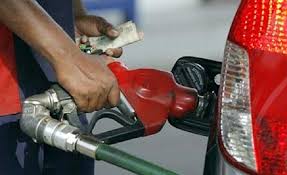
BY CHIKA KWAMBA/JUMAI NWACHUKWU/OGORAMAKA AMOS/PERCY IDUBOR/GRANDBALL CHOICE/PAUL EGEDE
For many Nigerians, the recent increase in the price of Premium Motor Spirit (PMS), popularly known as petrol, has become one of the most pressing economic challenges in recent times. Across the country, petrol prices have continued to fluctuate following ongoing reforms in the petroleum sector, with many filling stations selling between about ₦1,200 and ₦1,350 per litre in several cities.
For small businesses, petrol is not just another commodity; it is a lifeline. It powers generators, drives transportation and logistics, and keeps production activities running in the absence of a stable electricity supply.
In many parts of the country, where small and medium-scale enterprises dominate the local economy, the rising cost of petrol has created a ripple effect across different sectors. Traders, artisans, transport operators and service providers say they are now spending a significant portion of their income on fuel alone.
Many entrepreneurs have been forced to increase the prices of goods and services to survive, while others say declining purchasing power among customers is reducing their sales.
In Delta State, residents have expressed growing frustration over the continued rise in the price of PMS, popularly known as petrol, saying the persistent increases are worsening the cost of living and putting further strain on already stretched household budgets.
Residents who spoke with The Pointer in parts of the state, including Asaba, Warri and Ughelli, lamented that the recent fuel price adjustments have triggered increases in transportation fares, food prices and other essential commodities.
A commercial driver in Asaba, Mr Monday Efe, said the rising cost of petrol has made it difficult for transport operators to sustain their businesses without increasing fares.
“We buy fuel at about N1,300 per litre, which is very high. Before, when the price was lower, we could manage, but now if we don’t increase transport fares, we cannot meet our daily expenses,” he said.
A tricycle (keke) rider, Mr Friday Chukwuma, described the situation as unbearable for many Nigerians. “Just when Nigerians were praising the government over the reduction in fuel scarcity, the price of PMS increased again, without considering how people are struggling to afford three square meals,” he said.
According to him, transportation fares have already gone up significantly. “For instance, a trip from Stadium to Midwifery that used to cost N300 now goes for N400 or N500. The fare to Okpanam Roundabout, which was N400 before, now ranges between N500 and N600 depending on the driver.
“As a parent and a tricycle rider, I can imagine what people are going through in their homes. Increasing transport fares is necessary because of the situation, but it is difficult when you know that people are already suffering, especially schoolchildren who travel long distances to school,” he added.
Similarly, a trader at the popular Ogbogonogo Market in Asaba, Mrs Blessing Okafor, noted that the rising cost of transportation has affected the prices of food items and other goods in the market. “Everything is going up because of fuel. Transporters charge more, and we also have to adjust our prices. Customers complain, but we have no choice,” she said.
In Warri, residents said the situation has forced many households to cut down on non-essential spending as they struggle to cope with daily expenses. Mrs Pamela Oghene, a business owner, described the development as “very difficult,” adding that the fuel hike has affected nearly every aspect of daily life. “Transportation to my shop is now more expensive, and food prices are also rising. The government needs to find ways to ease the burden on the people,” she said. She also appealed to the Federal Government to introduce measures that would cushion the impact of the fuel price increase on citizens, including improved public transportation systems.
Expressing similar concerns, Mr Peters Edem, a public servant, called on the state government to address what he described as the arbitrary increase in transport fares. “As you can see, transport fares across the state have doubled almost overnight. How do you expect us to make ends meet when things continue to get worse? Even with the new minimum wage, our salaries are not enough,” he said.
According to him, the rising cost of living has made it difficult for workers to cope. “Our salaries can barely take us home. If you have to spend about N800 daily on transport alone, imagine what it amounts to at the end of the month,” Edem added.
Meanwhile, a stay-at-home mother, Mrs Patricia Chukwurah, expressed frustration not only over the fuel hike but also over persistent power outages. She lamented that businesses are struggling because many people can no longer afford to buy fuel to power generators.
“The suffering is too much. Everything seems to be happening at the same time. Just when we think things are getting better, another difficult situation comes up,” she said.
Speaking on the development, a Senior Special Assistant to the Delta State Government on Project Monitoring and economic analyst, Hon. Onyinye Joseph, said sustained increases in fuel prices could continue to drive inflation and negatively affect small businesses that rely heavily on transportation and energy.
He urged policymakers to implement strategies aimed at stabilising fuel supply and improving local refining capacity to reduce dependence on imported petroleum products.
Speaking with our correspondent in Port Harcourt, a food vendor, Mrs Chinyere Okafor, said the hike in fuel prices has eaten almost half of her earnings. According to her, the recent increase in petrol prices has drastically increased the cost of running her small restaurant.
“I depend on a generator to power my freezer to cool drinks, preserve things and sometimes to cook, especially when electricity is not available,” she said. She explained that petrol currently sells around ₦1,150 to ₦1,300 per litre in many filling stations.
“Every two days, I buy about five litres of petrol for my generator. At the current rate of about ₦1,150 per litre, that is almost ₦6,000.” According to her, “When you combine that with the cost of food items like rice, pepper, tomatoes and meat, the profit becomes very small.”
She added that she recently increased the price of a plate of rice from ₦800 to ₦1, 500-₦2,500. “But customers complain because they are also struggling with the economy, plus the fuel matter is not helping at all”
Another respondent, Blessing Douglas, a hairdresser who owns a small salon, said the rising cost of petrol has made running the business much more expensive. “In this salon we use hair dryers, clippers and other electrical equipment, so we must run a generator when there is no electricity,” she explained.
According to her, she buys about four litres of petrol daily. “At about ₦1,200 per litre, which is almost ₦6,000 every day. It really hasn’t been easy because I must use light for my equipment, and I can’t chase customers. Now I charge washing of hair ₦1,200; that’s if they are going to dry the hair with my generator. Some customers just come to wash and go. They don’t dry their hair; they would say the sun will dry it for them. Honestly, I don’t blame them. Everyone wants to save costs.”
Similarly, Mr Emeka Nwankwo, a foodstuff seller who sells cartons of sachet tomatoes, Spaghetti, noodles and cooking oil at Rumuokoro, said the fuel price hike has increased transportation costs for traders. “Most transporters now buy petrol at around ₦1,250 or ₦1,300 per litre, so they have increased transport fares,” he said.
He explained that moving goods from wholesale markets now costs much more than before. “Transporting foodstuffs from Mile Three to this shop used to cost about ₦3,000. Now it can cost ₦6,000 or more.”
According to him, traders often have no option but to add the cost to the price of goods. “I had to add the cost of transportation to the goods because, honestly, the gain is not much. I really pray that the price of fuel returns to normal because it’s really affecting the business.
Also, a dispatch rider, Samuel Etim, said, “I buy about five litres of petrol daily for my motorcycle,” he said, adding that dispatch riders have had to increase delivery charges slightly. “I had to increase my charges for delivery depending on the area in Port Harcourt. I charge from ₦2,500 upwards. Before, I used to charge ₦2,000. But some customers complain because they are also facing financial pressure.”
Mr Kingsley Wobo operates a barbing salon in Rumuodomaya. In his words, “The electricity supply in the area is irregular, and this has forced me to rely on a generator to do my business every day”.
He said, “Some barbers have slightly increased haircut prices to cope with the rising cost because it’s really not fair for us at all. How much do we go home with when we spend almost everything on fuel?”
An economist, Dr Timi Aliye, explained that increases in fuel prices often have widespread consequences across the economy because petrol is a major driver of transportation, production and energy supply in Nigeria.
According to him, the heavy reliance on petrol-powered generators by businesses makes them particularly vulnerable to fluctuations in fuel prices. “In an economy like Nigeria, where electricity supply is inconsistent, petrol becomes an alternative source of energy for most businesses,” he said. “Once the price of fuel increases, the cost of running generators also increases, and this automatically raises the cost of doing business.”
Dr Aliye noted that the impact is particularly severe for small businesses and entrepreneurs who operate with limited capital. “Small and medium-scale enterprises usually operate on very thin profit margins. When fuel prices rise, they have two options—either increase the price of their goods and services or absorb the cost and make less profit.”
He said the situation also affects consumers. “When businesses increase prices to cover fuel expenses, consumers end up paying more for goods and services. This leads to inflationary pressure within the economy.”
According to him, the rising cost of fuel also affects transportation and logistics, which further increases the prices of goods in markets. “Transporters spend more money buying petrol, so they increase fares. Traders also pay more to move goods from one place to another. All these costs eventually reflect in the final price paid by consumers.”
Dr Aliye added that improving the electricity supply would significantly reduce the dependence of small businesses on petrol. “If Nigeria can achieve a stable electricity supply, many businesses will rely less on generators. This will reduce their energy costs and improve productivity.”
In Asaba, an Accountant at Hotel Victoria Plus and Suites, Ms Faith Abiola, said the recent increase in fuel prices is affecting the masses, not only small business owners, adding that high operating costs are forcing many small businesses to scale back operations, postpone expansion plans, or shut down totally.
‘’To keep the business going, many entrepreneurs are forced to reduce their workforce, leading to layoffs and increased unemployment. This has gradually reduced productivity; time spent in the fuel station reduces the time available for production, directly hitting output. Lastly, to gain balance, coupled with the high cost of living, little service is rendered, but high financial input.
‘’Currently, my financial plans for the month have been tempered, especially transportation. The workplace has gradually increased prices on things because of light breakouts, and our standards of service have been affected, even though serving our customers is our priority, but the cost is much higher.’’
In the words of a public servant, Ubaka Okoro, based on recent reports from early March 2026, Nigerians are experiencing severe economic strain following a sharp increase in fuel prices, with petrol surging past ₦1,000 per litre in many parts of the country. This hike, driven by global supply chain disruptions and adjustments by the Dangote Refinery to align with international crude oil prices, has prompted widespread outcry, inflation fears, and a crisis in the transportation sector.
‘’Every Nigerian, regardless of your occupation, whether in small businesses or as entrepreneurs, is affected in general. Firstly, there is widespread frustration and hardship, which has been described as unbearable, with the high cost of living forcing people to cut down on basic needs.
‘’It has reduced movement: Transport fares have doubled in many areas, leading to fewer cars on the road as residents opt to stay home or use public transportation to save money. At this point, we are calling for intervention; demanding that the government intervene and that the Nigerian National Petroleum Company Limited (NNPCL) boost local refining to stabilise prices.
Similarly, Treasure Bafuere submitted that Nigeria isn’t the only affected, but the impact is much greater on us. That’s why we are complaining. Yeah, it’s a global thing because of Iran and the USA.
‘’This has led to an increase in the prices of commodities. I think for certain goods, demand might drop, but then my concern is the transport sector, as this is going to affect the masses negatively. For entrepreneurs, SME owners might be affected in different ways.’’
From the diaspora, an anonymous respondent confirmed that the fuel scarcity and hike in prices are not only happening in Nigeria. According to her, ‘’I saw a fuel queue for the first time here in the USA. The fuel prices also went up; the fuel issue is also linked to the current war happening in and around the Middle East.
Also, a Customer Care Representative and entrepreneur, Mary Chizabo, suggested that the hike in fuel price is now becoming like the alternate times of the day and the change of weather.
Meanwhile, residents living in Agbor and environs in Ika South Local Government have reacted differently to the current hike in the price of fuel. Mr Samson Dada, a business owner, said that the hike in petroleum products is a global problem. ‘’Unless there are alternatives to oil, everyone will feel the spill-over effect of the war between the US, Israel and Iran.’’ He added that the four government-owned refineries are not working; they are only active on paper. There are a lot of mafia in the oil sector. Dangote has some battles to fight with the US, too. He therefore advised that having multiple streams of income is the solution to the hardship in Nigeria; life will only get worse.
Another resident, Mr Dominic Ewere, a laundry owner, said the recent fuel price hike is definitely a tough pill to swallow, especially for small businesses and entrepreneurs.
Mr Sunday Ndidi, a barbing salon operator, has decried the current hike in petroleum products, saying that it has affected his take-home, as he runs his business solely on petrol due to the continued light outage across the state. He said customers are not willing to pay a new price for a haircut. Another resident, Mr Eso Okoma, noted that the fuel price hike is a result of the ongoing war between the United States… Israel and Iran. ‘’It is affecting Nigeria because we are part of OPEC, and the only functional refinery working in Nigeria is Dangote. It affects us more because Dangote buys Nigerian crude oil at the international price.
Furthermore, the Agbor Nta Community Youth Leader, Amb. Anthony Abanimoro said categorically that it is not palatable that what is happening in another country could affect the price of petroleum products in Nigeria. This is abysmal.
Mr Anthony said small businesses and entrepreneurs are the most affected in this whole thing. It has reduced motivation for increased productivity, caused a decline in patronage, and production costs will now be more expensive. The most affected are the micro businesses at the grassroots level, as some would hardly find business coming forth for them to be able to feed themselves.
Mr Osamwonyi Friday said, “In fact, this shouldn’t have happened at this time. Just recently, we protested in Benin City due to the epileptic power supply by BEDC. Now, the price of fuel has gone up. It feels like a nightmare. How do they want us to survive this kind of dilemma? This is a double tragedy.
‘’As a business owner, experiencing a total blackout and sudden fuel hike severely limits operations and chokes profitability. It has transformed the operational landscape from a focus on growth to a desperate struggle for survival, with daily fuel costs sometimes consuming 30–40% of income.
The impact on us is enormous. From increasing Operational Costs, to an increase in transportation and logistics, to an increase in prices of raw materials and reduced purchasing power. The situation is so frustrating. Sometimes I feel like sitting back at home. But the question remains, will that put food on my table? struggling continues. Naija, my country, I hail thee.
Another respondent, Beatrice Okosun, a Hair Stylist, said the increase in fuel prices drives up the cost of living, and customers now spend on things that matter most. Sometimes, after spending money on transport to get to your shop, you will not get any patronage. I called one of my customers who always visited every week to know why she didn’t come this week. Her answer was “na who chop de fine”.
Another challenge is that while costs have soared, customers often complain or cannot afford to pay higher prices, forcing business owners to absorb the costs and lose profit.
I’m making plans to install Solar panels to be free from BEDC today, Fuel increase tomorrow. It’s only God that can help us in this country.
Motorists have raised an alarm over the per-second emergency fuel hike in Ughelli North Local Government Area, following the crisis between Iran and Israel.
The continued increase had critically affected the cost of transportation and food items in Ughelli North.
Speaking to our correspondent, Mr Gabriel Osekene berated the federal government for giving excuses for the experience. He said, “The nonstop increment of fuel is killing, and our movement has been curtailed because of the increase without mercy.
“On a normal day, even if there is a fuel hike, you cannot buy in the morning at one rate, in the afternoon another rate and the evening for a different price if it is not pure wickedness.
“About three days ago, I bought fuel for N850 in the morning, and in the afternoon, when I wanted to buy a gallon, it was increased to N1,030, and in the evening of that same day, it was again increased to N1,180.
“The next morning, when I was travelling, it had skyrocketed to N1,300, but later in the afternoon, it was reduced to N1,200, and when we asked, they said the price of crude oil had increased.

