


BY RITA OYIBOKA/AMAYINDI YAKUBU
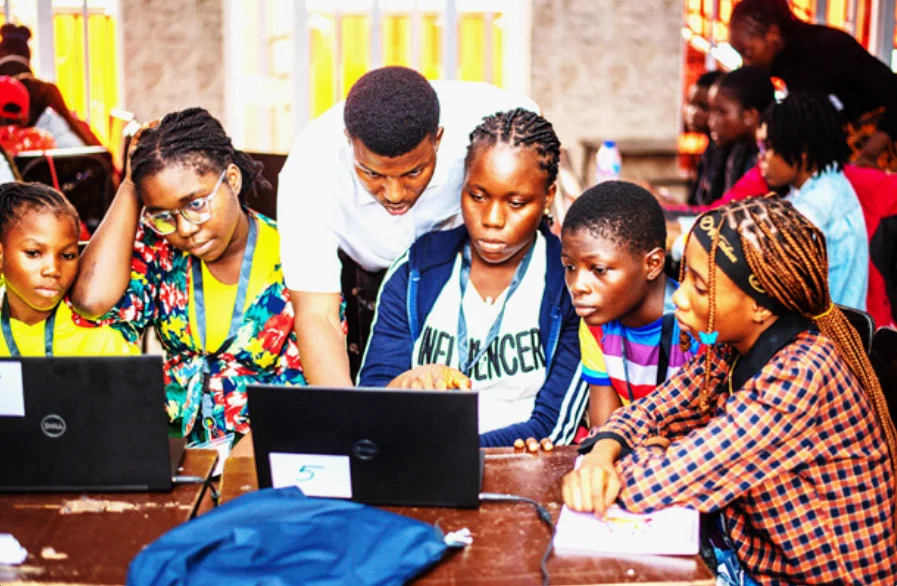
By the time the world marked the 2026 International Day of Education on January 24, one truth has become impossible to ignore: education is no longer a closed-door system designed exclusively by governments and delivered to passive recipients.
Across continents, young people are moving from the margins to the decision table, co-creating curricula, shaping policy priorities, running advocacy campaigns, and redefining what learning should look like in the 21st century. The old model of education as a one-way transfer of knowledge, where adults decide, and youths merely comply, is steadily losing relevance in a rapidly changing world.
This year’s theme, “The Power of Youth in Co-Creating Education,” is therefore not aspirational rhetoric or ceremonial language crafted for annual observances. It reflects a global shift that is already underway, though unevenly distributed, across regions and systems. From Europe to Asia, from Latin America to parts of Africa, youth participation in education governance is increasingly recognised as a strategic imperative rather than a token gesture. Countries that have embraced this shift are not merely reforming education; they are future-proofing their societies.
Nigeria, Africa’s most populous nation and home to one of the world’s youngest populations, sits at a critical inflexion point. With over 60 per cent of its population under the age of 25, the country cannot afford an education system that treats young people as spectators in decisions that shape their lives. Nigerian youths are vocal, innovative, digitally savvy, and deeply invested in education, but they remain structurally sidelined from the very systems they are expected to inherit. The question, therefore, is not whether Nigerian youths are interested in shaping education. The real question is whether the system is ready to take them seriously.
From Beneficiaries to Co-Creators
In an interview with our reporter, Mr Bilal Isaq, an instructor at the Nigerian Army School of Public Relations and Information, Abuja, was unequivocal in his assessment: Nigerian youths have never been passive observers in the education space.
“Nigerian youths have, over the years, actively participated in the development of the country’s educational sector,” he explained. “In terms of independent involvement, youth-led educational organisations have sprung up to contribute meaningfully to education through enlightenment programs, academic excellence initiatives, and skills-acquisition projects.”
This distinction matters. Co-creation is not about symbolic inclusion or ceremonial youth representation. It is not about inviting students to listen after decisions have already been made. Rather, it is about shared ownership, where young people are involved in identifying problems, designing solutions, implementing interventions, and evaluating outcomes. It is a shift from consumption to contribution, from dependency to partnership.
Bilal cited the Academic Elite of Ebiraland Foundation, where he volunteers, as a practical example of youth-led co-creation in action. Established in 2016, the foundation has impacted over 1,000 young students and teachers in Kogi Central, working directly with government agencies, non-governmental organisations, and other critical educational stakeholders to diagnose challenges in the academic sector and propose actionable solutions.
“These efforts,” he noted, “have influenced policies, complemented school curricula, and enhanced good governance.”
This model, youth identifying gaps and stepping in to fill them, is increasingly common across Nigeria. From informal learning centres to grassroots scholarship schemes and digital learning platforms, young Nigerians are not waiting for perfect policies before taking action. However, this trend also exposes a deeper systemic failure: when youth must consistently self-organise to compensate for institutional weaknesses, it signals not empowerment, but neglect. A system that relies on volunteerism to survive is failing its mandate.
Government-Led Shifts and Their Limits
To its credit, the Nigerian government has begun to signal a departure from rigid, top-down education models. According to Bilal, initiatives driven by the Federal Ministry of Education are gradually transitioning toward participatory frameworks that recognise learners as co-creators rather than passive recipients.
Key interventions include curriculum rationalisation, accelerated digitalisation, strengthened teacher capacity, and the expansion of technical and vocational education. Innovation hubs, digital fluency programmes, feedback mechanisms, and skills aligned with the demands of the 21st-century economy are slowly reshaping the education ecosystem.
Yet a strategy on paper does not always translate to impact on the ground. While these initiatives acknowledge youth agency, they often stop short of granting youths real decision-making power, particularly in curriculum development, school governance, and policy formulation. Consultation is often mistaken for collaboration, and participation is frequently limited to implementation rather than design.
The result is a halfway reform: youths are consulted, but not fully trusted; engaged, but not fully empowered. Until young people are given authority, not just visibility, the promise of co-creation will remain largely rhetorical.
The Marginalisation Problem
Perhaps the most glaring contradiction in Nigeria’s education narrative lies in its treatment of marginalised youth. Out-of-school children and youths affected by conflict, disability, poverty, and displacement remain largely excluded from co-creation conversations, despite being the most affected by policy failures.
Bilal addressed this head-on, pointing to government initiatives such as the Nigeria Foundational Learning Fund and the Women and Youth Financial and Economic Inclusion Programme, designed to accelerate foundational literacy and numeracy, address the out-of-school crisis, and promote inclusive growth.
Beyond government efforts, civil society organisations are filling critical gaps. At the Academic Elite of Ebiraland Foundation, Bilal revealed that about 25 orphans are currently enrolled in free education and scholarship schemes, alongside tertiary students enjoying free tuition support.
“We also organised skill-acquisition programs for them,” he added, “including leadership mentorship classes, entrepreneurship programs, and technology skill-acquisition programs.”
Crucially, he emphasised that this work is not isolated. Across Nigeria, numerous organisations are stepping in where the state has failed, an uncomfortable but necessary truth. However, reliance on NGOs as permanent substitutes for public policy is unsustainable. Inclusion cannot be charity-driven; it must be system-driven.
Education as a Peace Infrastructure
In a country grappling with insecurity, ethnic tensions, and declining trust in public institutions, youth-driven education has emerged as an unlikely but powerful peacebuilding tool. Education, when inclusive and participatory, does more than impart knowledge; it fosters dialogue, civic responsibility, and social cohesion.
According to Bilal, programmes such as the Nigeria Jubilee Fellows Programme and Tech4Dev’s Digital for All initiative are bridging the gap between education and employment, equipping youths with relevant skills while strengthening their sense of civic duty.
Beyond employability, youth-led peace education programmes and community dialogues have contributed to reducing communal clashes and fostering mutual respect, proof that education, when co-created, extends far beyond classroom walls.
Advocacy, Media, and the New Education Frontline
From Port Harcourt, Tabitha Akor, an award-winning Accesspreneur, Head of Corporate Communications at the Diplomacy and Corporate Communication Conference, and Founder of The Ideal Woman, situates youth involvement in education within a broader advocacy ecosystem.
“Every year, on the 24th of January, the world celebrates the International Day of Education,” she said. “And this year, the theme, the power of youth in co-creating education, casts our attention to youth inclusion when it comes to education.”
She underscored education as the bedrock of development, not merely as schooling, but as the totality of systems, structures, materials, opportunities, and platforms needed for societies to thrive. Increasingly, Nigerian youths are engaging these systems through student unions, advocacy groups, outreach initiatives, educational campaigns, and consultative forums.
Her work with the Project Educate a Child campaign illustrates this shift. Through outreach programmes, the initiative supports out-of-school children with educational materials, financial assistance, and extracurricular activities such as debates, spelling bees, and quizzes, tools designed to sharpen critical thinking and reintegrate learners into formal education.
The Power and Limits of Student Representation
While student unions remain a primary vehicle for youth participation, Tabitha was candid about their limitations.
“There are certain situations in which you see student unions not necessarily have the ultimate freedom to make decisions,” she observed. “Sometimes those decisions are being influenced by adults… by the school structure.”
This is the structural bottleneck. Youth representation without autonomy is performative. Inclusion without influence is cosmetic. True co-creation demands trust, independence, and accountability.
Her position is clear: youths must be represented on education boards, curriculum development committees, and governance structures, not as observers, but as decision-makers.
Marginalisation, Poverty, and the Case for Community Hubs
Addressing inclusivity, particularly for youths affected by poverty, insecurity, disability, and displacement, Tabitha highlighted systemic barriers that continue to exclude vulnerable populations. Insecurity deprives communities of safe learning environments, while poverty restricts access even where schools exist.
Her proposed solution is pragmatic and scalable: community-based education hubs. These hubs would function as learning centres, innovation spaces, and civic incubators, grooming marginalised youths, exposing them to adaptive learning models, and empowering them to contribute ideas and policy insights.
“It’s about moving them from a state of being unseen into a state of being seen,” she said.
Global Lessons Nigeria Cannot Ignore
Globally, youth co-creation in education is not experimental; it is institutionalised. In Finland, students contribute directly to curriculum design through structured feedback loops embedded in national policy. Germany’s dual education system integrates youth voices with industry needs, ensuring relevance and employability. In Rwanda, youth councils actively shape national education priorities, while Chile has formalised student participation following sustained advocacy movements.
These countries treat youth input not as a disruption, but as a strategic asset.
Nigeria, by contrast, still operates largely within a paternalistic framework, where adults decide, youths adapt, and innovation is expected to emerge despite structural exclusion.
The Cost of Exclusion—and the Promise of Inclusion
The lapses are clear: weak youth representation, adult interference in student governance, limited access for marginalised groups, and policy processes that prioritise consultation over collaboration. Yet the opportunity cost of exclusion is far greater than the inconvenience of reform.
A system designed for youths but not with them risks irrelevance, resistance, and eventual collapse.
As Nigeria observes the 2026 International Day of Education, the message is unambiguous: youths are no longer waiting for permission. They are already co-creating education through advocacy, innovation, and grassroots action.
The real question is whether institutions will catch up.
Because in the final analysis, education designed for youths but not with them is not reform. It is delayed. And delay is a luxury Nigeria can no longer afford.

