


BY MONDAY UWAGWU
Long ago, as I grew up in my ancestral village of Alisimie – Agbor in Ika South Local Government Area of Delta State, I had the privilege of being taught by a teacher – a credible one at that – as I attended then Local Authority (LA)- now Ehiwuogun Primary School, for my basic formal education.
That teacher, who, by the special grace of God and Mother Nature, is still alive today, made such a great impact in our lives and, to date, retains a deservedly big place of great endearment in our lives as his former pupils.
And this is how.
As I enrolled in basic school, I met Mr Okoro Boi (now Dr Okoro Boi) as both a teacher (of academics) and a sports instructor (Games Master as we had then called in those days).
O Boi, as he was more popularly known and called, was a man of many good parts – in fact, he was a man of virtually every good part.
As an instructor in academics, he was something out of the ordinary: he was not only good at pedagogy but was an expert in child psychology. He knew how to get the best from every pupil and had the patience of a vulture to ensure that he attained his goal in that direction. He would patiently and kindly help you get across a difficult sum in arithmetic, and had the uncommon gift of ability to read and interpret, for our clear understanding, all other academic literature – History, Geography, Nature Study, Music, etc. available.
He took us through all of the Lambs’ Tales from Shakespeare; all of the Ancient History lessons on Mesopotamia, Songhai, Kanem-Borno (first and second streams, with the latter seated in the now defunct city of Ngarzaragamu), Oyo, Bini and Mali empires; I have not forgotten how he dwelt on the role of such great kings as Mansa Musa, the richest man in the world of his time, and how, ancient black Africans taught the rest of the world the high skills of gold and salt mining (the latter in the three nodal settlements of Taghaza, Taotek and Taodemi).
His lesson on the legendary black African marathoner, the Great Hanno (Hannibal) of Carthage (now Tunisia), remains eternally fresh and enriching to me as when he gave it more than 50 years ago.
- Boi also told us the stories of ancient Egypt and Medieval-era Greece, as well as the story of medieval-era Europe, including the Roman Empire and how it grew and burned out.
On account of his intellectual depth, uncommon devotion and excellence in drive, O Boi made us understand, in basic (Primary) forms five and six, what we were to meet much later in life as students of secondary and tertiary schools.
In fact, I remember his extraordinary efforts as we prepared to write what was then called the Common Entrance for admission into secondary school, as a result of which he had to intensely groom us.
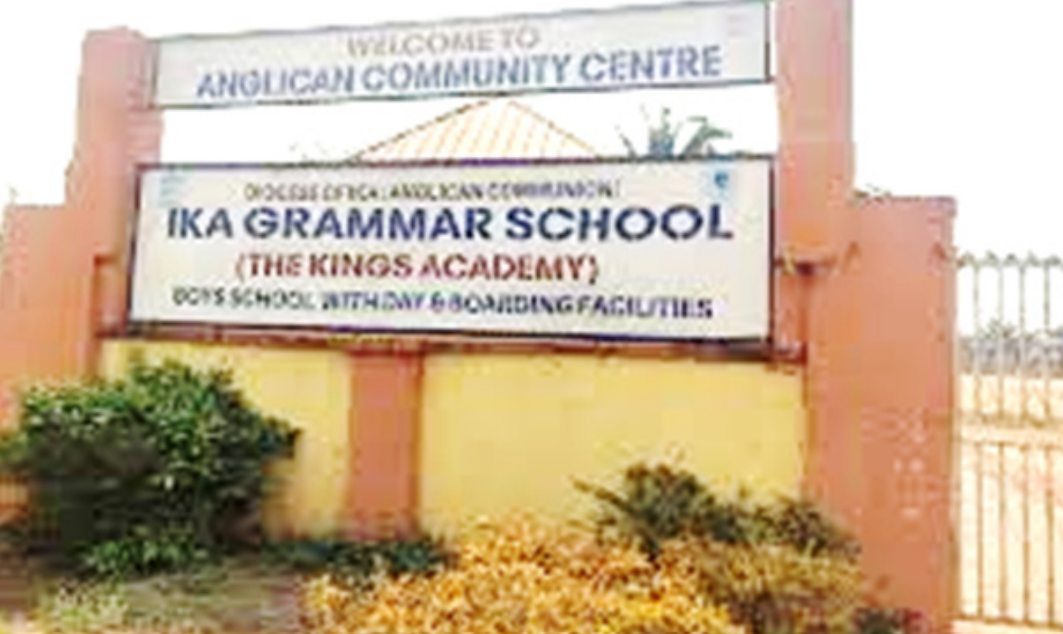
I can recall, quite vividly, that, in 1976, I, along with my co-pupils (Charles Okoukpor Okah and Abel Omaghe, whom we later preferred to call Joe Tinted Abel Omaghe), had chosen Ika Grammar School, Agbor (now Ika Grammar, Boji-Boji Owa) as our preferred secondary school of choice.
Actually, it was O.Boi who persuaded us into that choice.
We had actually frozen on the perception that Ika Grammar School, being the elite school in the Ika nation in those days, was out of reach of the ordinary people, including us, who were rightly considered low on the social standing of society, as poor pupils from a village school.
In fact, long before the examination, all three of us felt, genuinely speaking, that we stood no chance and would only enjoy the rare opportunity the examination venue (the school) offered us to catch a rare glimpse of city life, away from the drudgery of our rustic rural setting.
But O. Boi would have none of it.
By every honest means possible, he encouraged us with pep talks, extra lessons, etc.
And the day came, and there we were with mixed feelings…the fear of the unknown and the hope that, just as O Boi, and our guardian (Pa Omaghe, father of Joe Tinted), who took us to the examination venue, had repeatedly told us, the city boys from urban schools (object of our dread) are beatable.
And that was it.
To cut short a long story, by the time the result was announced, the impossible had occurred and a miracle had manifested….Out of the more than 800 pupils who wrote the examination, the three of us made it among the top six, thanks to O. Boi and his Midas touch.
Our classic success was so outstanding that Pa Omaghe, who is a member of my extended family and was fairly materially well-to-do, had to lavishly entertain us at a high-brow restaurant in town. I recall that all three of us ate rice and beans (a rare meal for us on the lower rungs of the socioeconomic ladder in those good days) served with boiled egg and beef, and later washed it down with a bottle of Coke each- a princely meal for three poor but diligent pupils from a poor rural school!
Elated, Pa Omaghe picked up the bill and paid the deposit (the old term for what is now acceptance fee) for both Charles Okah and his son, Joe Tinted. I humbly declined his offer to pay my deposit for the curious, if not illogical, reason that I did not want to attend the same school as my two elder brothers (Mike and Peter), who acquired secondary education at the same school.
Imagine that! My decision, which disappointed everyone, including my dad, still sounds childish to me today, with the benefit of hindsight.
Happily, we arrived home to an electric reception as news of our miraculous performance had hit town.
It is needless to say that O Boi, that day, had his moment in the sun at the hands and hearts of an appreciative community of grateful, godly souls.
The rest, as they say, is history.
Well, both Charles Okah and Abel Omaghe went on to become first graders at the school, and, much later, top-flight graduates of Agriculture at the now-defunct College of Agriculture, Anwai-Asaba, at which site sits the Dennis Osadebe University, Asaba.
As for me, I went to Elaho Grammar School, Eguaeholor-Isi’, where, together with Hillary Okezie (who was about 12 years older than me), Osazee Agbonkina, Moses Osayemwere, Beatrice Otabor, Patience Egama, Harold Asoleghe (my now late soul mate), we broke the jinx of consistent failure at the secondary school certificate examinations to which the school had been linked.
Today, Charles Okah remains an award-winning teacher of Agriculture and Mathematics at the secondary school level, while I have tried to make some impact in my subsequent engagements as a student, worker and family head. The level of my potency in the engagements is for others to assess, since, as it is said in my place, neighbours and patrons are the best judges of the efficiency of the herbalist.
As for Joe Tinted, well, fate dealt us a cruel blow by way of premature demise:
Joe Omaghe, though dead, left a mark.
Aside from his uncommon lively spirit and conviviality, I hear his academic record at his tertiary school remains a positive reference point, more than 40 years after he left there with an indelible footprint on it.
What am I trying to say? Well, it is as simple as it is short: in all we did and still do, much of it is due to the tensile strength of our foundation at the hands of our miracle-working teacher (laid for us) by the values he entrenched in our hearts.
In sports, O. Boi was inimitable so much so that we were well grounded in such sports as football, volleyball, basketball, athletics and legion others. In fact, not only were we taught the various sports, but we were also trained on how to maintain kits (with the awl that was locally fabricated, we would stitch our football, which, after soaking water, had the evil habit of tearing after exposure to stress under heavy rains), construct and mark the various fields for the various games. He made us have four sizeable football fields in the school and made it mandatory for every one of us to run around the biggest of the fields at least twice every morning and evening before detaching to focus on any one sport of our personal interest.
His hard stance on physical energy-sapping exercises ensured that, unlike our opponents each time we played, we had energy to spare. This was one of the main reasons why, in 1973 L.A. Primary School Alisimie-Agbor, my school – won the treasured Oba Akenzua Soccer Competition among primary schools in Mid-West State/Bendel State (now Edo and Delta States) and was runner up in the contest the following year when it lost to L. A. School, Ogume, (by an incredible 2-9 goal margin) which allegedly hired experienced legs from existing sundry football clubs.
I recall that members of our victorious 1973 team earned full scholarships to the secondary school of their choice, and that was how many of those who might never have actually attended secondary school at the expense of the state government.
The dream team of our school in those days had the likes of Matthew Iwerunmor (nicknamed Flying Millipede because of the speed of his pace which conveyed the false impression do the onlooker that he had more than two feet in action); Jonhbull Osomari, a deadly attacking midfielder; Philip Monye, alias Flying Cat, and Mbeke, second choice goalkeeper, who was renamed Barbed Wire for his ability to prevent the ball going into his net: Osikpor Okobu, a fair skinned leftout whose shots always rumbled like an active volcano in action: Goddey Okobu, the gangling central defender most attackers dreaded to go near: Sunday Ebon, alias Odo, who was called the Cricket for his ability to outwit defenders with the ball in between his half club feet, while moving like a modern day cricket drone: Festus Orogodo Odede, alias Rigogo, who could put off even the most velocious (by which I mean fastest and most dangerous) shots away with his head, Eduewekwu Agbekoma, alias Duru, a fearsome defender, and the inimitable Anthony Osajie, the much decorated captain of the team nicknamed Akprus (our derivation from the word accuracy) on account of the pinpoint accuracy of his passes and shots at goal.
For me, I was not outstanding by any objective assessment, being almost always a substitute playing either at number 7 or 9. Something happened one day that almost eternally doused my love for soccer, the magic sport that the British gave the rest of the appreciative world, and this was how.
On the fateful day, during our long break, we had, as usual, panned into the usual two-friendly foe formation, whereby the best attackers played against the best defenders and goalkeepers for the sake of giving us a near real-life situation of confronting real gifted opponents in the field of play. Of course, our coach and teacher, O Boi, was always leading the defence against our best attackers.
Yours sincerely, tiny in size in comparison to others, had been deployed to the best attacking forward, and as play progressed, I came face-to-face with defender O.Boi.
Initially confused about what to do with the ball halfway between us, I made a dash for it, and, perhaps, without first synchronising my body as we were taught, attempted to dribble past him.
Not wanting to be undone by his ‘boy’, he attempted a defensive tackle in the course of which he had to jump up.
At the same time, unable to control my speed and rhythm after dribbling past him, I fell in a heap, my legs in a very awkward position.
O Boi, in his descent from the jump, saw my plight and tried to avoid the disaster that loomed for me.
But haste was useless as his best and most honest efforts failed to save me.
As he crashed onto my right foot, I heard a brief creaking sound and a rush of adrenaline hurried into my head.
My right foot had fractured, and as I tried to stand up, I wobbled and fumbled back to Mother Earth as if an invisible force pulled me.
Everyone was dumbfounded as the game ended abruptly, and O.Boi had to ferry me home on his bicycle.
At home, my dad and uncle were tamely upset at my incapacitation, but everyone understood that it was a great error, not mischief.
What many would have considered a big setback and a period of great personal pain and inconvenience was made more amenable by two factors: first, both my dad and his junior brother and my guardian did not send me to a hospital. No way; rather, they just resorted to their knowledge of roots and herbs for my personal orthopaedic treatment, every morning and evening.
Secondly, O. Boi, the devoted teacher that he was, made sure that he personally came home daily to teach me what my mates had learnt at school, at which I could not be present because of my fracture.
Yes, every day, as schools closed, he would ride down to my father’s house and teach me, after which he would ask me questions before giving me what we called homework that he would mark the following day.
That was our routine for the roughly four months that I was incapacitated and had to undergo treatment.
After about four months, I had regained full health and returned to the field and the warmth of my teachers and co-pupils.
But do you know what?
During that period, I learnt the virtues of fidelity (by the conduct of O.Boi) and autarky and self-reliance (by the action of my dad and uncle who resorted to traditional variant in handling my orthopaedic case, rather than follow Oyibo medicine).
As for O. Boi, I can go on and on, on the number and identities of the pupils that he turned into competitive football stars, but let me stop here, lest I lose focus on the theme of this write-up.
Not only was O. Boi a good coach, he was equally a gifted player: I remember his creative initiatives as he played in the central defence, thwarting all our efforts to dissect the defence of our friendly foes in the contest. In fact, he introduced us, by the commentary he ran on our games (even when he never trained as a commentator or even a journalist) and the way and manner he ran his flawless commentaries, to such national and international football greats as Pele of Brazil (Arantes Do Nascimento), Baba Yara, Possible Oyi (who was killed during the Civil War), Peter Anieke, Dan Anyiam, the inimitable Thunder Balogun, Rigogo etc.
He made academic commitment our second nature, and sports and extracurricular activities, our undying passion. He was, in addition, excellent with the whistle as a referee.
Dr Boi (as he later became after his studies at the University of Pittsburgh, Pennsylvania, America) was also an excellent agriculturist. Not only did he introduce us to practical modern agriculture as a subject (to augment the rudimentary cultural variant we had learnt as children and wards of farmer parents and guardians, as proud inheritors of the rich but ignorantly derided legacy of subsistence farming), but also had us well honed in practical farming: we learnt how to do fencing, map out land for various crop farming activities, as well as how to harvest and store farm produce for value addition and enhanced income.
I recall that aside from leafy vegetables, O. Boi taught us how to cultivate yams, cassava, pineapple, poultry management and the principles of dieting for health.
Outside of basic academics, sports and agriculture, O. Boi was also an expert in skills development and human resource empowerment. He had us taught weaving (especially of basket), basic principles of aviation (by the development of kites which we flew to our endless elation), automobile prototype development (via the design and construction of models of automobiles, using wood and cocoyam stem), and encouraged us to acquire viable skills including blacksmithing (which I learnt from my dad) of aged and blunt weeding cutlasses as well as the use of nails and spoke (to produce locks and the keys) as well as sponging technology (by the harvest and streaming of the then abundant willows locally called Ogan) and much more than I can readily remember.
O Boi taught us the virtues of human resource management via his consistent monitoring/supervision of all of our activities. He was always at parents’ homes when their children either failed to attend class or behaved moodily at school. At night, irrespective of what the elements had to offer, O. Boi, on his bicycle, would go round the entire community, stopping at each child’s home to inquire after his/her health and to establish whether or not he/she was at the study, revising the lessons he had learnt that day at school. He was such an icon in mentoring that whenever our external examinations were near, he would sleep in school with us for weeks preceding them (examinations) for us to remain focused on the task at hand. I remember that he occasionally bought us biscuits, groundnuts and Glucose D to encourage us each time he felt he was driving us too hard, too fast, too intensely.
Beyond all else, Okoro was a moral icon and a symbol of not only knowledge and skills but also overall discipline. By deeds and words, he taught us the principles of honesty, sincerity, proactiveness, humility, respect for others, self-respect, autarky, patience and perseverance, doggedness, team play, self-restraint and sacrificial attitude, and the fear of God.
What else can I say?
Okoro’s inimitable character was not just infectious among his pupils but among the entire community, which, in recompense, deservedly deified him and his colleagues.
Yes, like the other teachers of those good old days, 0. Boi never paid rent, never bought foodstuff, or anything else that caught his fancy (he was modest about his needs): the community ensured steady free supplies. He was a deserving demi-god who did not, on account of the respect that he had earned, share any apartment, toilet, kitchen or bathroom with anyone else. He never paid rent.
In every good way and for every good cause, O. Boi mentored us for enduring maximum positive effect. It was for this reason of enduring societal endearment to the teacher that, years after I initially lost contact with Boi and having gone through secondary school that I chose, after I was made the offers, to be a teacher rather than work in the Nigerian Customs Service (at its then regional office in Sapele) and what was then the National Electric Power Authority (NEPA), at Ogorode Power Station, Sapele, to be a teacher! That was in 1981, after my secondary education at Elaho Grammar School, Eguaeholor- Isi’ in the then Orhionmwon Local Government Area of the defunct Bendel State.
That was how I briefly taught Agriculture, English Language and Literature in English at Ekuku-Agbor Grammar School, Ekuku-Agbor, before I left to read Mass Communication at the defunct Ogwashi-Uku Polytechnic, which was established by the administration of Prof. Ambrose Folorunsho Ali, former Dean of Faculty of Medicine at the University of Benin (Uniben) and world-famous Professor of Morbid Anatomy.
The Polytechnic was later phased out by the administration of Col Jeremiah Timbut Useni, who also extended the same cruel fate to Ozoto Polytechnic, Ozoro, the College of Education, Igueben, and several others that the Ali administration had established to train middle-level manpower required for the sustainable development of the now defunct state.
I still recall Col. Useni (to whom I had drawn unusually close out of curiosity typical of the trainee reporter) as he yelled at Dr Abel Guobadia, then Commissioner for Education in the defunct Bendel State (who later became Nigeria’s envoy to South Korea).
“Abel,” he said, calling the Commissioner by his first name, “close Ogwashi-Uku and Ozoro polytechnics. You have Auchi Poly, Ozoro Polytechnic and Ogwashi Uku, Colleges of Education, Agbor and Igueben. How do you fund them all, and what do you need all of them for? Close Ozoro, close Ogwashi-Uku Uku”.
That was it.
In those days when the military junta’s words were sharper than an edged sword, that was how Useni ‘s casual words acquired the potency of a state policy and the associated poor fate made to envelop institutions not initially mentioned by the military governor.
Ironically, some three years ago, when I met Useni, by then aged and frail, at a traditional event in Asaba, his host and our mutual friend, Chief Patrick Isioma Goodluck Onyeobi (who became Head of Service and Secretary to State Government under Useni) restrained me from asking him his retrospection regarding his rash 1983 action to shut thriving tertiary schools designed to arrest, ab initio, the syndrome of lack of opportunity for higher education, which undeservedly affected tens of thousands of Bendelites.
Well, enough of both my friends (Onyeobi and Useni): both have now gone the way of all flesh.
Now, back to my story of the lost teacher, and how my dear teacher, O. Boi, helped lay the foundation that helped move us ignorant villagers from the bulrushes to a modest status in life.
But how time flies and things change!
The last time I discussed with my teacher, O Boi, age, quite understandably, had caught up with him, and though he remained eternally proud of us, his former pupils, he remained totally in pain and regret at what has become of our once potent education sector.
And do you know what? As we discussed the issue of the sag in the potency of our education system, I sought to know from him how we could, in effect, reverse the trend.
And he spoke, asking an effective question: “How can you successfully reinvent education without adequate provision for the teacher, its symbol and the subsequent creator of human resources, the single most important factor in any society and determinant of the tempo and quality of its development?”
I had no answer but merely rued our needless loss as I resolved to go in an obvious, futile search for the lost teacher.
I shuddered.

