


BY RITA OYIBOKA
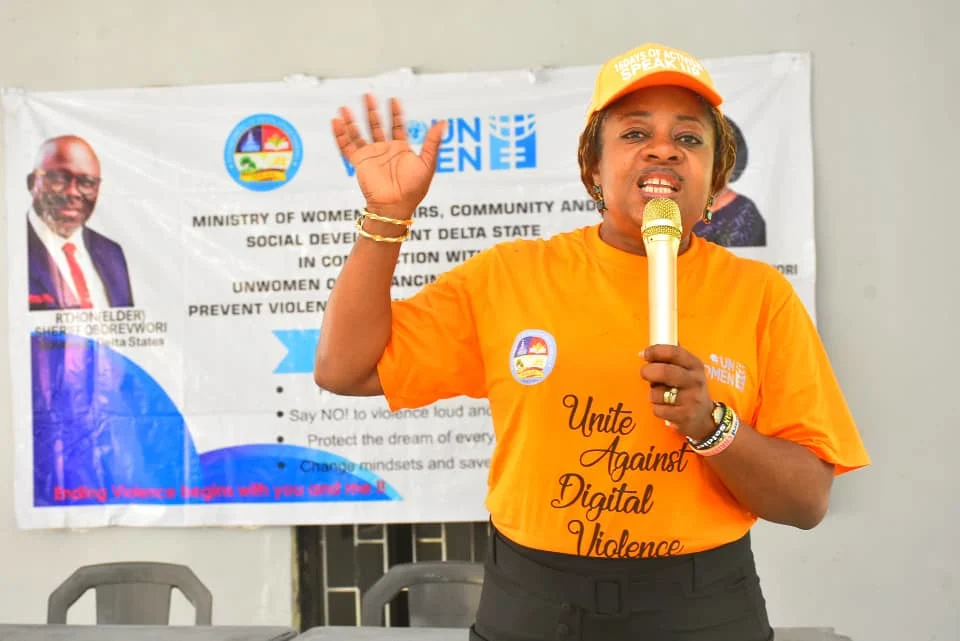
In a decisive move to curb the tide of gender-based violence (GBV), the Delta State Ministry of Women Affairs, Community and Social Development, in partnership with UN Women, has engaged community leaders and stakeholders on proactive strategies to prevent violence against women and girls.
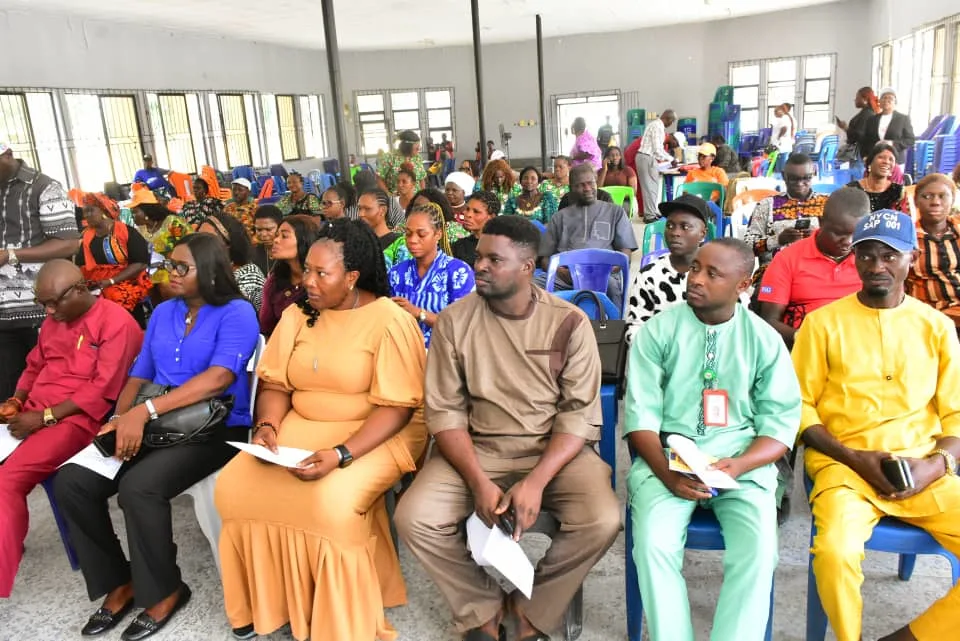
The engagement took place yesterday during a town hall meeting held at the Ughelli North Local Government Secretariat Hall, Ughelli, drawing President-Generals, women and youth leaders, and other key community stakeholders from across the area.
Speaking at the event, the Permanent Secretary of the Ministry, Mrs Oghenekevwe Agas, said the state government was shifting focus from reactive responses to deliberate prevention of GBV by tackling the problem at the community level.
She noted that most cases of gender-based violence occur within communities and are often sustained by a “conspiracy of silence,” where perpetrators are shielded, and victims discouraged from speaking out.
“Gender-based violence is unacceptable in Delta State. There are laws in place, and perpetrators will be punished. But our priority is prevention, so that these cases do not occur at all,” Agas said.
She stressed that community leaders occupy strategic positions of influence and must take ownership of ending harmful practices, urging them to openly reject violence and refuse to conceal offenders.
Agas further highlighted the existence of Sexual Assault Referral Centres across the state, including facilities in Ughelli, Warri Central Hospital and Asaba Specialist Hospital (ASH), where victims receive integrated support services involving medical personnel, law enforcement officers, social workers and legal practitioners.
She clarified that under the law, rape is not limited to vaginal penetration, noting that any form of penetration using fingers, objects or other body parts constitutes sexual violence and is punishable under Delta State law.
Also speaking, the Vice Chairman of Ughelli North Local Government Area, Chief Meg Atano, commended the Ministry and UN Women for taking the campaign to the grassroots, describing violence against women and girls as a threat to families, communities and future generations.
She called for sustained collaboration among government agencies, traditional institutions, religious bodies and civil society organisations to challenge harmful cultural norms and promote values of respect, equality and non-violence.
In her keynote lecture, the Executive Director of Working Fingers International Initiative, Ambassador Eris Jewo-Ibi, spoke extensively on frameworks for preventing violence against women and girls, while another facilitator, Kadara Mumirat, educated participants on the legal instruments available to combat GBV.
The event featured interactive sessions, allowing stakeholders to ask questions and share community-level challenges and solutions.
In a post-event interview, UN Women representative, Ambassador Gloria Umukotete, described the town hall as a strategic follow-up to the 16 Days of Activism Campaign carried out between November and December 10.
She urged community leaders to speak out, ensure cases are not concealed, and allow justice to take its full course, stressing that the punishment of offenders serves as a deterrent to others.

