


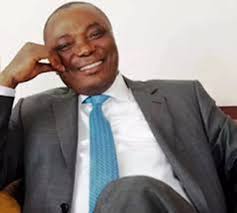
WAS settling down to pen this tribute to Senator Peter Onyelukachukwu Nwaoboshi who was also known as the Oracle of Delta Politics when news filtered in that a former deputy Governor of Delta State, a gentleman in every sense of the word, Sir Benjamin Elue has also passed on at the age of 85. This development got me thinking on life generally and public service and the place of legacy. This made me to reflect deeper on how the song writer captured the reality of man’s mutability in the following traditional Victorian-era hymn “Fading Away” with lyrics by Horatius Bonar, famously featuring the chorus “Only remembered, only remembered/ Only remembered by what we have done”. The hymn focuses on leaving a legacy through actions, faith, and spoken truth.
Fading away like the stars of the morning,
Losing their light in the glorious sun
Thus would we pass from the earth
and its toiling,
Only remembered by what we have
done.
Chorus:
Only remembered, only
remembered,
Only remembered by what we have
done;
Thus would we pass from the earth
and its toiling,
Only remembered by what we have
done.
- Shall we be missed, though by
others succeeded,
Reaping the fields we in spring-time
have sown?
Yes, but the sowers must pass from
their labours,
Ever remembered by what they
have done.
- Only the truth that in life we have
spoken,
Only the seed that on earth we have
sown;
These shall pass onward when we
are forgotten,
Fruits of the harvest and what we
have done.
- Oh, when the Saviour shall make up His jewels,
When the crowns of rejoicing are
won,
Then shall His weary and faithful
disciples All be remembered by what they
have done.
For some reasons, this traditional Victorian hymn has been reserved for requiem Masses and gatherings related to obsequies but because of the theme of the place of legacies in telling our stories when we are no more physically occupying the offices we were known with, I do most sincerely recommend it as a daily recitation for deep meditation in the lives of all occupants of public offices.
The central theme of the hymn however appears to be at a dialectical conflict, presenting an ultra-cultural contradiction with the obtainable traditions of never speaking objectively about anyone once such a fellow has been pronounced dead. The axiom of never speaking objectively about the dead has left us with a society of hypocrites, pretenders and those committed to half-truth if not mass deceit. We often consider it futile making public the other sides of those who have now joined the ancestors. Some will tell you that they are no longer in a position to exercise the right of reply in cases of being wrongly accused. The society is the biggest loser as we do not have enough opportunities to learn from the lived experiences of those who had gone ahead of us. Some of us also, in error, continue on the path of travesty and tragic trajectory in public service.
On the other hand, William Shakespeare in Julius Caesar (Act 3, Scene 2) engraved that
“The evil that men do lives after them; The good is oft interred with their bones” This was as spoken by Mark Antony in his funeral oration in honour of Caesar. It means that people’s wrongdoings are remembered long after their death, while their good deeds are often easily forgotten. The greater part of last week was devoted to tributes to the legacies of Senator Peter Onyelukachukwu Nwaoboshi. He rose from a modest community based lawyer to an opulent politician driven essentially by material acquisition. The tributes were elaborate and as will often be said all well-deserved just as the requiem mass at St Augustine Catholic Church Igbuzor helped to bring together the political class in Delta State.To many, what transpired were mere ceremonial rituals as the Oracle himself had concluded his evaluation of life as vanity upon vanity which he summed up as all vanity.
The public reflections, uttered only days before his sudden death remain remarkable as a moment of truth that needs to be better appreciated by those of us still living. It was a rare moment of sincere sober reflective evaluation of life’s essence in the face of man’s pursuit of material possessions. They were reflective confessions that belong to that rare category of deep philosophical truth. And confessions, especially from men long accustomed to power and abundance, have a way of unsettling the comfortable myths of our age. Only days before his sudden collapse and death, Nwaoboshi offered what many have come to describe as a moment of epiphany – unguarded, unscripted yet unusually philosophical for a political culture accustomed in bravado rather than introspection. He spoke not of political enemies or plans towards 2027 or projections towards 2031 but of houses – many houses – spread across Nigeria and beyond. The core of his testimony was not the scale of his acquisitions but the emptiness they concealed. His words, “With all these things, I was in one room,” reducing a lifetime of accumulation to a single, stark image of concealed inner regrets.
He left us with a rhetorical question that followed (Does it make any sense to you?) That question was not merely addressed to his immediate audience. It rather was an abiding sermon addressed to a society that has prioritized material accumulation far above sincere committed service and community development. We live in a generation that has normalized excess as success. We are left with lingering rhetorical question that exposes the hollowness at the heart of unchecked pursuit of materialism. Most of the choice property in elite locations he made reference to were built from proceeds of Federal Government and NDDC contracts to connect communities in Delta North with motorable roads. One of such road projects was supposed to connect Onicha Ugbo and Ubulu-uku. Same goes for some parts of Okpanam, his mother’s birth place. We must come to a point where we realize that public office is for public good not for greed and primitive accumulation of material possessions that leaves us with eternal hollowness and last minute confession without the much needed restitution.The timing of his realization of the vanity of uncouth materialism elevates it from a personal confession to a public moral event. Shortly after articulating this clarity that dawned on him a bit late, life withdrew. There was no long interval between insight and exit, no opportunity to domesticate the truth or soften its edges. Here was a man who had traversed the full arc of Nigeria’s material imagination: mansions in Asaba, Abuja’s most exclusive quarters of Maitama (for the ‘big boys’ in town), Lagos, Port Harcourt, even London; homes fortified, homes admired, homes envied while communities he represented politically were the poorer for it.
It was not a sermon against wealth per se but an exposé of its false promises when wealth becomes the driving essence and primary principle of life. In a country where public office is too often seen as a fast track to private opulence, his words cut against the grain of our civic culture. They disrupt the quiet consensus that the measure of achievement is how many houses one owns, how impregnable the walls are, how far the assets stretch across continents.
What makes Nwaoboshi’s reflection compelling is its timing. These were not words spoken at the beginning of life, when ambition is still untested, but near its end, when pretenses lose their utility. He was presenting an unedited valedictory and obviously sounded troubled and needed to preach that sermon if it could grant him some sense of inner peace. In that sense, the reflection functions as a moral audit for us all. It asks what remains after the applause fades, after the titles lapse, after the keys to multiple houses lie unused. The answer he offered was sobering: possession without presence is emptiness; ownership without enjoyment is futility; accumulation without purpose is noise, not meaning. Life without a people centered legacy is empty, futile and vane.
The tragedy is not wealth itself. Societies need prosperity and individuals deserve comfort. The tragedy is the collapse of moral compass and ethical proportion, the inability to ask how much is enough. Adieu the Oracle of Delta politics. May those after you learn from your last minute realisations on life and its primary essence of service rather than void opulence. Hoping that you still can have a taste of the peace and joy that your material acquisition here on earth failed to offer. Thanks essentially for validating the theory of the vanity of a life based on materialistic pursuit.

