BY RITA OYIBOKA
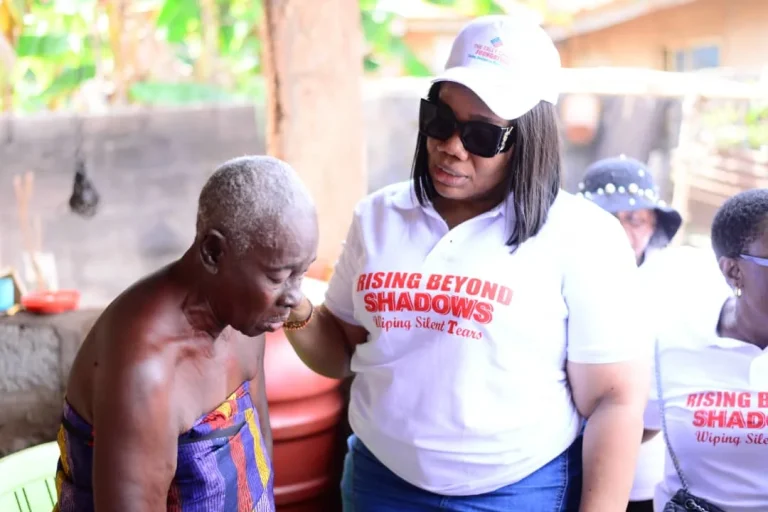
The sun was burning down on the earth with the sweet smell of hot garri filling the air and tears of widows, but not tears of those freshly mourning the loss of their husbands. These were tears of women who had been seen, remembered, and touched by kindness, as the team of the Sally Charity Foundation touched down in Atuma, the North-North axis of Oshimili North Local Government Area of Delta State.
Here, in a community where most women survive by farming cassava, frying garri, buying and reselling it under harsh conditions, hope arrived quietly yet powerfully.
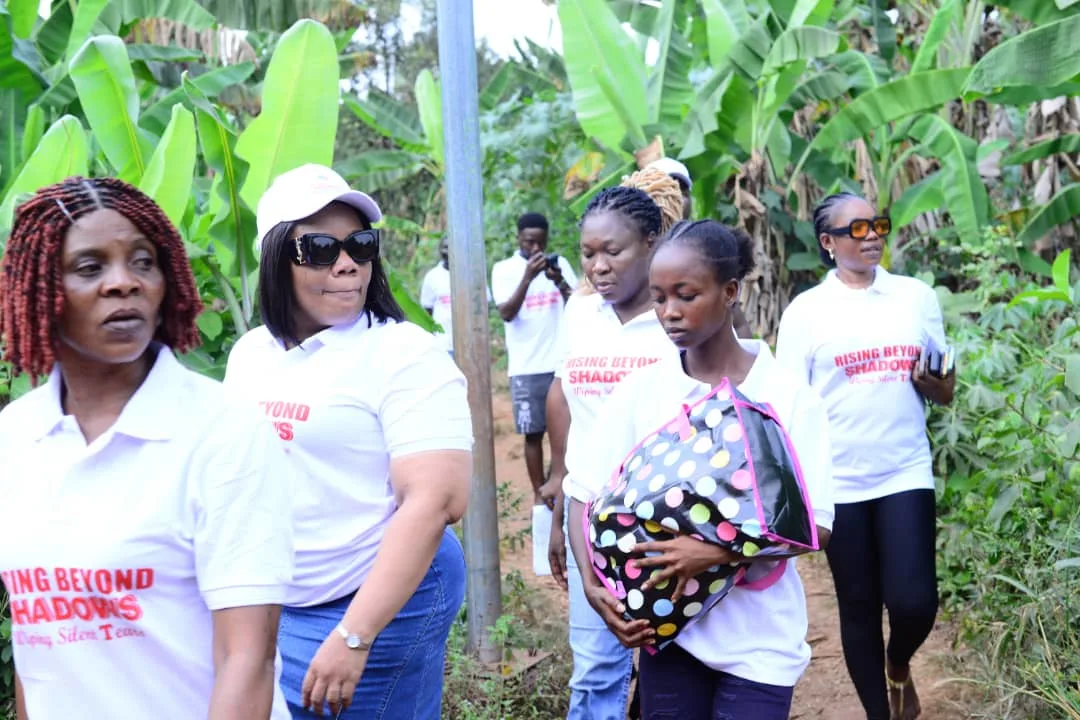
The outreach, themed “Rising Beyond Shadows: Wiping the Silent Tears,” was not just another charity visit. It was a deliberate, door-to-door intervention, flagged off on the 17th of December and carried out between the 18th and 19th, targeting 100 widows across communities in Oshimili North.
It was led by the Special Assistant to the Delta State Governor on Women Mobilisation, Widows Coordinator for Oshimili North, and founder of the Sally Charity Foundation, Mrs Sally Anyadike, a woman who has made it clear that widowhood should not be a life sentence to neglect.
This was not Anyadike’s first foray into the fragile world of widows. Last year, she empowered 15 widows in Ibusa. This year, she scaled up, bigger footprint, broader reach, harder realities. And those realities were written plainly on the faces, homes, and stories of the women encountered.
At the flag-off of the Foundation in Asaba, Anyadike set the tone, her voice firm and resolute.
“For too long, widows in our communities have carried pain in silence, pain that no one sees, pain that no one hears. Today, we say no more. This foundation is not just about giving items; it is about restoring dignity and letting these women know that they matter.”
That conviction followed the team into the narrow paths, broken houses, and quiet courtyards of Oshimili North.
In Atuma, Rose Mogbo’s story stood out, not because it was dramatic, but because it was painfully familiar. She sat forlorn in front of her house when the team arrived, her posture heavy with resignation. She is a farmer who returned to her father’s house after her husband died. Loss had pushed her backwards in life.
Yet, as the team prepared to leave after receiving the package of foodstuffs, condiments, toiletries, among others, Rose was suddenly animated, excitedly telling her neighbour she never expected such support. Happiness spread across her face like sunlight breaking through harmattan haze. It was a small moment, but it mattered.
In another corner, Augustina Okwudi stood at the zinc gate fencing her house, holding it open for the team as they walked in. The make-shift gate creaked; the zinc fence told a story of struggle. When she was handed her package, she broke down in tears. Comforted by Anyadike, she whispered her gratitude, repeating prayers under her breath, prayers for the woman who had remembered her.
“God bless you, my daughter,” she said tearfully. “May your children never lack.”
The outreach moved on to Ukala, where hardship wore heavier faces.
Nwanne Nnabundu of Ward 10 lives in a house with half its louvres missing and ceilings broken down. She has five children, three with her, two living with her sister. One has graduated and is idle, another is in secondary school, and the rest are in primary school. Poverty here is layered: broken infrastructure, stalled dreams, uncertain futures.
Then there was Obodoagwu Rose, 82 years old, from Ward 6. Frail yet composed, she lifted her hands in prayer, saying simply, “Chukwu gozie unu”, God bless you. Sometimes gratitude does not need many words.
Chukwuka Nwanne’s life reads like a ledger of endurance. A 39-year-old widow with seven children, she lost her husband three years ago. Three children stay with her; the others are scattered among relatives. Her first child, 19, is at the University of Delta (UNIDEL), Agbor, funded by her brother. The second is learning tailoring; her education was cut short at primary six. They live in a rented house with no ceiling, rent-free but dignity-free. She works on other people’s farms to earn money, the same work her husband once did before death interrupted everything.
In Akwukwu-Igbo, pain took on harsher forms.
Elizabeth Mokobia of Ward 1 was perhaps the most heartbreaking. Her knuckles were dusty and ashen, worn down from years of walking on all fours, her knuckles substituted for heels as her once straight body now remains perpetually bent. She has no children. Tears flowed freely as the team listened. Her siblings are her only lifeline. Here, charity was not symbolic; it was urgent.
Nearby lived Nonyere Odu, in a small wooden shack barely fit for animals. She eats, urinates, and sleeps in the same cramped space. Grains of rice lay scattered on the mud floor. Under the burning sun, she stayed indoors. Mentally unstable, with five children in Calabar still too young to care for her, she survives on occasional kindness from neighbours.
Abraham Joy, with ten children, one deceased, now shoulders the burden of a grandchild left behind by her late child. None of her children has a job. The arithmetic of survival here never balances.
In Ebu, the outreach encountered Roseline Biachi, whose story shifted the air. Blind, cheerful, and resilient, she began to dance immediately after receiving her empowerment package.
“I cried this morning and prayed,” she said. “Just like Paul and Silas. I am blind, but I do everything myself. I cook, I clean, I take care of myself. Nobody helps me.”
Her house was clean. Her spirit, unbroken. Her joy, contagious.
Then came Catherina Patrick. She has no house. By day, she stays in a dilapidated mud shack; by night, she moves from place to place, depending on neighbours’ goodwill. This year alone, she lost her two grown children, months apart. She survives on menial farm work and the occasional plate of food from strangers.
Catherina Chibogwu’s feet were yellow and rotten. According to her daughter, she stepped on poison days earlier. They tried local remedies, mustard seed medicine in a bottle, now finished. There is no money for more. Her suffering was visible, urgent, and untreated.
In Okpanam, Dumebi Ofili is 40, with four children aged 15, 10, 9, and 7, plus a grandchild. Her first child became pregnant by ‘mistake’; the father disappeared. She sells snacks in a government school, using ₦5,000 capital to make 15–20 balls daily. On a good day, she makes ₦2,000. She buys cheap bamboo, makes her own fire, and carefully manages oil so the snacks do not soak too much. Before the outreach, she slept on the floor with her grandson. She was given a mattress, a pillow, and ₦20,000 to support her business.
In Ibusa, Beatrice Mogekwu was being bathed by her guardian when the team arrived. The guardian received ₦100,000 to start a business, with a promise from the foundation to return and monitor progress. Accountability was built into compassion.
Then there was Ifeoma Adigwe, whose house had collapsed on her multiple times. Her in-laws abandoned the building because she refused to vacate after her husband’s death. Her children, she said quietly, do not check on her.
“Sometimes I ask God if they are still alive,” she confessed.
When she received her package, she was so happy she almost followed the team.
Throughout the outreach, women clasped Anyadike’s hands, praying openly.
“May God raise helpers for you,” one widow said. “You will never know sorrow or death,” another added. Many of the women had their rent paid. Some received support to restart or grow small businesses. Others watched the burden of their children’s school fees lifted from their shoulders.
Beyond the cash, beyond the transfers and envelopes, beyond the food items was something money will never buy. They felt seen. They felt remembered. They felt the solid presence of people who genuinely cared, a team that did not rush in and rush out, but stayed. A team that laughed with them, cried with them, held their trembling hands, listened patiently to their stories, and treated their pain not as statistics, but as human lives worthy of dignity and compassion.
In a brief interview, Anyadike said, “We’re providing not just food, but crucial necessities. But the best way to help a widow is to counsel her first. Even when you take her out of poverty, the grief remains. Losing a husband is a shock you don’t recover from easily.”
The foundation’s approach aligns with Governor Sheriff Oborevwori’s MORE agenda, particularly meaningful development and opportunity for all. Executive Assistant to the Governor, Hon Joseph Ijeh, described the initiative as unprecedented. “What she’s doing is first of its kind since entering politics,” he said, noting he had mentored Anyadike since 2019.
The Odogwu of Ibusa, High Chief Ositadinma Okonkwo, offered prayers and blessings, grounding the initiative in communal approval and traditional legitimacy.
Funding remains a challenge. “It’s self-funding,” Anyadike admitted. “No investors. No sponsors. It’s passion. I cannot hear that someone is hungry, especially a widow, and look away.”
By the end of the two days, numerous widows had been reached across Oshimili North, Atuma, Ukala, Akwukwu-Igbo, Ebu, Ugbolu Okpanam, Ibusa, and beyond. But the real metric was not numbers. It was posture. Women who had bent under years of neglect stood a little straighter. Some cried. Some danced. Some simply said thank you and meant it with their whole being.
The Sally Charity Foundation did not erase their pain. It did something more sustainable, it acknowledged it, addressed it, and refused to let it remain invisible.
As the dust settled and the garri smell lingered in the air, one thing was clear: the shadows had not vanished completely, but light had finally entered. And for widows who had lived too long unseen, that light was everything.