


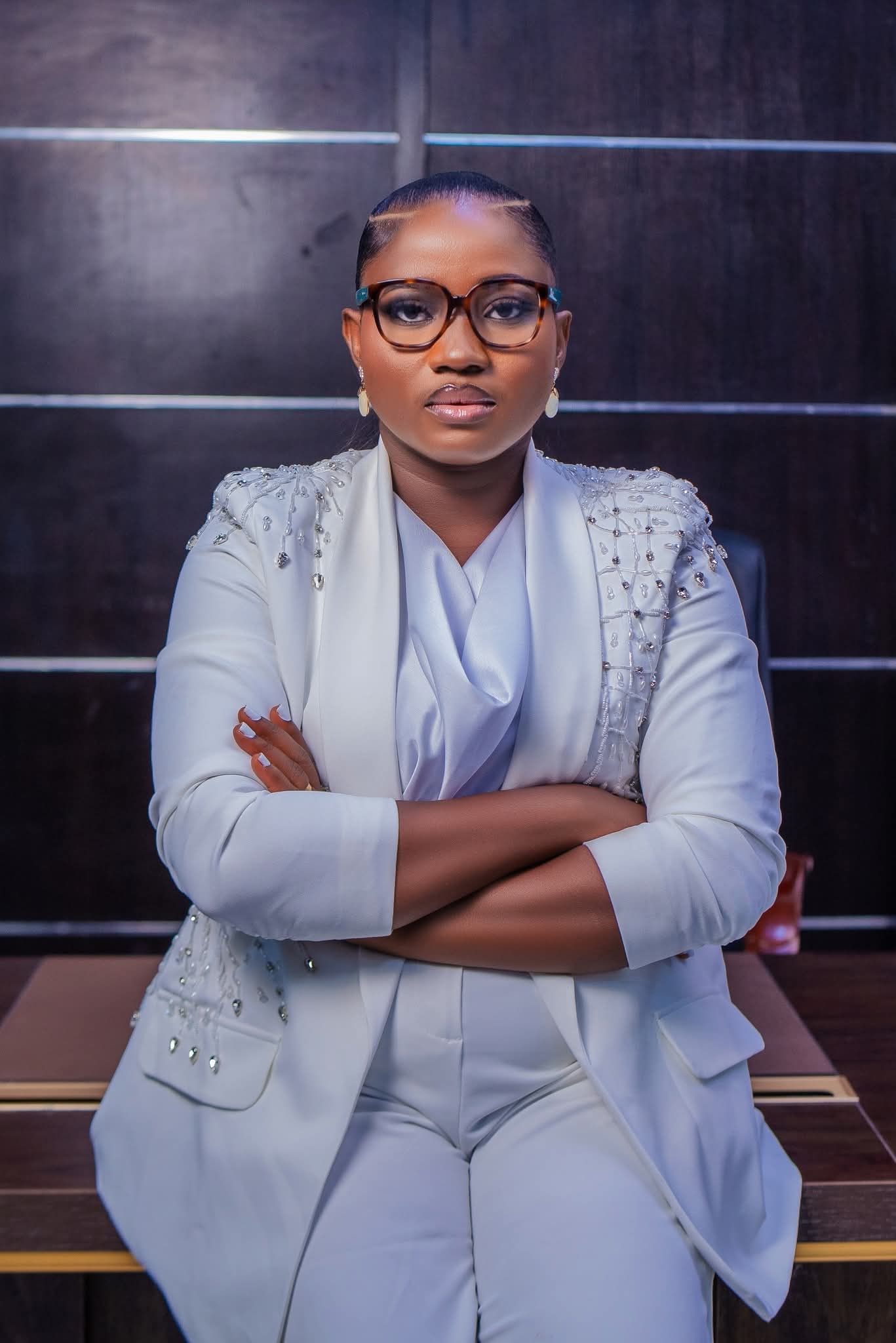
From working for free at a radio station in Abuja to shaping the public image of political leaders and founding her own media firm, Avata Media, Veronica Gwam’s story is one of grit, vision, and purpose.
A woman who built her career on hard work rather than handouts, she turned every unpaid role into a stepping stone, proving that consistency still trumps connections. Today, she wears many hats: Senior Special Assistant (media) to the Delta State Government, entrepreneur, faith advocate, wife, and mother.
In this interview with Rita Oyiboka, she talks about her early life, career journey, the challenges of working in politics, her faith-based initiative, and the legacy she hopes to leave behind.
Can we meet you, ma?
My name is Veronica Gwam. I am from Cross River State, but by marriage, I am now a Deltan, married to an Oshimili South man.
Tell us about your early life. What kind of upbringing shaped the woman you’ve become today?
I came from a family where we were mostly independent. As children, we were taught to stand up and go for what we wanted from an early age, and that formed most of my resolve.
When I finished school, I ventured out. While most of my classmates were waiting for those uncles who promised jobs and all of that, I didn’t wait. I just moved out and started working.
What did you study, and how did your education influence your career path?
I studied Sociology at the University of Abuja. I graduated at the age of 23, and then I went for my National Youth Service (NYSC).
While I was serving, I started working. After service, I did a lot of jobs. I worked with a couple of people for free; I actually volunteered to work without pay.
What kind of job were you doing at the time?
When I finished NYSC, as an athlete at the time, I was recruited to join the team to train primary school children in athletics. I did that for a couple of months, then left.
After that, I started working at a radio station in Abuja. When I started, they told me they would not be able to pay me at all.
Interesting. Did you have any prior media experience before joining the station?
Yes, I started in church, basically while I was serving. Everything actually started in church. I began by managing my church’s social media pages. My pastor had a lot of programmes, and still does, so I volunteered to manage the social media for those programmes.
Even when I was with the children’s athletics club, I created and managed their social media pages, all voluntarily. They didn’t pay me, but I did it to gain experience.
You took on unpaid roles early in your career. How did you manage to survive during that period?
At that time, my family was based in Abuja, so I was still living at home. The money wasn’t the drive; the experience was. I understood how Nigeria works: you need to have something to offer before you can get something in return. In Nigeria, because of the educational system, most employers don’t really focus on your degree; they focus on your experience, which carries more weight. So I needed to gain that experience. It wasn’t that I didn’t like money, but I knew that what I needed most then was experience.
Did your hard work at the radio station ever get recognised?
I started working, and anyone who knows me knows that once I agree to do something, I give it my all, as if I’m being paid a billion naira. I don’t work based on the level of the offer; I work based on my level of commitment, which is always 100 per cent.
I remember resuming work by 7 a.m. and sometimes closing at 10 or 10:30 p.m., only to resume again by 7 a.m. the next morning. I’d wake up by 5 a.m. to get ready because the first programme started at 7 a.m.
My boss, then, Mr Nelson, was so relieved when I joined. After the first month, despite telling me I wouldn’t be paid, I got paid. You know, when you join, they take all your details for record purposes. I went to him and said, “Sir, I don’t know if this was an error, but I received a salary.”
He said, “Really? How much?”
I told him ₦20,000. He was shocked and said, “You’ve been working like this, thinking you wouldn’t be paid?” He was genuinely surprised and told me, “It’s your money. Go ahead and take it.”
While I was there, I heard there was an opening in the Senate. A new Senate President of the 8th Assembly had just emerged and was setting up his media team. I applied, and as God would have it, I got the job.
When I told my boss I was leaving, he cried. I froze, seeing a man shed tears. He told me, “I don’t think I’ll ever find anyone like you again.” He was emotional but wished me well.
That’s quite a leap, from a radio station to the Senate. How did that experience shape you professionally?
I moved to the Senate, and bigger opportunities came with bigger challenges. But those challenges built me. At the time, the then Senate President, Senator Bukola Saraki, was going through several court battles with the Code of Conduct Bureau (CCB).
We had to manage both the Senate’s image and his. It was the first time the Nigerian Senate had a social media presence; we created that. We were managing both him and the Senate’s online image while dealing with the court cases.
All that training built me. My team lead made sure we wrote articles weekly to control our narrative. That improved my writing skills immensely, and it later proved very useful.
You were part of the first team to establish the Senate’s social media presence. Why do you think social media has become indispensable for public figures today?
Social media is the new marketplace. If you’re not on social media, your market will not sell. Before, traditional media, TV, radio, and newspapers ruled. But how many young people still watch TV?
The world has become fast-paced. People get their news on their phones while on the go. If you’re still struggling to have a social media presence, the world will move past you. That’s why everyone, including the government, is catching up.
Fast-forward to today, and you now run your own firm. Tell us about Avata Media and how it started.
I’ve always had the idea of running my own firm. I’ve always known there’s something unique about me. For instance, when I moved to Delta State, Former Governor, Sen (Dr) Ifeanyi Okowa, my boss, became the first governor in Delta State to have an active social media presence. So, I’ve always worked with first-timers.
I finally established my own media company, Avata Media, in March 2024. It hasn’t been easy, but God has been faithful.
We’re still in an environment where people don’t fully understand the importance of new media. They need it, but don’t see why they should pay for it. Meanwhile, they’ll spend more money on something less valuable.
Those who do understand it often expect Lagos or Abuja standards, which is exactly what we’ve brought to Delta. Our standards can compete with any brand in Nigeria or even Africa, the value and excellence we deliver. But sometimes, clients undervalue us. Yet, we must keep the business running, pay staff, buy equipment, and cover bills. So sometimes, we accept less profitable jobs just to keep things afloat.
Do you work solely with politicians, or do you handle clients from other industries as well?
We work across sectors. Though politics forms a major part of our clientele, we’ve also done work in hospitality, health, construction, real estate, and architectural firms.
Media can be both a tool for information and propaganda. How do you balance truth with loyalty in politically sensitive environments?
Not really. The challenge is that, as a media professional working with political leaders, your personal opinion takes a back seat. For instance, even with current issues concerning Nigeria and Donald Trump, I may have my opinion, but as an appointee of the Delta State Governor, I cannot air it publicly.
I must align with my principal’s stance. Whatever I post could be interpreted as his view. That’s why many government media aides write, “Opinions are mine,” but even then, people still link it to their boss.
So, to avoid conflict, it’s best to stay neutral publicly and focus on the job.
Also, it’s not difficult to balance truth because we only portray what our principal is doing. And these are verifiable facts. If we are telling you that Governor Sheriff has done a particular road or bridge, best believe that structure exists and it is verifiable. So as for me I cannot relate to pushing propaganda because all my principals say what they do and they do what they say.
All your ventures have been in media and communications. Have you tried anything outside that?
Yes. I have an initiative called Avata Heart for relationships, which is focused on building healthy relationships. We even have a support group for women in young marriages and an online community for both singles and married people. It’s faith-based and entirely Bible-backed.
That’s one passion I plan to expand; it may even take the front seat while media takes the back seat one day, by God’s grace.
What long-term goals drive you, both for Avata Media and Avata Heart?
Yes. Purpose is my biggest drive. I plan to grow Avata Media into a firm that mentors young people and builds them into responsible men and women in society.
For Avata Heart, I want it to become a platform that strengthens families and relationships. The health of society depends on the home. Healthy families create healthy citizens.
I dream of having a TV programme, a radio show, and a podcast, plus outreach programmes in rural areas focused on family and social relationships, not just medical missions. It will cut across all forms of relationships, romantic, parental, sibling, workplace, and community.
You currently serve with the Delta State Government as a Senior Special Assistant on media. How do you project the governor’s image in this digital era?
Everyone now gets their news on social media. We project the governor across all platforms, Facebook, Instagram, X (formerly Twitter), and even TikTok. The Delta State Government also has an official TikTok page.
We use everything: pictures, videos, graphics, and infographics. If you follow national dailies, you’ll often see the governor’s reports there.
Though I work more behind the scenes now, we ensure content is accurate, visuals are right, and narratives portray the governor in the best possible light.
How long have you been in the media space, and what achievement stands out most for you?
About 12 years now. Honestly, birthing my own company. I’ve spent the best part of these 12 years building other brands. Giving myself that same attention to build mine is my biggest flex.
There’s often a stereotype that women in media use sexuality to advance their careers. What’s your view?
People say such things based on their own experiences, like blind men touching different parts of an elephant. The part they touch is what they describe, but it’s not the whole picture.
Yes, sexual harassment happens, especially when I was single, but I never succumbed. I understand how the system works: it’s garbage in, garbage out. When they’re done with you, they move on to the next “new face.”
So, what’s the point? I’ve never compromised myself, and nobody can claim otherwise.
Those who do it probably have their reasons, but it’s not fair to say all do. Just like not all men are bad, not all women in media sleep their way up. Some of us work hard to earn our place.
Twelve years in media must come with lessons. What mistakes have shaped you along the way?
I think this is more of a character flaw than a mistake, I’m too emotional. Even when I see red flags, I still give people chances, staff, clients, anyone. I always think everyone deserves an opportunity.
It’s affected me, but I don’t regret it, because someone once gave me a chance, too. Still, I’d advise people to follow their instincts and the leading of the Holy Spirit.
When you’re not working, how do you relax?
I love dancing and swimming, though I haven’t done either in a while. Since I started having children, I have two, and it’s been hard to find time. Balancing work and motherhood is another story entirely.
Have you ever returned to athletics, given your background in sports?
Not really. Like I said, once marriage and children came, it became harder to do some of those things.
Finally, what legacy do you hope to leave when you close the curtain on your career?
I want a legacy where anyone who crosses my path never leaves the same, that they’d know they’ve encountered someone who reformed them, inspired them, or changed their perspective in some way.

