


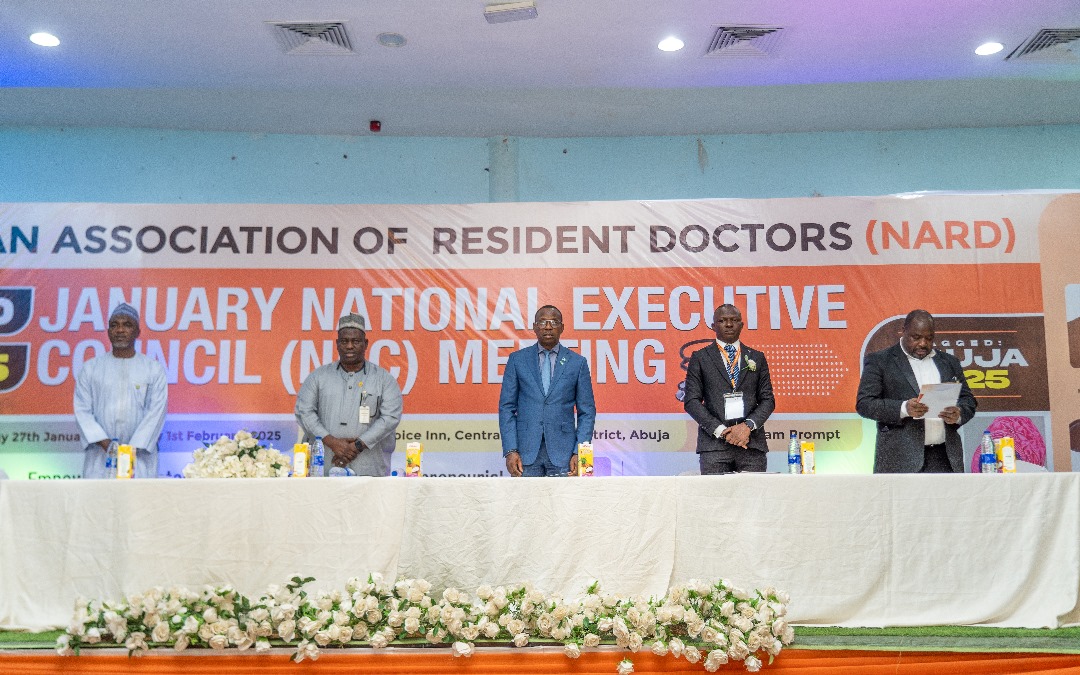
THE renewed threat of industrial action by the Joint Health Sector Unions (JOHESU) and the National Association of Resident Doctors (NARD) in the country is a stark reminder of the deepening crisis within Nigeria’s health sector and the urgent need for decisive federal intervention. JOHESU commenced an indefinite nationwide strike on November 15, 2025, while NARD, having suspended a similar action late last year, has announced plans to resume its strike today over unresolved welfare and work-condition issues. These developments should not be treated as routine labour disputes but as warning signals from a system dangerously teetering towards collapse.
The Federal Government has attempted to explain the impasse with NARD as a consequence of structural and policy challenges rather than neglect. While such explanations may hold some technical merit, they do little to address the human cost of delayed action. Resident doctors have repeatedly complained about poor welfare packages, unpaid allowances, and unfulfilled agreements, issues that have lingered for years despite several rounds of negotiations. JOHESU’s grievances are no less severe. Its members embarked on strike action largely due to the government’s persistent failure to implement the adjusted Consolidated Health Salary Structure (CONHESS), alongside other longstanding systemic and welfare concerns affecting health workers nationwide.
The danger of prolonged inaction cannot be overstated. The warning strike embarked upon by NARD last year had devastating consequences, as many Nigerians reportedly lost their lives due to limited or complete lack of access to medical care. Hospitals were paralysed, emergency services stretched beyond their limits, and ordinary citizens, particularly the poor, bore the brunt of the disruption. To allow a repeat of such a scenario would amount to a failure of governance. Healthcare is not a luxury service; it is a critical pillar of national development and social stability.
What is particularly troubling is the perception that the Federal Government has been dilly-dallying on issues affecting health workers’ welfare. Policies such as the threat of “no work, no pay” appear more punitive than constructive and risk further poisoning relations between the government and organized labour in the health sector. Negotiations must be conducted with sincerity of purpose, not underhand tactics. Agreements reached, whether collectively or separately, must be implemented in full and not reduced to selective compliance with only the most convenient aspects.
The consequences of this attitude are already evident in the alarming rate of brain drain. Nigeria is haemorrhaging its most skilled medical professionals at an unprecedented pace. Reports attributed to the Federal Ministry of Health and Social Welfare indicates that about 4,193 doctors and dentists left the country in 2024 alone. NARD further revealed that between 2005 and 2024, no fewer than 18,949 doctors emigrated, with 2024 recording the highest single-year exit of 3,974 doctors.
This mass exodus has inevitably worsened Nigeria’s doctor-to-patient ratio. The Minister of Health, Prof Muhammad Pate, recently confirmed that Nigeria currently has about 3.9 doctors per 10,000 people, far below the global benchmark of 17.2 physicians per 10,000 persons. Such a deficit makes quality healthcare delivery almost impossible and leaves millions of Nigerians vulnerable to preventable illness and death. It is noteworthy to commend President Bola Tinubu for approving an upward review of professional allowances for health workers in November 2025, a decision estimated to add nearly N90 billion annually to government expenditure and the administration’s adoption of collective bargaining as a strategy to reduce industrial conflict is also a step in the right direction.
However, we advise that these measures must be complemented by a comprehensive reward and retention model capable of motivating healthcare workers and restoring confidence in the system. Bureaucratic bottlenecks that delay the implementation of agreed-upon benefits, such as the specialist allowances, must be addressed decisively, even if it requires executive intervention.
At the same time, we implore the unions to also reflect on the broader implications of prolonged strikes. While their demands are largely legitimate, the innocent Nigerian who cannot afford medical tourism should not become collateral damage. Humane negotiation and a willingness to explore interim solutions are essential to preventing avoidable loss of life.
It would amount to double jeopardy if citizens are subjected to unmitigated insecurity and unavailable healthcare, therefore, the federal government must respond to the health workers demand now.

