


BY DANIEL EZEANWU
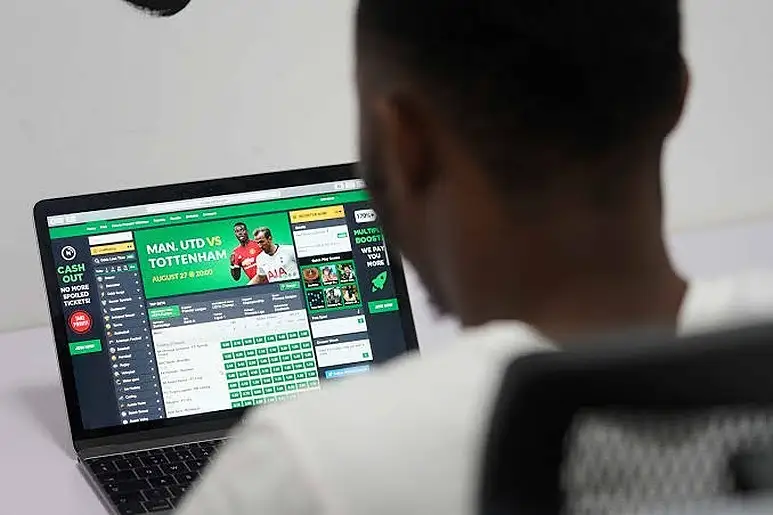
online gambling, particularly among the youth in modern-day Nigeria, has grown from a niche hobby into a pervasive daily habit. To many, it presents itself as a quick route to wealth or, at the very least, an adrenaline-fueled pastime.
Some see it as a potential source of income; others treat it as a way to “cash out massively” with minimal effort. Yet, beneath this allure lies a complex mix of psychological, social, and financial risks that many fail to anticipate.
The rapid rise of betting shops and online sports betting platforms has made wagering easier than ever before. A simple smartphone with internet access and some money is all that’s required. Convenience has spurred participation: over 90 per cent of sports bettors in Nigeria primarily use mobile applications or websites to place their bets.
The industry, fueled by the ubiquity of mobile technology and social media marketing, now forms a multi-billion-dollar sector of the Nigerian economy. Estimates indicate that over 60 million Nigerians between the ages of 18 and 40 actively participate in sports betting, each spending an average of ₦3,000 daily. By the end of 2025, analysts project the Nigerian sports betting market to generate $3.63 billion in revenue.
The Gambler’s Perspective
Understanding gambling requires listening to those at the centre of it, the players themselves. In an interview with students at a university in Delta State, 19-year-old Favour Otumunye candidly explained his attraction to betting. “The reason I gamble and play sports is that I love predicting, and I believe I can get money from it,” he said. Favour described his highest single-stake win as ₦25,000, while his accumulated daily earnings peaked at ₦45,000. However, the losses also weigh heavily on his experiences. “My biggest loss was ₦20,000 in a day, accumulated too,” he admitted, reflecting the unpredictable nature of betting outcomes.
For others, gambling represents a calculated risk. A teacher at St. Patrick’s College in Asaba, Mr Joseph Olumide, shared his perspective: “It has been a profitable venture for me, possibly because I took time to understand how it all works, drafting a specific plan to minimise risks while aiming to maximise potential profits. Although sports betting is unpredictable, I’ve made a good chunk of profit, which has significantly increased my overall income. Of course, there have been losses here and there, but my overall experience has been positive. Why stop now?”
Yet, not all stories are positive. Another student who pleaded anonymity and was interviewed for this report recounted a harrowing experience with gambling addiction: “I lost a lot due to my addiction to sports betting. I would play mini-games on these sites, such as Aviator and blackjack, believing I could easily double or triple my money, but I rarely did. At some point, I got into trouble with my parents and the institution because I lost a large sum of my school fees and could not sit for my exams.”
He further admitted, “Anytime I lose, I feel like I must win it back immediately; that is what spoils everything.”
A former gambling addict, Tolu Odewole, offers another cautionary tale. “I’ve had terrible experiences because of my gambling habit, from not being able to eat and surviving on plain garri for over three days because I put all my money on two sure-odds, to selling some of my property to settle debts and avoid police problems after taking out loans. I thought I could easily double or triple the money even after failing to do so several times prior,” he recalled.
Tolu explained how compulsive analysis of betting scenarios consumed him: “I would calculate and play out possible outcomes in my head and use this to stake on games. I divided some of my income to fuel this habit, repeating the same cycle of loss until it became unbearable and led to serious problems in my life. I eventually sought help, and today I am no longer a gambling addict.”
The Psychological Dangers
Experts warn that the dangers of gambling extend far beyond financial losses. Online betting, in particular, provides instant gratification, which can condition the brain to chase the next high. A clinical psychologist, Dr Chioma Okeke, noted: “When the brain experiences repeated cycles of reward and loss, it becomes conditioned to chase the high. This can create a compulsive pattern that is difficult to break.”
A cross-sectional research study examining the factors behind gambling addiction surveyed 796 secondary school students. It found that 38.3 per cent displayed problem gambling behaviours, and there was a positive correlation between gambling severity and internet addiction.
This suggests that gambling is not simply about chance but is propagated by a combination of factors: excessive internet use, the desire to win big quickly, thrill-seeking behaviour, amusement, and various cognitive distortions that convince individuals of their predictive skills.
A separate survey of 420 university students revealed that 85 per cent were involved in gambling in some capacity, and a significant correlation existed between gambling behaviour and substance abuse. The research concluded that gambling risks among youth are often intertwined with other high-risk behaviours, compounding adverse social, psychological, and economic outcomes.
Societal Impacts
The consequences of gambling extend beyond the individual. Families and communities are affected when youth lose funds meant for education or basic living. Parents often find themselves intervening financially, while some students face academic setbacks when school fees are lost to betting platforms. Communities also bear indirect costs: social unrest, petty crime, and increased demand for counselling and rehabilitation services.
In response, some civil society organisations in Nigeria have called for stricter regulation of the industry. According to the National Lottery Regulatory Commission (NLRC), while operators are required to adhere to responsible gambling policies, enforcement is often weak. Advocacy groups argue that clearer policies, age verification mechanisms, and public awareness campaigns could reduce youth exposure to gambling-related harm.
The Fine Line Between Profit and Addiction
Despite these risks, gambling continues to draw participants with promises of quick money and entertainment. Some manage to profit through disciplined strategies, but even they face the unpredictability of sports events and games of chance. The stories of Favour, Mr Olumide, and Tolu illustrate a spectrum: from moderate, controlled engagement to destructive addiction.
Economically, the industry contributes significantly to Nigeria’s GDP and employment, with betting shops, online platforms, and supporting technology sectors creating jobs and generating tax revenue. Yet the human cost, addiction, debt, and mental health struggles cannot be ignored. As online betting becomes increasingly integrated with social media, the glamorisation of big wins further fuels the cycle of hope and despair among young Nigerians.
Prevention and Rehabilitation
Psychologists and counsellors emphasise early intervention, education, and awareness. Programs targeting secondary and tertiary institutions, such as workshops and mentorship on responsible gambling, aim to inform students about the risks. Dr Okeke suggests practical steps: “Set limits on both time and money spent, avoid chasing losses, and seek help immediately if gambling begins to interfere with your daily life or responsibilities.”
Support systems are crucial. Organisations like the Nigerian Responsible Gambling Foundation provide counselling services and rehabilitation programs for individuals struggling with gambling addiction. Peer support networks also help, offering guidance from those who have successfully overcome the compulsion.
Conclusion
Gambling in Nigeria is undeniably a double-edged sword. On one side, it offers excitement, potential financial gain, and employment opportunities. On the other hand, it harbours the potential for addiction, academic failure, financial ruin, and mental health deterioration. As the industry grows, so too does the responsibility of regulators, parents, educators, and the youth themselves to navigate this complex terrain responsibly.
The stories of those who profit and those who falter offer a stark reminder: betting is never truly risk-free. For young Nigerians chasing wealth or thrills online, awareness, discipline, and informed choices may be the difference between opportunity and catastrophe.

