


By Emmanuella Oghenetega
Under the Nigeria Health Sector Renewal Investment Initiative, the Federal Government has expanded the 2026 National Traditional and Religious Leaders’ Summit on health for effective implementation of comprehensive reform, anchored on the Health Sector Renewal Compact.
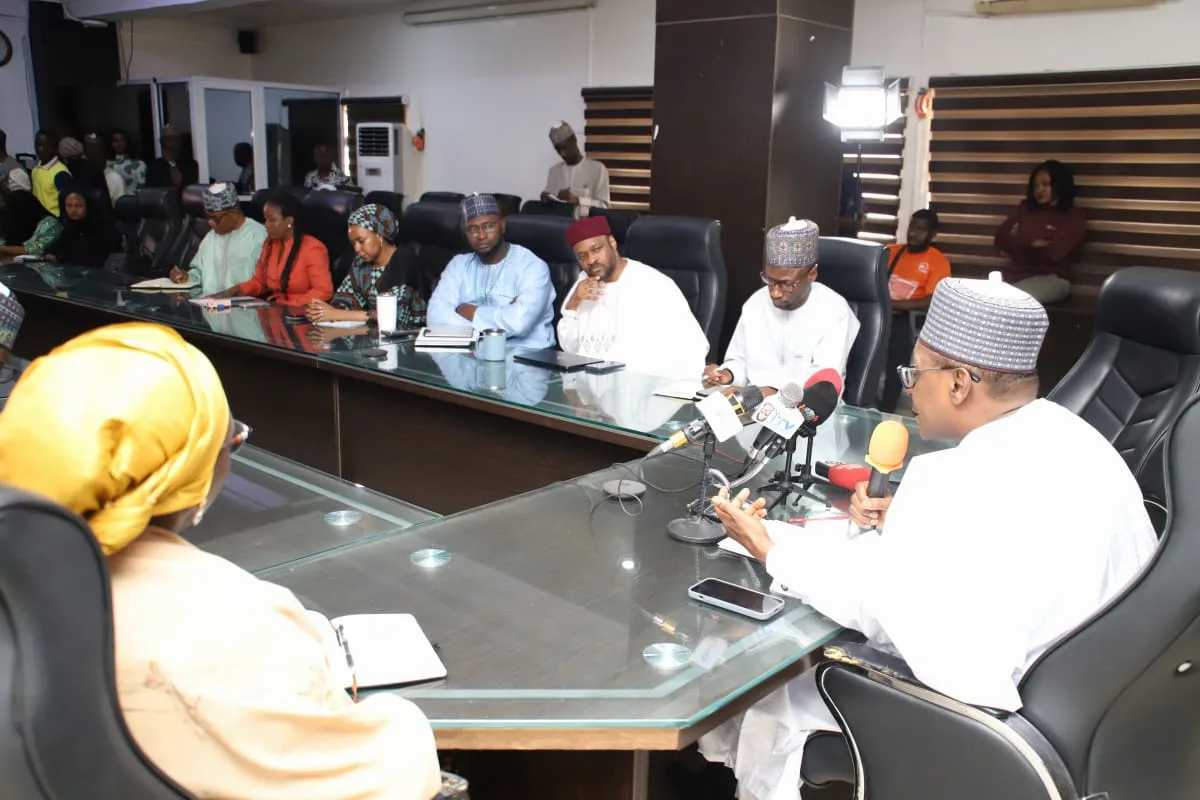
The Coordinating Minister of Health and Social Welfare Professor Muhammad Ali Pate made this disclosure at a Ministerial Press briefing ahead of the 2026 National Traditional and Religious Leaders’ Summit on health held in Abuja.
Speaking, Pate stated that Health Sector reform focused on strengthening governance and accountability across the sector; Expanding access to quality health services; Unlocking the health value chain; and Strengthening health security and resilience, reiterating that the engagement is about clarity, alignment, and shared responsibility.
“Health outcomes are not driven by government action alone. They are shaped by trust, leadership, and decisions made in households and communities every day. That is why engagement with traditional and religious leaders is essential.” Pate re- emphasized.
The Coordinating Minister further stated the President, Bola Ahmed Tunibu, approved the convening of a National Traditional and Religious Leaders’ Summit on Health as enshrined in the National Health Act 2014 that provides for consultative mechanisms to strengthen coordination and shared accountability.
“The Summit is designed to deepen understanding of the Ministry’s reform blueprint aligned with President Bola Ahmed Tinubu’s Renewed Hope Agenda; Strengthen collaboration for implementation; and Reinforce accountability at federal, state, and local levels.”
The Pate explained that the 2026 Summit has been expanded to include: launching of the National Health Fellows – a Programme that creates structured pathways for young Nigerians to develop leadership capacity within the health system.
Another priority addition is a structured dialogue on the Nigeria–United States Memorandum of Understanding supporting HIV, TB, and Malaria responses in which the two nations through constructive engagement, agreed on a five-year framework: Approximately 2 billion US dollars from the U.S. Government over five years; Approximately 3 billion US dollars expected from Nigeria—federal and state — over the same period; indicating that 60% of total financing under this arrangement will be Nigerian resources.
“This is structured transition. We will increase domestic financing while external financing reduces in a predictable manner. Partners can support. They cannot permanently substitute sovereign responsibility. The health of Nigerians is the responsibility of Nigerians.” Pate said.
Clearing air on the discourse, the Minister stated that only Ten percent of the U.S. contribution — not the total financing envelope — is earmarked for faith-based health service providers. “We must avoid narratives that distort facts or promote division.” He warned.
“This applies to facilities providing diagnosis, treatment, and care — Christian, Muslim, and other recognized faith-based institutions. There is no provision in the MOU privileging any specific religious group.” He clarifies.
Pate described Traditional and religious leaders as Partners in community mobilization; Champions of trust and accountability; Influential voices who translate policy into everyday action.
“For the first time, this Summit brings together traditional and religious leaders nationwide in a unified forum on health, expanding beyond immunization to encompass broader system priorities. Diseases such as HIV, Tuberculosis, and Malaria do not recognize religion, ethnicity, geography, or gender.” He explained.
Pate also said that the Summit will address broader health issues like Maternal and child health; Nutrition — including feeding practices and underlying determinants of malnutrition; Human resources for health; and Service delivery systems, adding that Health is not only clinical care, but includes household decisions, social norms, and community practices.
The Permanent Secretary of the Ministry Daju Kachollom, Directors of various Departments and Development Partners were in attendance during the Press Briefing.

