


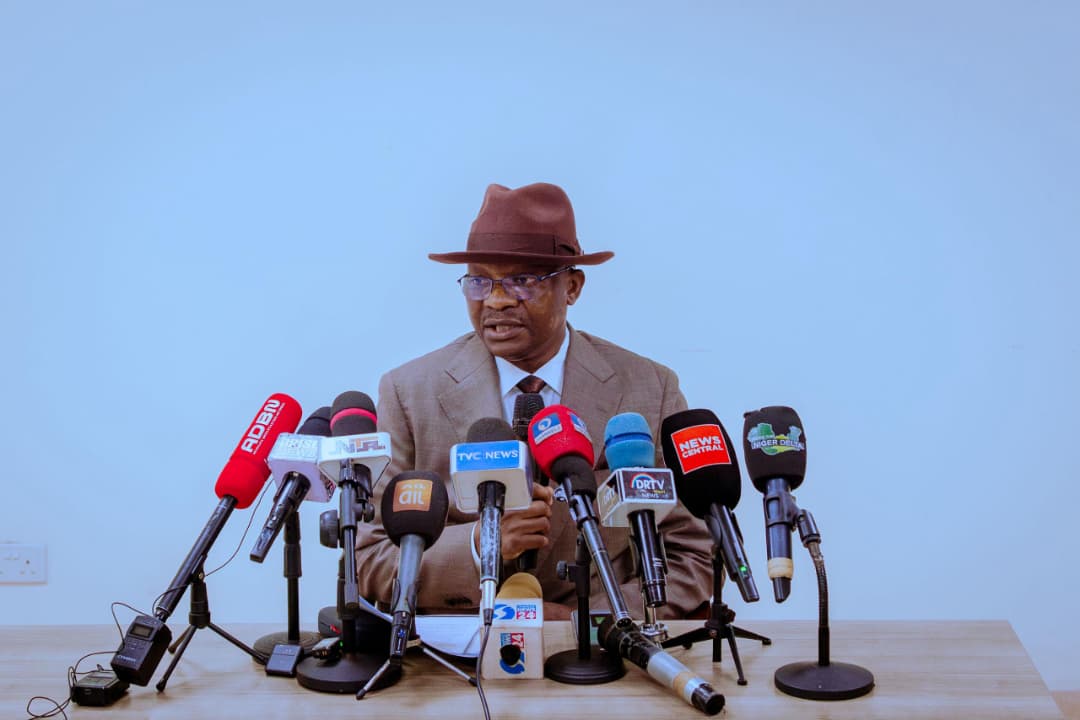
THE Delta State Commissioner for Works (Rural Roads) and Public Information, Mr. Charles Aniagwu, has declared that Delta State recorded notable progress in power sector development under the administration of Governor Sheriff Oborevwori, attributing the gains to strategic investments, policy reforms and increased private sector participation aimed at driving economic recovery and sustainable growth across the state.
Aniagwu made the declaration while delivering his goodwill message at the 2025 Seminar/Workshop and Press Week of the Asaba Correspondents Chapel of the Nigerian Union of Journalists (NUJ), held in Asaba with the theme: “Understanding the MORE Agenda of Governor Oborevwori administration: Meaningful Development in the Power Sector as Panacea for Economic Recovery and Development in Delta State and Nigeria.”
The Commissioner, who was represented by the Director, Production and Publication Services, Ministry of Information and Vice Chairperson, Nigeria Association of Women Journalists (NAWOJ), South-South Zone, Mrs. Stella Macaulay, said the power sector was central to the success of the Oborevwori administration’s MORE Agenda.
“The MORE Agenda; an acronym for Meaningful development, Opportunities for all, Realistic reforms and Enhanced peace and security, is more than a policy framework; it is a social contract designed to unlock the full potential of our people,” Aniagwu said. “In the power sector, it translates to deliberate investments that expand access, reduce poverty and improve quality of life.”
Aniagwu stressed that no nation had attained industrial growth without first solving its energy challenges, citing global examples where stable electricity drove economic transformation.
He disclosed that Delta State had embarked on street light installations and transformer deployment across urban centres, while also convening a Rural Energy Roundtable in Abuja to attract renewable energy solutions and private sector investments into the state.
“These initiatives are projected to unlock over 31,000 jobs and mobilise investments exceeding 158 million dollars through private sector participation,” Aniagwu said. The commissioner listed other ongoing interventions to include strengthening power distribution through partnerships with electricity distribution companies, upgrading substations, replacing ageing infrastructure, promoting independent power projects, and expanding renewable energy adoption.
Looking ahead, he said Delta State was working towards decentralised mini-grids, the establishment of a State Electricity Commission and Rural Electrification Agency, and scaled-up private sector participation to position the state as a hub for energy supply and sustainability. Aniagwu also charged journalists to remain active partners in development, noting that the media plays a pivotal role in shaping public opinion and bridging government and the people.
“The media is central to our vision. You shape perception, influence policy and connect the government to the governed. Your role is more critical than ever in this era of digital disruption,” he said, pledging continued engagement, transparency and support for professional development.
Earlier, Chairman, Asaba Correspondents Chapel of NUJ, Comrade Ifeanyi Olannye, had that aid the seminar was organised to stimulate a national conversation on ending perennial power failure and unlocking Delta State’s economic potential through energy reform.
He commended the Federal Government for the constitutional amendment that moved electricity from the Exclusive to the Concurrent Legislative List, describing it as a critical step in empowering states to drive energy solutions.

