


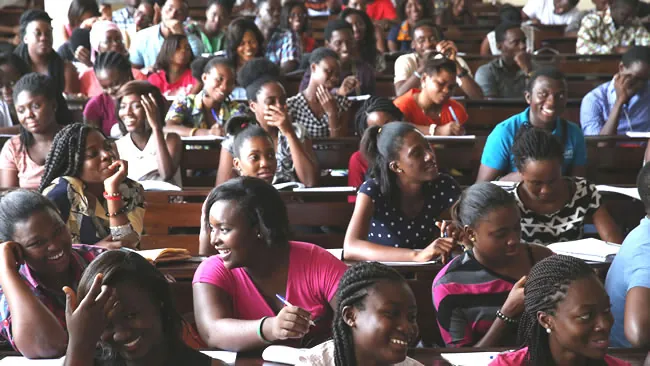
THE dwindling students’ enrolment in tertiary institutions across the country has become a source of worry to education stakeholders with colleges of education being the worst hit, followed by polytechnics and universities in that order by a lengthy distance.
According to a November 2025 report by the Federal Ministry of Education, schools such as the Federal College of Education (Technical), Asaba, enrolled only about 276 students for the 2024/2025 academic session, despite the millions who sit for the yearly Unified Tertiary Matriculation Examination (UTME) nationwide.
Alluding to this ugly trend, the Asagba of Asaba, HRM Prof Epiphany Azinge SAN, did perceived in his visit to the college that, among other things, the expected students’ population in a citadel of learning established 39 years ago was not encouraging, irrespective of the numerous investments in infrastructures.
This prompted the monarch’s charge to the management of the school to explore innovative methods, such as the Dual Mandate Policy approved by the National Assembly, which empowers colleges of education to run certificate and degree programmes concurrently, in tackling the challenge that has continued to threaten their existence.
Pledging his avowed commitment to ensuring progress in that regard, the revered monarch juxtaposed the ugly situation at the college of education with a more favourable outcome in the Delta State University (DELSU), Abraka, which matriculated 9,000 students, urging the leadership of FCE(T) to think of nothing less than a blanket population of 10, 000 students.
The Dual Mandate Policy, which follows the enactment of the Federal Colleges of Education Act, 2023 signed by President Bola Tinubu, marked a significant milestone in Nigeria’s teacher education reform as it aims to curb declining student enrolment, preserve institutional relevance and eliminate the need for university affiliations in the issuance of degrees.
Therefore, the Asagba is correct in his observation and must be commended for his sharp perception of the hollowness that dwells upon the vastness of land and buildings occupied by the FCE (T) and many other similar institutions. It is usually the case that colleges are boisterous with students undertaking training in different fields of human endeavour, but regrettably, colleges of education are gradually becoming relics in Nigeria’s education story.
But it has not always been so. The fate of colleges of education started dwindling the moment preference was given to teachers with university degrees, especially in public employment. As a direct consequence, teachers with NCE started playing second fiddle and in no distant time, were relegated to the background alongside their qualification, forcing many of them to seek degrees if they must advance in their careers.
Another reason responsible for the poor enrolment of students in colleges of education is the perceived poor welfare of teachers in the country. Teaching, a noble profession, has been ridiculed by the deprived socioeconomic standing of its practitioners, who have almost become beggars in society. This unfortunate situation leaves youngsters with little or no choice in avoiding that career path as much as they can and preferring more lucrative endeavours if they must escape the fate of their poor teachers.
At this point, we strongly believe that while schools such as the Federal College of Education, FCE (T) Asaba, being among the schools selected for the pilot phase of the Dual Mandate Policy, hope to improve their students’ enrolment, going forward, it only remains a drop in the ocean if nothing else is done.
Attitudinal changes and how teachers are treated by governments, employers and even parents must reflect decency and nobility in the profession. When teachers dress haggardly, drive rickety vehicles, and resort to distasteful practices just to make ends meet, students observe and would naturally seek ways to avoid enrolling in colleges of education. It is also not out of place for authorities to blur stark divisiveness between NCE and education degrees in the classrooms. If this dichotomy is smashed, students’ enrolment in colleges of education, where teachers are forged, will undoubtedly improve and these institutions will remain relevant in a nation in dire need of more teachers.

