


The long-running feud between the Federal Government and the Academic Staff Union of Universities (ASUU) has, for decades, been one of the most damaging fault lines in Nigeria’s education sector. It has paralysed academic calendars, eroded public confidence in the university system and inflicted lasting harm on students psyche whose futures were repeatedly put on hold. Against this backdrop, the 2025 Federal Government–ASUU Agreement represents a rare and welcome moment of convergence, signalling an opportunity to finally turn the page on a history defined more by strikes than by scholarship.
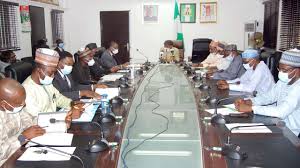
The agreement, unveiled in Abuja by the Minister of Education, Dr Tunji Alausa, carries both symbolic and practical weight. Symbolically, it acknowledges the scale of the damage inflicted by years of mutual distrust and broken promises. Practically, it introduces concrete reforms aimed at improving lecturers’ welfare, stabilising industrial relations and restoring dignity to the academic profession. The involvement of President Bola Ahmed Tinubu in personally driving the resolution of the impasse lends additional political gravitas to the deal and raises expectations that this time, implementation will not falter.
Central to the agreement is the approval of a 40 per cent upward review of academic staff emoluments, set to take effect from January 2026. This adjustment, long demanded by ASUU, reflects the harsh economic realities confronting university lecturers and the need to stem the steady exodus of talent to better-funded systems abroad. The revised remuneration framework, which combines both the Consolidated University Academic Staff Salary (CONUASS), with an enhanced Consolidated Academic Tools Allowance (CATA), recognises that modern scholarship depends not only on salaries but also on access to research tools, conferences, publications and professional networks. If properly implemented, this could help reposition Nigerian universities within the global knowledge economy.
Equally significant is the restructuring of earned academic allowances, which are now more clearly defined and tied to specific academic responsibilities. By linking rewards directly to postgraduate supervision, examinations, fieldwork and leadership roles, the agreement promises greater transparency and fairness in compensation. The introduction of a Professorial Cadre Allowance for Professors and Readers further acknowledges the heavy intellectual and administrative burdens borne by senior academics and sends an important signal about valuing excellence and experience within the system.
However, celebration has been tempered with realism. ASUU’s leadership has rightly warned that while the agreement marks progress, it does not resolve the deeper structural problems that have long threatened the survival of Nigeria’s universities. The crux of these concerns is the persistent erosion of university autonomy. Despite being recognised in law and principle, autonomy has been routinely undermined by arbitrary government actions, including the dissolution of governing councils and interference in vice-chancellor appointments.
Funding remains another unresolved fault line. Although the agreement contains provisions related to research and development, decades of underinvestment have already taken a toll. Nigerian universities risk being reduced to teaching-only institutions, disconnected from innovation and national development, if research funding is not prioritised and sustained. The proposed National Research Council Bill, which would commit at least one per cent of GDP to research and innovation, offers a potential lifeline, but its promise will mean little without swift legislative action and faithful execution.
While we acknowledge the level of hard work that went into the negotiation process, we, just like other Nigerians, know that the ultimate test of this agreement will be its implementation. Students, parents and educators alike are weary of promises that dissolve into fresh disputes. Therefore, we call on the Federal Government to demonstrate good faith by acting promptly on all commitments, particularly those relating to autonomy and research funding, to prevent a relapse into crisis. Industrial harmony cannot be sustained on goodwill alone; it depends on consistency, sincerity and respect for negotiated outcomes.
The 2025 agreement offers a chance to reset relations between government and academia and to refocus universities on their core mission of teaching, research and service to society. If honoured in both letter and spirit, this accord could finally bring an end to a feud that has cost the nation too much for far too long.

