
….scales up nursing school enrolment from 28,000 to 115,000
By Emmanuella Oghenetega
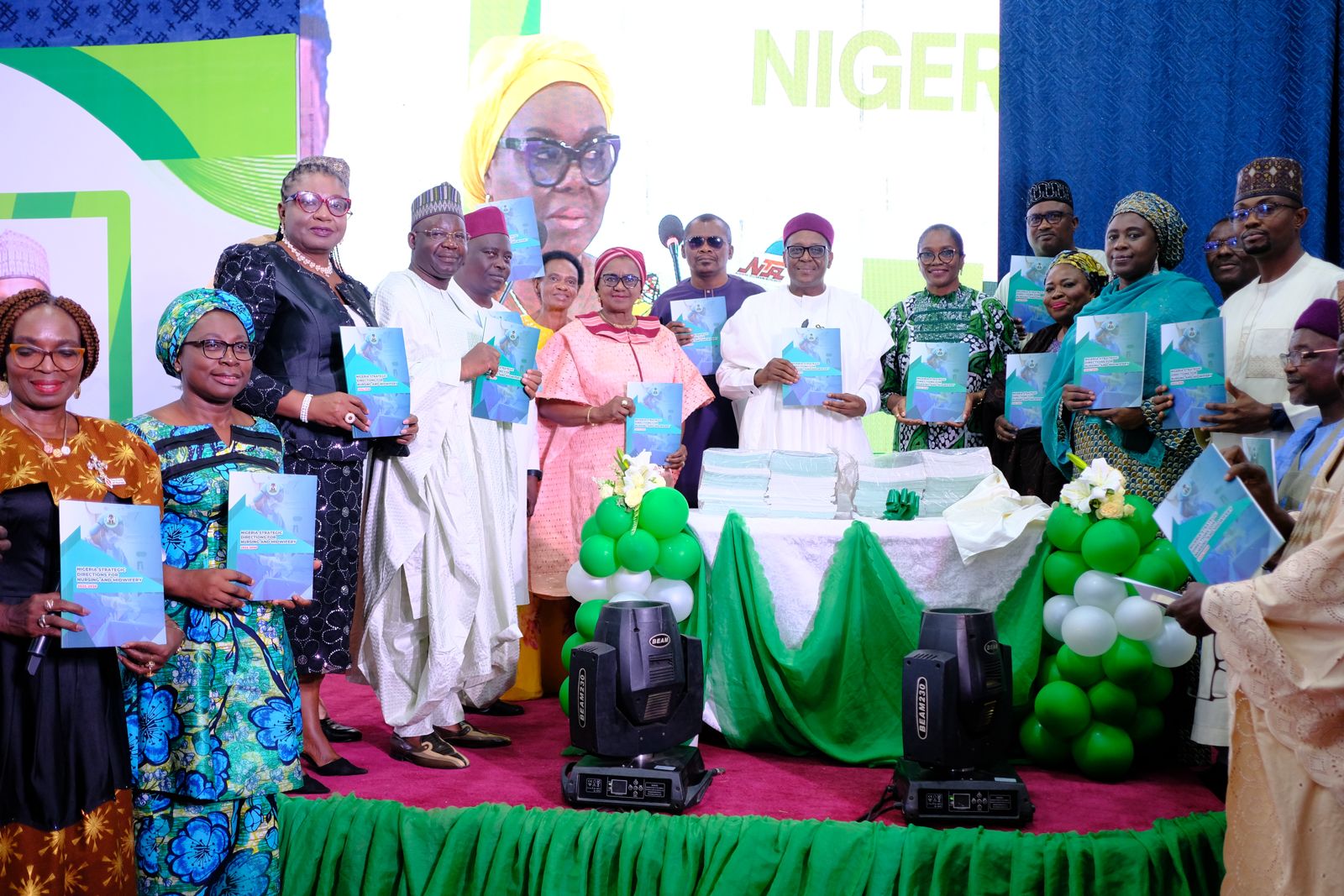
The Federal Ministry of Health in collaboration with key international partners has unveiled the Nigeria Strategic Directions for Nursing and Midwifery- NSDNM 2025-2030.
A policy document designed to strengthen healthcare delivery, education, transform nursing profession, workforce development, leadership, and service delivery across all levels of healthcare nationwide.
Speaking at the event, while delivering his keynote remarks at the Launch in Abuja, the Coordinating Minister of Health and Social Welfare, Professor Muhammad Ali Pate asserted that the initiative was a “blueprint for transformation” that will reposition Nigeria’s nursing and midwifery services for greater impact, quality, and equity.
“Nurses are at the core of the resilience of Nigeria’s health system,” Prof. Pate said.
The Minister reaffirmed the commitment of the current administration to uplift the nursing and midwifery profession.
He stated, that the enrollment quota for nursing and midwifery training institutions, which stood at 28,000 in May 2023, has now been scaled up to 115,000 for the 2025 academic year.”
The Minister asserted, that this leap will enable Nigeria to produce more nurses, midwives, pharmacists, laboratory scientists, and medical students to meet both national and global health needs.
He therefore emphasized that beyond increasing numbers, government efforts are also focused on improving working conditions and creating an enabling environment where health workers can thrive.
Highlighting the Sector-Wide Approach and Recruitment Drive, the coordinated reform agenda under the Sector-Wide Approach, Pate noted that over 69,000 frontline health workers have been retrained across the 36 states, with nurses and midwives among the top beneficiaries.
He also disclosed that the Federal Government has approved recruitment waivers for 20,000 new health workers, 60 percent of whom will be nurses and midwives, to fill critical workforce gaps in federal health facilities.
Prof. Pate commended the World Health Organization (WHO) for its technical and financial support in developing the NSDNM. Nigeria’s alignment with the WHO Global Strategic Directions for Nursing and Midwifery (2021–2027) underscores the country’s commitment to global standards and best practices.
In her remarks, the Permanent Secretary of the Health Ministry, Daju Kachollom, charged members of the TWG to ensure measurable progress through innovation, data-driven planning, and cross-sectoral collaboration.
“You are not here to re-discuss the strategy,” she said. “Your charge is to drive its implementation and ensure accountability at every stage.”
In his keynote address, Prof. Saleh Ngaski Garba, Head of Nursing Science at Bayero University, Kano, highlighted that nurses and midwives constitute nearly 60 percent of Nigeria’s health workforce and remain indispensable to achieving the Sustainable Development Goals (SDGs) and Universal Health Coverage (UHC).
He urged government and stakeholders to sustain investment in the profession to bridge existing workforce gaps and retain talent.
Goodwill messages were delivered by representatives of WHO, UNFPA, and others partners present.