


By Godfrey Ubaka
The burden of leadership weighs heavily but often differently given the socio-political clime, developmental imperatives, settings and the toughness of decisions that need to be taken at each point in time. Vision is usually a core necessity to see beyond the vagaries of the now. It however takes firmness of courage to drive through to the envisaged future. The road could be thorny on every turn; the waves could graduate into life- threatening storms. It still will not reduce from the lucidity and certainty of the future.
That a vision is delayed or encounters formidable opposition does not make it less noble, for at the end, it still will speak.
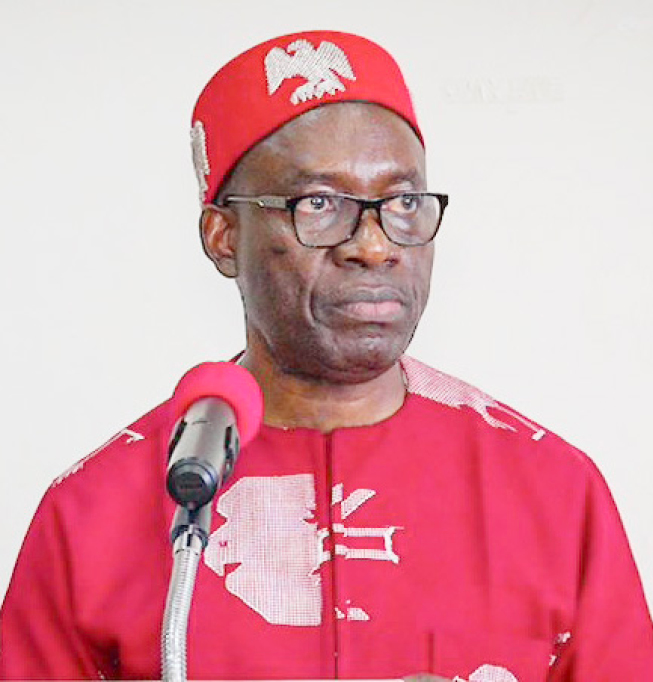
Prof Chukwuma Soludo has served Nigeria as a Central Bank Governor and did leave some enviable marks, Anambra State Governor for a four- year tenure and has just been re-elected to that position for another four years. I, ordinarily should envy him considering that he brings an appreciable level of urbane disposition, consummate public service profile and intellectual stature to Nigeria’s muddle -ridden politics.
Truth however remains that when it comes to do with the tough decision to have Onitsha Main Market put under lock and key and have it enforced with detachments of military men and armored tanks while contemplating a remodeling of the market in the face of the ongoing IPOB-powered sit-At-Home, I honestly do not wish that I were in Prof Soludo’s shoes. When the glamour of office meets with tough choices in the face of desperate, violent oppositions, wills are tested, strong resolves sometimes fade as new normal emerges.
The Governor is practically sounding frustrated in the past weeks and the reasons are not so farfetched. Anambra State loses a weekly revenue of N8 billion as a result of the Monday Sit-At –Home while the whole of the South East loses N19.6 billion in revenue. Prof Soludo describes this as deliberate act of economic sabotage and cruel attempt to redefine the state’s economic calendar.
The Governor is also said to be mulling a reconstruction plan and another extreme possibility of turning the market’s land mass into a school. The Governor appears to be operating in opposite direction with the people he is leading. Trading is integral to the culture of the people while the formal western education follows in the order of priority. Governor Soludo is seen as a representative of the Nigerian State which the people strongly believe has marginalized them.
His directives are not considered as carrying the same weight of law and consequences in terms of penalties when compared with the pronouncements of the leadership of the Indigenous People of Biafra, IPOB. This can be frustrating and unsettling for any leader, to be seen as a symbolic head while the real authority of action, pronouncements and consequences lie with those that could, ordinarily, be considered non state actors, their operations having been proscribed.
But the attachments to the root of the sentiments and sectional ideology of resentment are too strong to be ignored. When instructions and directives from Light House, the seat of power in Awka, Anambra State are considered to be of little or no consequences while those issued by the disciples of and sympathisers of the political ideologies of Mazi Nnamdi Kanu are adhered to, to the letter, the stage is obviously set for crisis before eventual resolution.
That is part of what is playing out in the decision of the Anambra State government to have the Onitsha main market locked up for a whole week. Today is the acid test for the traders to either open for business or have the market locked up for a longer period of time.
The Monday “sit-at-home” order in the Southeast was initiated by IPOB to protest the arrest and detention of Mazi Nnamdi Kanu by the Nigerian government in June 2021. It was designed to serve as strategy to pressure for his release and highlight grievances regarding the marginalization of people of the Southeast. It has been enforced by a militant arm of IPOB the media have come to describe as “Unknown Gunmen”. Fear in the midst of inadequate security from the State has often resulted in mass compliance and a near-total collapse of the economy of the affected South eastern part of the country on the days of observation.
The Governor has insisted that the Onitsha Main Market would remain shut for one week as a punitive measure for refusing to open for business on the last Monday.
The Governor had dismissed security concerns as a valid excuse for the closures, highlighting that apart from the security measures already put in place by his government, over 150 security officials are currently stationed within the Onitsha Main Market alone.
Soludo emphasized that his administration has exhausted its patience while further reminding traders that the government holds the authority to revoke land allocations under the Land Use Act if it serves the public interest.
Soludo detailed the government’s extensive efforts to end the sit-at-home era, including; amnesty programs for agitators, establishment of a Bureau for Missing Persons to address grievances, direct engagement with the proscribed IPOB, who he noted have distanced themselves from the lockdowns.
He described the current closure of the market as “painful collateral damage” which had become necessary to protect the state’s collective prosperity.
The Governor also insists that the Onitsha Main Market, in its current state, is no longer functional but a literarily dead estate.
According to him, the market has been effectively shut down for over 260 days since the observance of sit-at-home began, with billions of naira lost weekly as revenue that should accrue to the State.
Leadership requires taking inconvenient steps to secure the future. The Governor therefore considers the closure of the market as a corrective measure to reclaim the state’s economic life. The brunt and burden of that decision however heavily weighs on the struggling citizens who depend on the daily income from the activities in the market to eke out a living.
Some traders have had to accuse the governor of acting high-handedly, alleging that the same level of security deployed to enforce the market closure had never been provided to protect traders from attacks by criminal elements enforcing sit-at-home orders in previous years.
Soludo should in the decision as to the future of the market blend his vision with public acceptability and effective sensitization/ citizen engagement in order not to give room for protracted protests that could pitch his government against Ndi Anambra. The tough leadership decisions should be blended with the socio-cultural realities that might not so easily give way overnight. These, obviously are not the best of times for Governor Soludo, operating from Light House, Awka and not many Nigerians will sincerely envy him. That is part of the lot of leadership in a socially complex developing society.

