Category: NATIONAL

  • BOI Commences Fresh Funding Fresh For SMEs

    BOI Commences Fresh Funding Fresh For SMEs

    THE Bank of Industry (BOI) has announced the commencement of the Rural Area Programme for Investment and Development (RAPID) for Micro Small and Medium Enterprises (MSMEs) and community groups in rural areas.

    This was disclosed in a post on the official X handle of the BOI where it explained that the extension of the deadline was to allow entrepreneurs the opportunity to apply for the loan.

    The RAPID funding programme aims to provide loans of up to N10 million to MSMEs in rural areas at a five per cent interest rate for a tenure of three years. The bank noted that interested applicants visit its website to apply.

    The objective of the program is to assist communities in rural and economically disadvantaged areas in utilizing available resources to develop enterprises. These enterprises aim to provide employment, improve the standard of living, contribute to national growth, and address insecurity stemming from youth restiveness.

    The Bank of Industry (BOI) earlier in May launched the RAPID program in Lagos with the target of empowering 10 beneficiaries per state and the Federal Capital Territory (FCT) totalling 370 beneficiaries. Following the removal of fuel subsidy, the Federal Government announced various grants and loan programs aimed at alleviating the impact of the subsidy removal on their businesses.

    The programmess include; the N75 billion single-digit loan to manufacturers and the N50, 000 grant to nano businesses across the 744 local government areas of the country. There is also a N200 billion grant to Small and Medium Scale Enterprises (SMEs) all over the country.

    The Federal Government’s Presidential Conditional Grant Scheme (PCGS), offers non-repayable financial grants to eligible small business owners in various sectors, including trading, food services, ICT, transportation, creative industries, and artisans.

    The PCGS plans to allocate 70 per cent of the grants to women and youths, 10 per cent to individuals with disabilities and five per cent to senior citizens, with the remaining 15 per cent designated for other demographics.

    The Bank of Industry (BOI) is also partnering with the federal government in the distribution of the N200 billion loan to manufacturers and SMEs across the country which has already been launched.

    According to the Minister of Industry, Trade and Investment, Dr. Doris Uzoka Anitie, under the program, N75 billion will be distributed to MSMEs while another N75 billion will be distributed to the manufacturing industry under the Presidential Intervention Fund.

    The Nigeria Distribution Sector Recovery Program was approved by the World Bank Board on February 4, 2021, and became effective since February 2, 2023. The programme’s primary objective is to enhance the financial and technical performance of Nigeria’s electricity distribution companies (DISCOs).

    This initiative is crucial for stabilizing and improving electricity supply across the nation, which has been plagued by inefficiencies and inadequate infrastructure.

    The document informed that the “project was approved by the Board on February 4, 2021, and it became effective on February 2, 2023. DISREP was included in the external borrowing plan of Nigeria on May 15, 2024.

    “The Objective of the Project is to improve the financial and technical performance of the electricity distribution companies.

    According to the report, the progress towards achieving the project objectives has been rated as “Moderately Unsatisfactory,” both in terms of overall implementation and specific project development outcomes.

    Key performance indicators such as the reduction in DISCOs’ metering gap, semi-annual electricity billing, and the collection of billed electricity have shown slow or stagnant progress.

    Despite the approval and effectiveness of the loan, the disbursement rate remains at 0%, with the entire $500 million still not disbursed.

    The project aims to reduce the metering gap, enhance electricity billing and collection efficiency, and improve corporate governance within DISCOs.

    However, as of the latest report, there has been no significant improvement in these areas. For instance, the target to reduce the metering gap remains unmet, with a current gap reduction of 0%.

    The report also shows that the Nigerian government has committed to awarding contracts for the supply and installation of 1.25 million smart meters by the end of June 2024.

    This effort is expected to significantly improve metering accuracy and billing efficiency, addressing one of the critical areas of the project.

    While campaigning for the presidency, Bola Tinubu released a manifesto outlining a plan to eliminate estimated billing and ensure that all Nigerian homes and businesses are equipped with prepaid meters.

    However, under his administration, the number of estimated billing customers has seen the largest growth rate both quarterly and yearly, based on data from the NBS up to 2022.

    The Nigeria Electricity Report by the National Bureau of Statistics (NBS) for the first quarter of 2024 shows a 10% quarter-on-quarter increase in estimated billing customers, as the metering gap widens. The number of customers on estimated billing rose from 5.83 million in Q4 2023 to 6.43 million in Q1 2024, marking a notable 10% increase.

    About 52% (an increase from 48% recorded in the previous quarter) of the total DISCOs’ customers are on estimated billing this quarter.

    This increase occurs amid the Federal Government’s plan to eliminate estimated billing by the end of 2024.

    It further highlights a persistent issue within the Nigerian electricity sector, which is the inability to adequately meter all customers to bridge the metering gap despite various initiatives.

  • Experts Proffer Solution To Minimum Wage Crisis

    Experts Proffer Solution To Minimum Wage Crisis

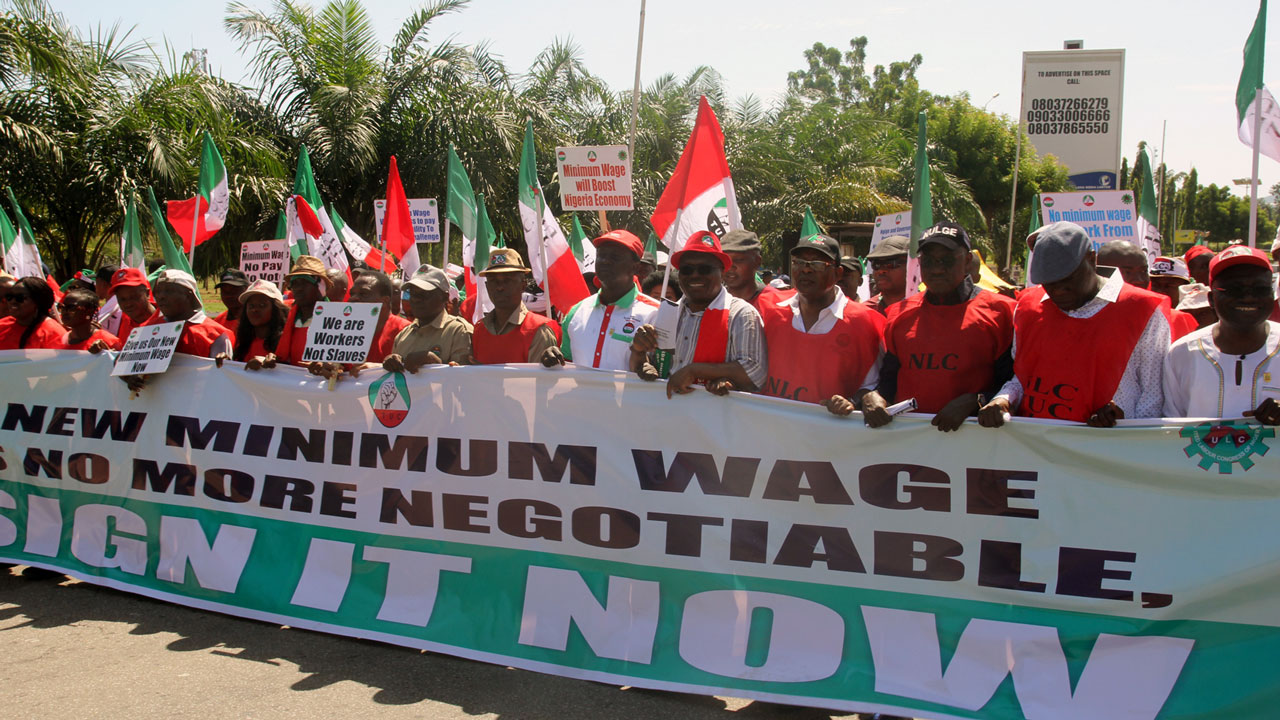
    WITH seemingly no end to the raging debate about a minimum wage that will be satisfactory to all parties, experts have proffered a lasting solution to the crisis.

    Both Organised Labour and the government acknowledge that wages need to increase, but the disagreement lies in how much it should be, how to implement the suggested changes, who will pay for it and who will be responsible for paying for it? “It is a quagmire that could affect the economy for years to come”, said a source.

    A country’s minimum wage is one of the most important economic metrics that underpin economic growth. For this reason, experts dedicated their time on ways Nigeria can resolve the minimum wage quagmire.

    A respondent explained that a key model economists use to measure the size of an economy, specifically GDP is C + G + I + Nx. “In this formula, C refers to consumption, G is government spending, I is investment, and Nx is net exports.”

    This GDP formula is supported by economists who advocated for the four-factor circular flow model of an economy. This model categorizes participants into four groups: households or consumers, businesses (investors/producers), foreign markets or exports, government’s understanding of these components and their interactions.” It was agreed that this is crucial for analyzing and fostering economic growth.

    It was explained that in its simplest form, this four-factor circular flow of income outlines that households provide labour to produce goods and services, in return they are compensated with reward for labour.

    They then spend the compensation on goods and services. Consequently, foreign markets enable firms to import/export goods and services to optimize earnings and finally government interjects to collect taxes and redistribute incomes through government spending.

    “Thus, for an economy to grow, all the factors need to continue to grow and thrive sequentially. That is, one factor cannot be ignored as everything is interdependent. An example of interdependency, as purchasing power increases, is that they spend money on goods and services which enables companies to become more profitable and seek to expand that market. Furthermore, as they become more profitable, governments will see more taxes and seek to increase expenditure targets.

    “Conversely, lower earnings results in struggling to survive and seek to exit the market resulting in lower taxes for who either borrow more to fund initiatives or increasingly ignore their responsibilities to citizens. No prizes for guessing which spectrum Nigeria is being experienced.

    “For many years now, discussions of how to fix the ailing Nigerian economy have focused ad infinitum on the other factors of the four-factor circular flow. Specifically

    However, when debating how to rapidly expand the Nigerian economy the fourth-factor issue of how to turbocharge our domestic consumption and boost household aggregate demand is often overlooked. By international standards, we can argue that Nigerians are grossly underpaid for the work they do. For example, a driver is expected to report 7 am to 7 pm for ~N45,000 to N50,000 monthly (N1,500 per day).

    In the corporate sector, junior staff can expect to earn between N100,000 to N150,000 monthly (N5,000 per day). Whilst the Federal minimum wage which was set in 2019 remains at N30,000 monthly (N1,000 per day). Remarkably, these numbers compare to the World Bank’s International Poverty Line of $2.15 per day (N3,000 daily).

    In other words, the vast majority of Nigerians earn below the recognized poverty level, and even entry-level staff barely earn above the poverty line (i.e., when they can get a job).

    For a country looking to supercharge its economy, the issue of gross under-compensation of households means that our aggregate demand is neither going to sustain nor drive economic growth.

    “If households continuously fail to demand for goods and services due to declining purchasing power, this will mean that Firms will rapidly become unable to pass cost adjustments to consumers resulting in Firms becoming unprofitable and look to depart. The adverse impact on Government is clearly loss of taxes (both corporate and personal etc). From a Nigerian perspective, household earnings have been declining for over 10 years.

    However, rather than fostering discussions on how to reverse this declining trend and turbocharge Nigeria’s household earnings, we saw an explosion of government direct interventions in the economy via increased subsidies and development finance funding.

    “Unfortunately, government direct interventions in an open economy creates market distortions and is NOT an adequate substitute to replace declining Household demand.

    The last decade has shown that Direct Government Intervention funds can easily be misused or misallocated with adverse consequences.

    The best transmission mechanism for economic prosperity in any economy remains a thriving capital market supporting companies to grow, employ workers and reward productive employees via compensation. But this is a topic for another day.

    The present administration has suggested it wants to scale back direct interventions and subsidies. This includes eliminating subsidies on fuel, electricity, foreign exchange amongst others. This policy stance was interpreted to mean that the present administration was keen on adopting a more orthodox approach to managing the economy. It was held that if true that the present administration is trying to adopt an orthodox approach then the government cannot pay lip service this time to household earnings.

    Specifically, the elimination of subsidies and the misallocation of intervention funds are leading to an unsustainably higher cost of living for everyone, with no immediate benefits for businesses and individuals, prompting a mass exodus from the country. Yet another held that “we have already witnessed the ‘Japa’ phenomenon among our youth from 2019 to 2023. This trend is now escalating to ‘Japa 2.0,’ as recent news articles highlight companies exiting the country, indicating that businesses are rapidly following individuals out due to mounting losses and cost pressures.

    “The ongoing debate about raising the minimum wage is certainly welcome and long overdue. However, the focus of these discussions is alarmingly inadequate. Rather than fixating on arbitrary figures like N62,000 or N100,000 per month, the conversation should center on creating a framework that enables Nigerian households to maximize their earning potential.

    “Turbo charging Nigerian houseHold income, as previously mentioned, given that the present administration is keen on eliminating subsidies as part of a return to orthodox economic policies, means the approach needs to be applied comprehensively across all economic factors, including household earnings. In other words, if there is a need to allow previously subsidized products such as fuel, electricity, and foreign exchange to reflect market prices, then household earnings should also reflect market conditions.

    The ongoing conversations about the minimum wage suggest a wide range, from N62,000 to N250,000. This raises the crucial question: what should the market rate be? Here are a few broad-brush approaches that can be considered:

    “Approach 1 is to use the World Bank International Poverty Level rate as a benchmark, which is $65 per month or approximately N95,000. Approach 2: Take the minimum wage set in 2019 and adjust for the average monthly inflation rate of 1.6% over five years from June 2019 to May 2024, resulting in a figure of approximately N77,758 (based on N30,000 adjusted by an average monthly inflation rate of 1.6% compounded over 60 months).

    Approach 3: Set a rate comparable to peer African nations. For instance, Morocco has a minimum wage of $285 per month and South Africa $250 per month, giving a range of approximately N375,000.

    “Regardless of the approach taken, it is clear that the appropriate figure is neither N30,000 nor N62,000.To be clear, advocating for an increase in minimum monthly compensation from N30,000 to N250,000 or even market driven compensation of N375,000 let alone N500,000 does not acknowledge the fact that the Federal Government has been running fiscal deficits for over a decade with the fiscal deficits getting worse each year.

    However, the economic principle remains that if the government wishes to eliminate subsidies and direct interventions, then household earnings need to increase, starting with setting a more market-driven minimum compensation. Otherwise, aggregate demand in Nigeria will collapse, adversely impacting firms and, in turn, the government through reduced tax receipts and increased borrowing.

    The dilemma was that as the government seeks to eliminate subsidies, Nigerian household earnings must increase. However, a one-time rapid adjustment of compensation to market-driven rates creates an affordability challenge for all employers of labor.

    If there is an acknowledgment that household earnings must increase as part of a return to orthodox economic policies, then a potential way to address the affordability quagmire is to link compensation directly to increased revenue productivity.

    One idea being floated is to set minimum compensation on an hourly basis. This approach must include allowing workers the flexibility to provide services to multiple employers.

    The focus should be on ensuring that workers can earn above poverty levels, even if it means being employed by two institutions.

    In this scenario, setting a minimum hourly compensation rate means that employment contracts cannot restrict individuals to working for a single employer.

    Additionally, working hours will need to be more flexible. For example, an employee could work from 8 am to 1 pm with one employer and then from 2 pm to 6 pm for another.

    This arrangement translates to nine hours of work daily and generates monthly earnings of over N106,000 using a minimum compensation of N570 per hour. This way, the working hours are spread across two companies, thus not overburdening a single employer.

    An alternative to the hourly rate is to create a structure where workers have a base pay but can earn significantly more if their performance warrants it. This base plus performance pay model can be applied on a monthly or annual basis.

    For example, a minimum wage of N95,000 could comprise of a base pay of N62,000 coupled with a N33,000 performance bonus for reaching realistic IGR targets or output

    This base pay plus performance approach has precedents in other countries.

    The key here is that enabling households to earn more as revenue productivity improves means that everyone wins. Workers are incentivized to attract firms to their region, fostering business growth.

    As firms grow and generate more revenue, they hire more employees, which ultimately leads to increased government revenue from corporate income tax (CIT) and personal income tax (PIT).

    A third alternative is to set a minimum compensation indexed to inflation, ensuring household earnings increase yearly.

    For example, a minimum wage of N62,000 with a 30% annual inflation adjustment would rise to N80,000 the following year, although this is still below World Bank International Poverty standards.

    This alternative could serve as an incentive for the government to be more accountable and to avoid policies that cause rising inflation and a higher cost of living.

    In conclusion, as the debate over a new minimum wage continues, it is crucial for all parties to understand that this discussion should not be limited to simply setting an arbitrary number as a one-time exercise that remains stagnant for another twenty years, pushing the nation backward in real terms.

    “Instead, the focus should be on recognizing that household earnings are a critical part of the income flow in an economy and need to continually increase as productivity rises. As a nation, some urgent questions include how quickly can we restore increased disposable income so that our businesses can adjust prices and become profitable again?

    “How quickly can businesses achieve profitability through elevated aggregate demand, thereby attracting more investment to the country? How quickly can internally generated revenue (IGR) linked to taxes increase without being a burden on profitability?

    “None of these questions can be answered without addressing the decimated aggregate demand in the economy caused by weakened household earnings.
  • MTN, Airtel, Others In Trouble For Defaulting On CSR

    MTN, Airtel, Others In Trouble For Defaulting On CSR

    The House of Representatives Committee on Corporate Social Responsibility (CSR) has resolved to sanction MTN, Airtel, and other companies for failing to perform their corporate social responsibilities.

    The committee said that it would enact laws to sanction any offenders in that regard.

    The Chairman of the Committee on Corporate Social Responsibility, Rep. Oby Orogbu, said this during a public hearing in Abuja today on “a Bill to regulate corporate social responsibility in Nigeria.

    She, however, gave MTN and Airtel the last warning to honour the committee’s invitation or face the arrest warrant.

    According to Orogbu, some companies operating in the country have overtime violated the law, hence the need for punishment to be imposed on them.

    She also frowned at the conduct of the National Communications Commission, MTN and Airtel, adding that they had several times ignored the invitation of the Committee.

    She said that the committee had no choice but to invoke its powers by issuing a warrant of arrest.

    “Section 89, 8 of the Constitution mandates individual companies as invited to make themselves available to parliament, but they take pleasure in breaking the law.

    “I want to tell MTN and Airtel that they take so much from our nation and they feel too big to appear before the parliament; we will not tolerate that.

    “We gave them the powers to operate in Nigeria, so to refuse to honour the invitation of the parliament is a no-no; we take exception to it.

    She said that in spite of operating from across the country, they had disrespected the same nation by not honouring the House invitation.

    Mr. Wondi Ndanusa, who spoke on behalf of the Governor of the Central Bank of Nigeria, said that the CBN is in support of the bill.

    He expressed concern about the proposed penalty of imprisonment for defaulting companies, stating that the penalty should rather be persuasive.

    Mr. Bala Wuoir, the representative of the Oil Producers Trade Section, expressed concern that the PIA already mandates oil companies operating in Nigeria to make a financial contribution of three per cent of their profits to the NDDC to benefit the oil bearng communities. (NAN)

  • Cholera: FG In Talks With Gavi On Vaccine Availability –NCDC

    Cholera: FG In Talks With Gavi On Vaccine Availability –NCDC

    The Federal Government revealed it has initiated discussions with the Global Alliance for Vaccines and Immunization (Gavi) to secure additional supplies of cholera vaccines.

    Director-General of the Nigeria Centre for Disease Control and Prevention (NCDC), Dr. Jide Idris, confirmed this in an interview with the News Agency of Nigeria (NAN), today in Abuja.

    NAN reports that Nigeria is grappling with a cholera outbreak amidst a global shortage of vaccines.

    Idris noted that, recognising the urgent need for vaccines, the Coordinating Minister of Health and Social Welfare, Prof. Muhammad Ali Pate, has entered into discussions with Gavi.

    “Gavi, a global health partnership, plays a pivotal role in improving access to vaccines in low-income countries.

    “Through these negotiations, Nigeria aims to secure an emergency supply of cholera vaccines to curb the outbreak.

    “At present, cholera vaccines are not stocked in our public facilities, though they are available in limited quantities in the private sector.

    “But vaccines alone are not the only preventative measures we have at the moment; we must also ensure environmental cleanliness and proper hand hygiene,” he explained. He highlighted that globally, the demand for cholera vaccines has surged, leading to  severe shortage.

    “This limited supply has strained efforts to control outbreaks in endemic regions, including Nigeria.

    “Cholera, an acute diarrheal disease caused by ingestion of contaminated water or food, remains a persistent health threat in Nigeria.

    “The outbreak has significantly impacted several states, leading to numerous deaths and overwhelming healthcare facilities.

    “Poor sanitation, inadequate clean water supply, and limited healthcare infrastructure have exacerbated  spread of the disease,” Idris explained.

    In response to the crisis, he said the NCDC has intensified its public health campaigns, emphasising hygiene practices and the importance of clean water.

    “However, these measures alone are insufficient without adequate vaccination coverage. The shortage of vaccines has hampered mass immunisation campaigns, crucial for preventing spread of cholera.

    “The situation in Nigeria underscores broader issues of global health equity and preparedness. It highlights the necessity for increased investment in vaccine production and distribution infrastructure,” he stated.

    Additionally, he called for stronger international collaboration to ensure that life-saving vaccines reached the most vulnerable populations in a timely manner.

    In response to the escalating cholera outbreak in 31 states of the federation, he said the NCDC has activated its Emergency Operations Centre (EOC) to coordinate national efforts to combat the disease.

    “The cholera outbreak is characterised by a case fatality rate of 3.5 per cent,  significantly higher than the national expected average of one per cent,  underscoring  severity of the situation,” he said.

    He said that Lagos accounted for the highest number of deaths with 29, followed by Rivers with eight, Abia and Delta with four each, Katsina with three, Bayelsa with two, and Kano, Nasarawa, and Cross River with one each. (NAN)

  • Alleged N1.84bn Fraud:  ICPC Arraigns REA Finance Director, Sambo

    Alleged N1.84bn Fraud: ICPC Arraigns REA Finance Director, Sambo

    The Independent Corrupt Practices and Other Related Offences Commission (ICPC), yesterday, arraigned Director of Finance and Account of the Rural Electrification Agency (REA), Abubakar Sambo, for alleged fraud to the tune of N1.84 billion.

    Sambo was arraigned before Justice Bolaji Olajuwon of a Federal High Court, Abuja on three-count charge for allegedly diverting the funds to personal accounts.

    He, however, pleaded not guilty to the counts and ICPC’s counsel, Osuobeni Akponimisingha, prayed the court for a trial date.

    But Sambo’s lawyer, Isiaka Dikko (SAN), informed the court of the defendant’s bail application which had already been filed.

    Since Akponimisingha did not oppose the bail plea, Justice Olajuwon admitted Sambo.to a N200 million bail with two sureties in the like sum.

    The judge held that the sureties must have landed property within the jurisdiction of the court with original certificates of occupancy (C of O) which must be deposited with the deputy chief registrar of the court.

    She equally ordered that sureties to provide affidavits of their tax clearance in the last three years with a one passport photograph each Justice Olajuwon adjourned the matter until Oct. 17 for trial commencement. The News Agency of Nigeria (NAN) reports that the anti-corruption commission had, in the charge marked: FHC/ABJ/CR/209/2024, sued Abubakar Abdullahi Sambo as sole defendant.

    In the charge dated May 8 but filed May 10 by Akponimisingha, an Assistant Chief Legal Officer in the commission, the ICPC alleged that Sambo sometime in March 2023 or thereabout while being the Payment Finalizer on the Government integrated Financial Management Information System (GIFMIS) platform of REA did finalise the payment of the totai sum of N1.84 billion (N1,835,000,000.00).

    It alleged that the funds were done in different tranches for the use of Henrrientta Onomen Okojie, Asuni Adejoke Aminat, Usman Kwakwa, Laure Shehu Abduilahi, Emmanuel Pada Titus and Musa Umar Karaye for a purported project supervision exercise without requisite approval, thereby contributing to the economic adversity of the REA.

    The commission said the offence was contrary to and punishable under Section 68 of the Public Enterprise Regulatory Commission Act, CAP. P39, Laws of the Federation, 2004.

    In count two, Sambo was accused to have used his access password to access the REA’s GIFMIS platform and finalised the payment of the sum of N1.84 billion in different tranches for the use of Okojie, Aminat, Kwakwa, Abdullahi, Titus and Karaye for a purported project supervision exercise without authority.

    The offence was said to be contrary to and punishable under Section 6(4) of the Cybercrimes (Prohibition, Prevention, Etc) Act, 2015.

    In count three, Sambo was alleged to have conferred corrupt advantage on Okojie, Aminat, Kwakwa, Abdullahi, Titus and Karaye when he used his access password to access the REA’s GIFMIS platform and finalised the payment of N1.84 billion in different tranches for their use for a purported project supervision exercise without requisite approvals.

    The ICPC said the offence contrary to and punishable under Section 19 of the Corrupt Practices and Other Related Offences Act, 2000.

    NAN reports that Justice Emeka Nwite of a sister court had earlier ordered the remand of Karaye, Titus and Okojie after they were arraigned by the ICPC on separate four-count charge preferred against them.

    While Karaye and Titus were arraigned before Justice Nwite on June 13, Okojie was arraigned on June 14.

    However, the fourth official, Usman Ahmed Kwakwa, who was arraigned alongside on June 13, also on separate criminal charge before the judge, was granted N50 million bail on same day.

    Meanwhile, after the arraignment of Karaye, Titus and Okojie, Justice Nwite ordered for their remand and fixed yesterday for the ruling on their bail applications.

    Upon resumed hearing, yesterday, Justice Nwite equally admitted the trio to a N50 million bail with sureties in the like sum.

    The judge, who ordered that the first surety must be a landed property owner with original CofO within the jurisdiction of the court, directed that the documents should be deposited with the deputy chief registrar of the court.

    He held that the second surety must be a responsible citizen and must sworn to an affidavit of means

    Nwite adjourned the matter until July 10 for trial.

    In the charge marked: FHC/ABJ/CR/203/24 filed against Okojie, she was alleged to have in count one, sometime in March 2023 or thereabout, with intent to defraud the REA, received the sum of N342 million in different tranches through her Access Bank Account: 0009022275 under the false pretence of project supervision.

    The offence is said to be contrary to Section 1(1) (a) and punishable under Section 1(3) of the Advance Fraud and Other Fraud Related Offences Act, 2006. (NAN)

  • Emefiele Awarded Contracts To Wife, Brother-In-Law, Witness Tells Court

    Emefiele Awarded Contracts To Wife, Brother-In-Law, Witness Tells Court

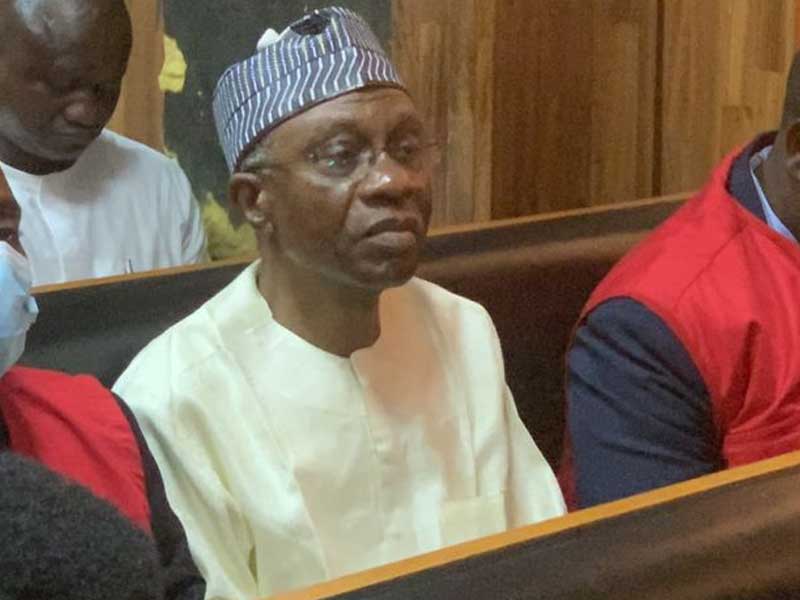
    A prosecution witness (PW7), Mr. Michael Agboro, alleged that the suspended governor of the Central Bank of Nigeria (CBN), Godwin Emefiele awarded contracts to companies belonging to his wife and his brother-in-law. Emefiele is standing trial on an alleged 20-count amended charge, preferred against him by the Economic and financial Crimes Commission (EFCC) before an FCT High Court in Maitama, Abuja.

    He was alleged to have engaged in criminal breach of trust, forgery, and conspiracy to obtain by false pretence and obtaining money by false pretence, when he served as the apex bank’s boss. The EFCC alleged that the former CBN boss forged a document titled: Re: Presidential Directive on Foreign Election Observer Missions dated Jan. 26, 2023 with Ref No. SGF.43/L.01/201 and purported same to have emanated from the office of the Secretary to the Government of the Federation (AGF).

    Besides he is also accused of using his office as CBN governor to confer unfair and corrupt advantage on two companies; “April 1616 Nigeria Ltd and Architekon Nigeria Ltd”. Agboro, an investigator with the Independent, Corrupt Practices and other related offences Commission (ICPC) who testified earlier was cross-examined further by Emefiele’s counsel, Mathew Burkaa, SAN.

    When asked if the defendant conferred unfair and corrupt advantage on himself, he answered: ”he conferred on Saadatu Yaro, who is a public officer working under him. He also conferred on his wife and brother-in-law.

    When asked if Emefiele alone could award and approve contracts, he answered that the contracts were approved by the defendant.

    Answering if there was no difference between CBN and Emefiele, he said the difference was that the defendant was an employee of CBN.

    When asked if the defendant was a member of the tender’s board or procurement department, he said he did not know.

    ”We limited our investigation to him, his wife, relatives and associates.

  • How Buhari’s Govt Lavished  $100m World Bank Loan –Minister

    How Buhari’s Govt Lavished $100m World Bank Loan –Minister

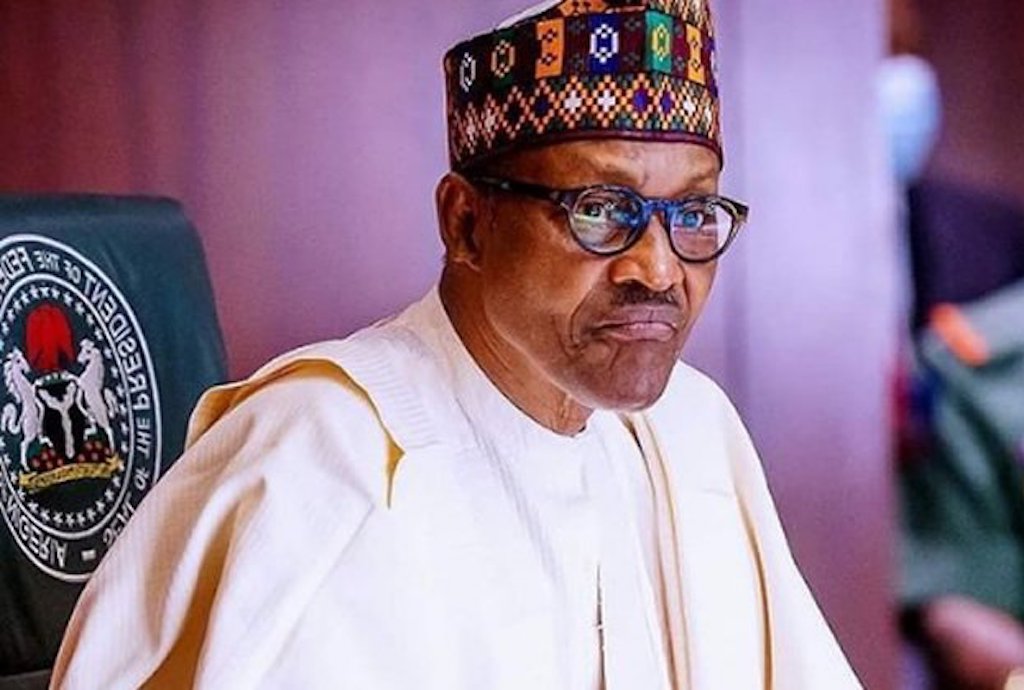
    A fresh allegation of maladministration against the immediate past All Progressives Congress (APC)-led government, came to the fore, yesterday, as the Minister of Women Affairs, Uju Kennedy-Ohanenye, accused former president, Muhammadu Buhari’s administration of lavishing the initial $100million of a $500 million World Bank loan for women empowerment.

    Ohanenye said Buhari’s government “lavished” the $100 million on meetings, advocacy and consultancy.

    The minister made this known in an interview with Arise News, monitored by The Pointer in Asaba, the Delta State capital.

    Recall that the World Bank on June 27, 2023 approved a fresh $500 million loan for Nigeria to help improve the livelihoods of women in Nigeria.

    Ohanenye commended President Bola Tinubu for his proactive involvement in the project, particularly his scrutiny of the initial $100 million expenditure.

    She clarified that the funds were a loan, not a grant, and stressed the importance of proper management to ensure repayment.

    “About the Nigeria for Women Project, let me first tell Nigerian women to clap for President Bola Ahmed Tinubu, who came in after the first $100 million had been expended. That was when he came in and when he came in, he looked at it with me and we were not satisfied with how the $100 million was used.

    “Let me make it clear. This is not a grant, it is a loan and when some monies are loans, they must have to be managed well so that the loans can be paid back. If you don’t manage it well, how do we pay back the loan? “And when it is a loan, we expect whoever you are giving loan to be allowed to utilise that loan properly in a way that it can yield back the money to be paid, so that Nigeria will not continue owing.

    “The first 100 million, when I came in, I was not satisfied. It didn’t augur well with the vision of the new President’s Renewed Hope Agenda.

    “It was mainly used for advocacy, meetings, consultancies and that was it. They shared it among the states.”

  • Fubara Cancels Revocation Of Five Star Hotel’s C Of O By Wike

    Fubara Cancels Revocation Of Five Star Hotel’s C Of O By Wike

    Rivers State Governor, Siminalayi Fubara has cancelled the revocation of the Certificate of Occupancy (C of O) of Ogeyi Place Le Meridien, one of sprawling five star hotels in Port Harcourt.

    The Certificate of Occupancy (C of O), which the property was sitting on, was revoked by the former Governor Nyesom Wike of the immediate past administration for reasons that government wants to use the space for the reasons not properly explained and under controversial circumstances.

    Our correspondent reports that the Hotel is owned by former Military Governor of Rivers State, General Anthony Stephen Ukpo, rtd.

    From the document sighted online, the Governor of Rivers State, Fubara cancelled the revocation order on June 6, 2024 in exercise of his constitutional powers.

    The property, owned by former military Governor of Rivers State, (now late) Brig-General Anthony Stephen Ukpo, (Ogeyi Place Le Meridian) Hotels Limited, is located at Plot 319, GRA Phase II, Port Harcourt.

    It would be recalled that at time the C of O of the hotel was revoked, private investors and owners of hospitality businesses in Rivers were rattled, particularly because no cogent official explanations were given.

  • Insecurity: We’ve Disrupted, Dismantled Criminal Networks –Tinubu

    Insecurity: We’ve Disrupted, Dismantled Criminal Networks –Tinubu

    President Bola Tinubu says the efforts of the security forces in the fight against insecurity in the North-West is yielding results, and has resulted in disrupting and dismantling of criminal networks.

    The President said this at the North-West Peace and Security Summit organised by the North-West Governors’ Forum in Katsina, the capital of Katsina State, yesterday.

    Represented by the Vice President, Kashim Shettima, Tinubu assured Nigerians that the progress made so far is just the beginning as the government is making more effort in providing a better secured environment for all citizens in every region of the country.

    “Our military forces, through various operations such as Operation Hadin Kai and Operation Safe Haven, have made true their promise to the nation by targeting like Boko Haram and bandits who have held for too long.

    “Through enhanced border security and intelligence capabilities, we have disrupted and dismantled criminal networks. Each of you here is aware of the high profile figureheads of these groups neutralised by our forces, and I am here to share with you that this is just the beginning,” he said.

    The President noted that the issue of insecurity in the North-West is not a sectional agenda, as whatever affects any part of the nation destabilises the other, adding that the administration’s promise of securing Nigeria remains its topmost priority since assuming office over a year ago.

    He said the strategies employed by the government in fighting insecurity in the North-West has begun to provide redemption, adding that there will be no slow down until the aim of totaling dismantling insurgents is achieved.

    Non collaboration among security agencies has always been pointed out by security experts as one of the major hindrances of the fight against insecurity.

    However, President Tinubu disclosed that the government is making huge efforts in strengthening collaborations among security agencies to ensure a unified approach in the fight against insurgency.

    He also said that guidelines such as standard operating procedures and rules of engagement are being adhered to in all the approaches in the battle against insurgents.

    Dignitaries that attended the security summit include former President Muhammadu Buhari, Sultan of Sokoto Governor, host of the event, Minister of Defence, Muhammad Badaru, National Security Adviser, Nuhu Ribadu, host governor Umar Radda, other North-West governor among others.

  • Abiodun Emerges Chairman Of Southern Governors Forum

    Abiodun Emerges Chairman Of Southern Governors Forum

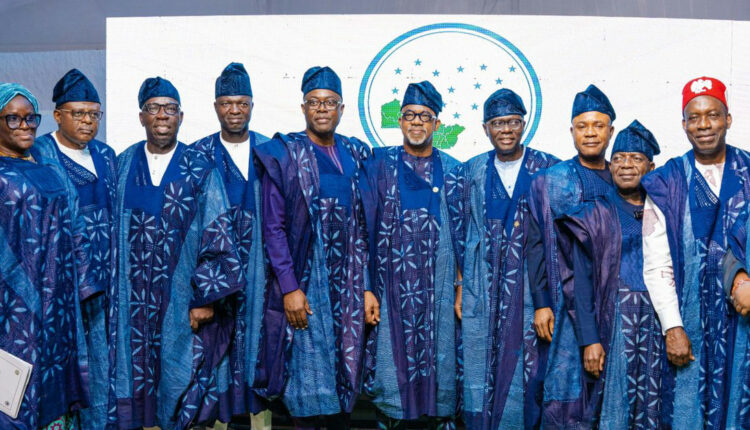
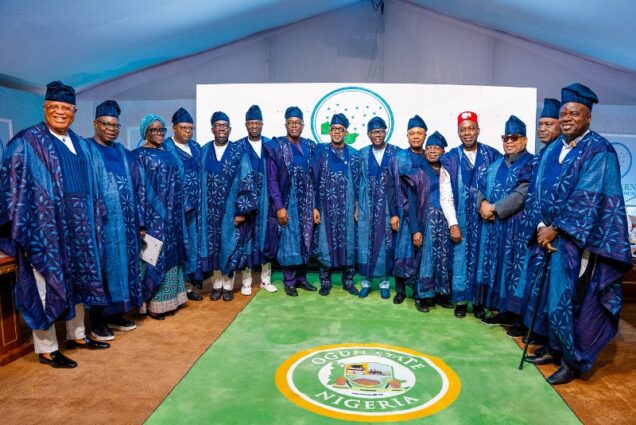
    Ogun State Governor, Dapo Abiodun has been elected Chairman of the Southern Governors Forum (SGF).

    Anambra State Governor, Chukwuma Soludo, emerged as the vice chairman.

    This followed a meeting of the Southern Governors Forum in Abeokuta, Ogun State, yesterday.

    The meeting, which lasted about five hours, had in attendance 13 governors and three deputy governors from the southern states.

    The governors are Dapo Abiodun, (Ogun); Godwin Obaseki, (Edo); Seyi Makinde, (Oyo); Alex Otti (Abia); Babajide Sanwo-Olu, (Lagos); Ademola Adeleke (Osun); Francis Nwifuru, (Ebonyi); Peter Mbah, (Enugu); Douye Diri, Bayelsa, and Umo Eno, (Akwa Ibom State).

    Others are Biodun Oyebanji, (Ekiti); Bassey Otu, (Cross River); Charles Soludo, (Anambra); Imo State Deputy Governor, ChinyereEkomaru, Delta State Deputy Governor, Monday Onyeme, and Ondo State Deputy Governor, Olayide Adelami.

×