Category: OPINION

  • 2027: Urhobo Nation And Imperative Of Ranking Senator

    2027: Urhobo Nation And Imperative Of Ranking Senator

    BY AKPOS OGHENTEGA

    In the buildup to the 2011 general elections, the late senator, Prof Adego Eferakeya, issued a stern, prophetic warning to the Urhobo nation. He spoke of a quiet but devastating peril: the danger of lacking a “ranking senator” in the National Assembly.

    As a member of his media campaign team during that era, I sat in the front row of history, listening as he articulated a reality that many political observers ignore to their own detriment.

    Sen Eferakeya was unambiguous—the Urhobo nation, despite its numerical strength and economic contributions, was often a “lone voice” in the Red Chamber. He argued that without the institutional seniority that comes with ranking status, even the most brilliant or charismatic senator remains at a structural disadvantage.

    To understand the weight of this warning, one must look at the demographics of power in Nigeria. The Urhobo nation is the fifth-largest ethnic group in the country. Yet, in the high-stakes theatre of Abuja politics, we often stand as political orphans.

    Our neighbours in Delta North find legislative solace and strength in their kinship with the Igbos across the Niger. Our brothers in Delta South—the Ijaws—align with a vast kinship spanning Bayelsa, Rivers, Edo, and Akwa Ibom.

    When an Ijaw senator speaks, he is backed by a chorus of voices from multiple states. But the Urhobo voice is solitary.

    For that voice to be heard above the legislative din, it cannot afford to be the voice of a “neophyte.” It must be the voice of a ranking senator who understands the levers of power.

    The Historical Cost of the “Newbie” Cycle

    A critical look at the Urhobo political trajectory from the dawn of the Fourth Republic in 1999 up until 2015 reveals a pattern of abysmally low tangible impact. This was not due to a lack of individual talent. We sent men of immense stature to Abuja: the late Sen Fred Brume, a brilliant engineer and administrator; the late Sen Felix Ibru, a former Governor and architect of repute; and the fiery Sen Pius Ewherido. However, their legislative impact was frequently curtailed by the “newbie” trap.

    In the Senate, seniority isn’t just a matter of respect; it is a matter of law and standing orders. New senators are effectively on probation. They are rarely given the floor during critical debates and are rarely considered for the “Tier 1” committees where the nation’s wealth is distributed.

    Save for Prof Eferakeya—who used his unique goodwill and professional standing to strategically attract the Faculty of Engineering and a Medical Centre to the Federal University of Petroleum Resources (FUPRE), as constituency projects—few can point to landmark, multi-generational achievements from that era.

    Compare this to the “James Manager Era” in Delta South. Sen Manager served multiple terms, rising to become the Chairman of the Senate Committee on the Niger Delta Development Commission (NDDC).

    Because he was a ranking member, he didn’t just ask for projects; he influenced the budget. He was able to facilitate massive infrastructure, thousands of international scholarships, and high-level job placements for his people.

    Similarly, the late Sen Peter Nwaoboshi from Delta North utilised his ranking status to dominate the NDDC committee, ensuring his constituency was a primary beneficiary of the agency’s interventions. The lesson is clear: in Abuja, seniority is the only currency that buys results.

    The Omo-Agege Precedent

    The most recent and glaring evidence of the “Ranking Advantage” is the tenure of Sen Ovie Omo-Agege. When he first went to the Senate, he was a lone voice. But it was his return as a ranking senator in 2019 that changed the game for Delta Central. Because he was a ranking member, he was eligible to contest for—and win—the position of Deputy Senate President (DSP).

    As DSP, Omo-Agege didn’t just represent Urhobo; he led Nigeria. That seniority translated into the Federal Polytechnic Orogun, dozens of power transformers across Urhobo land, hundreds of solar streetlights, and a level of national visibility the Urhobo nation had not enjoyed since the days of the Midwest Region.

    Had the Urhobo nation fallen into the trap of “rotation” or “political expediency” in 2019, we would have sent a newcomer who would have sat in the back row, and none of these landmark achievements would have materialised.

    2027: Avoiding the Self-Inflicted Trap

    Today, we see a dangerous repeat of history staring us in the face. As the 2027 cycle approaches, the whispers of “political expediency” and “it’s another person’s turn” are beginning to surface. We must ask ourselves: is it the turn of an individual to go and “dance Kerewawa” (make a mere appearance) in Abuja, or is it the turn of the Urhobo nation to finally consolidate its power?

    Sen Ede Dafinone is currently bridging a massive gap. He entered the Senate during a period of intense national economic difficulty and regional tension.

    Despite being a first-timer, he has used his immense corporate goodwill, his international professional connections, and his pedigree to navigate a difficult scenario. He has not been a silent observer.

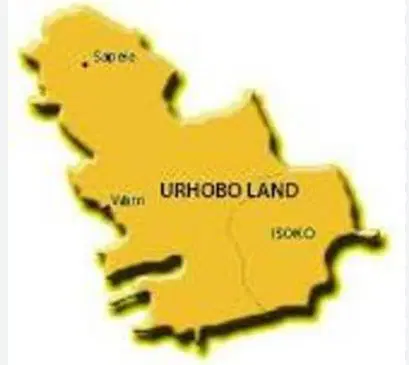
    His gallant interventions during the Okuama crisis were a masterclass in protective representation. When the very soul of the Ewu Kingdom was under threat, Dafinone stood firm. When Urhobo interests were attacked in Warri and Sapele, and when there were attempts to denigrate the stool of the revered Orodje of Okpe, he did not hide behind legislative immunity. He stood in the gap, rebuffing attacks and ensuring that the Urhobo nation was not intimidated. He has reanimated the “Mokoro” and “Salubi” era of Urhobo politics—an era where our leaders were thinkers, protectors, and diplomats.

    To abandon Sen Dafinone in 2027 for a “neophyte” would be a catastrophic mistake. A new senator, no matter how well-intentioned, will be a “nobody” in the 11th Senate. They will spend the first two years learning the rules of the House and the next two years trying to make friends. By the time they understand how to lobby for a road or a hospital, the four-year term will be over, and Urhobo will be back at square one.

    The Choice for Progress

    The Urhobo nation cannot afford to be a “perpetual beginner” in the National Assembly. We cannot continue to sacrifice our collective development on the altar of local political rotations that do not serve our national interest.

    If we want a forceful voice that echoes across the floors of the National Assembly, if we want our infrastructure to match our status as a host to major oil and gas assets, and if we want our youth to have access to federal jobs and scholarships, we must play the game by the rules of the Senate. The rule is seniority.

    Sen Dafinone has demonstrated the temperament, intellect, and courage to lead. In 2027, the choice is simple: do we send a neophyte to “learn on the job,” or do we send a ranking senator to “finish the job”? For the sake of our children and the future of the Urhobo nation, we must not make the mistake of 2011 again. We must return Sen Dafinone to Abuja.

  • APC Delta Congress: The Dawn of a Defining Political Era

    APC Delta Congress: The Dawn of a Defining Political Era

    By Fred Oghenesivbe

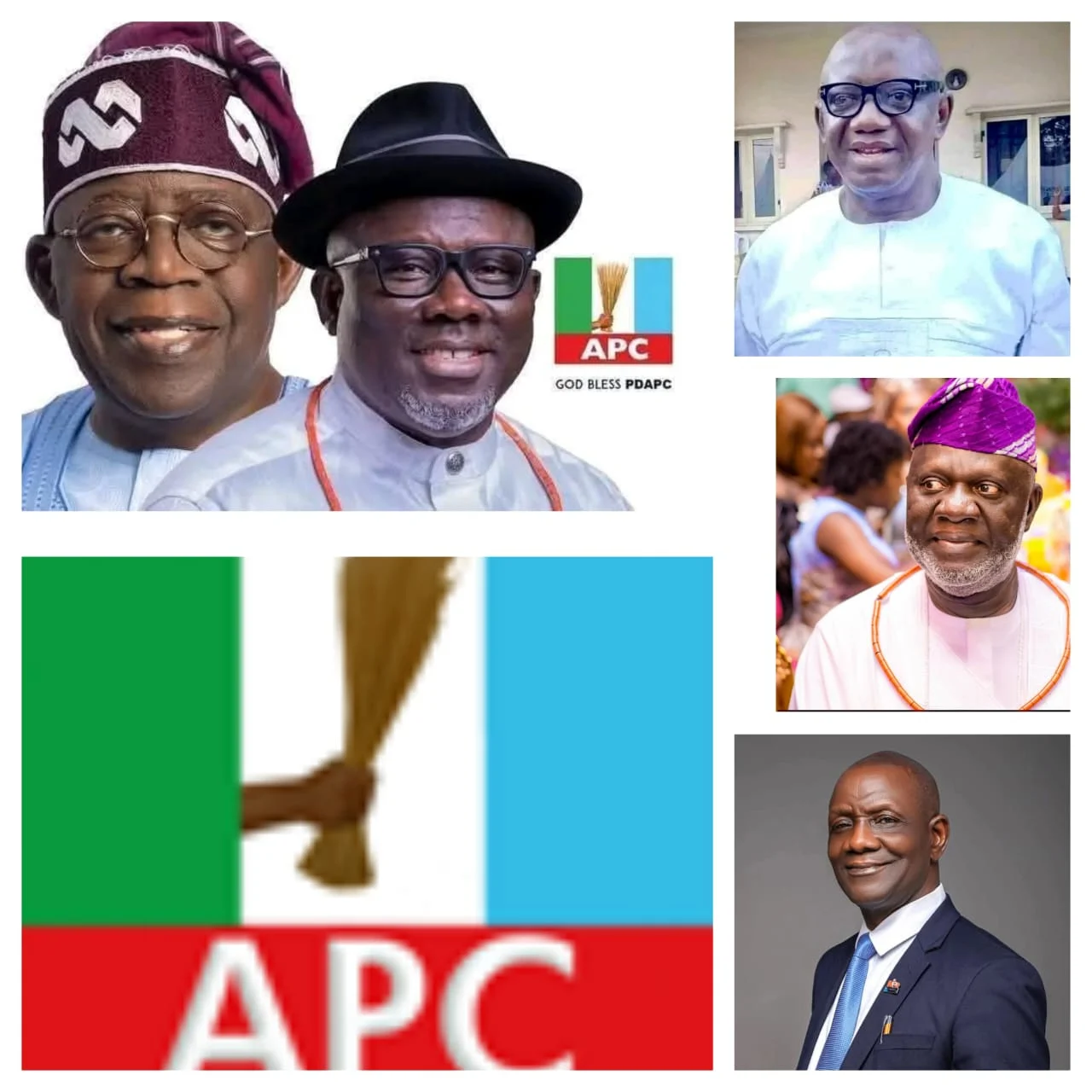
    At the iconic Cenotaph in Asaba, the Delta State Chapter of the All Progressives Congress (APC) convenes its first State Congress following the seismic political realignment that reshaped the state’s power structure, the historic collapse of the People’s Democratic Party (PDP) framework in Delta State, into what is today widely acknowledged as the “Great Political Movement,” led by Governor Sheriff Oborevwori.

    This is no ordinary congress. It is not merely a routine political exercise. It is the formal unveiling of a new order. At the forefront of this defining moment stands the State Leader of the party and Governor of Delta State, Sheriff Oborevwori. He will lead party leaders, stakeholders, delegates, and loyal faithful into what promises to be a congress of consolidation, direction, and renewed strength.

    Across the globe, politics follows a familiar rhythm; negotiation and compromise, persuasion and principle, strategy and sacrifice. It is often a careful dance: a little to the right, a little to the left. But at its heart, politics is about unity of purpose, strength of structure, and the collective will to win.
    Above all, it is about leadership.

    The APC in Delta State, under Governor Oborevwori’s stewardship, has demonstrated firmness, clarity of purpose, and a performance-driven promise that resonates with the aspirations of the people. Leadership capacity is not measured by rhetoric alone, but by the ability to unify diverse interests into a formidable political force. In this regard, the Governor has proven both steady and strategic.

    This congress carries additional weight. It is the first major gathering since the adoption of President Bola Ahmed Tinubu and Governor Sheriff Oborevwori as sole Presidential and Governorship standard-bearers for the forthcoming general elections.

    The stakes are unmistakably high.
    Today’s decisions will shape tomorrow’s victories. The structures built now will determine the strength with which the party marches into 2027. The message must be clear: we mobilize not for division, but for dominance; not for discord, but for destiny.

    As the political pendulum swings, and as it inevitably does, our collective responsibility is to ensure that, whatever the outcome, unity prevails. Democracy within the party must strengthen the party, not strain it. When the ballots are counted and the dust settles, we must embrace the winners, celebrate collective triumph, and close ranks for the battles ahead.

    Naturally, conversations have emerged regarding zoning and balance. A significant majority favours the emergence of the State Party Chairman from the South Senatorial District in the spirit of political equilibrium. Others advocate for the North Senatorial District, equally invoking fairness and inclusion.

    These debates are healthy. They reflect engagement. They demonstrate ownership. But above preferences and projections stands a guiding principle: fairness, equity, and good conscience. Let the delegates speak. Let majority will prevail. Let justice temper ambition.
    When the process is transparent and participatory, legitimacy follows naturally.

    Our state party leader, Governor Oborevwori is widely regarded as a bridge-builder, a leader anchored in peace, equity, and sound judgment. Those privileged to have worked closely with him understand his calm deliberation, his consultative approach, and his commitment to justice.

    Trust is not demanded; it is earned. Over the years, Governor Oborevwori has earned it. And it is this trust that must guide us today.

    No matter how intense the contest, no matter how spirited the campaigns, the end must justify the means; a stronger, united APC poised for overwhelming victory in 2027.

    The bigger picture is 2027 general elections. Let us approach this State Congress with open minds and elevated vision. The real contest lies ahead. The ultimate objective is clear: deliver Delta State convincingly for our party and its candidates in 2027.

    Structures must be fortified. Grassroots mobilization must deepen. Stakeholders must align. The “Ukodo” symbolic of shared reward and collective participation will surely go round, one way or another. But first, we must sustain unity. Without unity, victory is fragile. With unity, victory is inevitable.

    Today is more than a congress. It is a statement of intent. It is the birth of a consolidated political movement determined to redefine Delta’s trajectory.

    As delegates gather beneath the Asaba sky at the Cenotaph, they do so not merely as party members, but as architects of a renewed political future.

    May this Congress be peaceful. May it be transparent. May it be result-oriented. And may it mark the unmistakable beginning of a new era.

    APC — Renewed Hope for MORE Agenda.

  • When DNA Results Don’t Tell The Whole Story

    When DNA Results Don’t Tell The Whole Story

    BY SYLVESTER OJENAGBON

    WE often treat a DNA result like a final, divine verdict. In a time when truth can feel subjective, a laboratory report has become our ultimate anchor. We hand over a cheek swab, wait a week, and expect a simple answer that will settle a lifetime of questions. But science, for all its staggering precision, operates in a world governed by human error, biological anomalies, and the unpredictable reality of our own cells. Sometimes, a mismatch on a piece of paper is not the end of a relationship; it is the beginning of a much more complex conversation about what truly makes a family.

    At its core, a paternity test is a game of biological matching. We inherit half of our genetic markers from our mother and the other half from our father. By isolating specific locations on the genome, scientists look for a profile that matches. If a child has a specific genetic marker that neither parent possesses, the mathematical logic of the test begins to disintegrate. In a vacuum, this often seems foolproof. But we do not exist in a vacuum. We live in a world where samples are handled by tired technicians, where home kits are contaminated by a stray hair on a kitchen table, and where the absolute truth of a printed result is only as reliable as the chain of custody that produced it.

    The truth is that, while DNA testing is often touted as being 99.9% accurate, that tiny remaining fraction is where thousands of real lives exist. Globally, the prevalence of errors is not necessarily about the failure of science but about the process surrounding it. The explosion of “peace of mind” home kits has introduced a margin of error that most families are not prepared for. When a man collects a sample at home, there is no official witness to verify that the swab belongs to the person named on the envelope. Clerical errors, mislabelled vials, or even a simple mix-up in a sorting office can lead to a result that is factually correct for the sample provided but completely wrong for the family involved.

    Beyond clerical oversight, there is the staggering, albeit rare, possibility of a hospital error. The “swapped at birth” narrative feels like the plot of a television drama, yet it remains a haunting reality in overworked or under-resourced maternity wards. There are moments in history where administrative chaos, sheer human fatigue, or even “deliberate miscalculation” has led to two newborns being placed in the wrong cribs. When a DNA test excludes a father, the immediate assumption is often infidelity, but the science does not account for the possibility that the child in the cradle is not the child the mother actually gave birth to.

    In these rare, devastating instances, a negative result is a cry for a deeper investigation into a systemic failure rather than a personal one. This is why, in cases of doubt, a “maternity” test is just as vital as a paternity one. If a father receives a non-match, it is crucial to also test the mother. If the results show that the child does not match the mother either, the narrative shifts instantly. The crisis of trust between a couple evaporates, replaced by the chilling realisation that their biological child is somewhere else entirely. In such a scenario, the DNA test is technically “accurate” in its exclusion, but it is telling a story of a lost child rather than a broken vow.

    Now, there are also “biological ghosts” in our machines. Humans are constantly evolving, and occasionally, a child will develop a spontaneous mutation at a specific genetic marker. If a lab only looks at a limited number of markers, a single mutation can make a biological father look like a total stranger to his child’s DNA. Even more surreal is the phenomenon of chimerism, where an individual carries two different sets of DNA—often from absorbing a fraternal twin in the womb. There are documented cases of mothers nearly losing custody because their blood DNA did not match their children’s, despite a clear biological birth. The same can happen to men; if the DNA in a father’s cheek swab does not match the DNA in his reproductive cells, the test will return a false negative.

    Furthermore, we must consider the role of modern medicine. Procedures like bone marrow transplants can rewrite a person’s genetic signature in their blood. If a man has received a transplant, his blood will carry the DNA of his donor. A test taken from a blood sample would suggest he is not the parent of his own biological children, whereas a swab from his cheek might say otherwise. In these cases, the truth is hidden beneath layers of medical intervention that a standard test is not designed to see. It requires a specialist, a genetic counsellor, and a laboratory willing to look beyond the surface.

    When a man holds a report that says he is excluded, the shock often triggers an intrinsic negative response. The world feels like it is tilting on its axis. And all of this comes at a great cost to physical, mental, emotional, and relational wellbeing. So, before imagining the worst or making accusations that cannot be reversed, it is vital to take a deep breath and look for the nuance. The first step should rarely be a confrontation but a conversation with a different, accredited laboratory. Opting for a “legal-grade” test, where identities are verified by a professional and the sampling is supervised, can eliminate the variables of a home-kit mishap, for example. It is also the moment to ask the lab if there is evidence of a mutation or to audit the birth itself if the mother’s DNA also shows a mismatch. This is a time for forensic curiosity rather than emotional finality.

    We must also recognise that a DNA test is a tool, not a judge. It measures molecules, but it cannot measure history, intention, or the depth of a bond. Geneticists can tell us who provided the sequence of proteins, but they cannot determine who the real father is.

    History is full of men who discovered late in life that their children were not biologically theirs, only to realise that the years of bedtime stories, shared meals, and hard-earned wisdom were more real than a DNA result. The man who taught a child to ride a bike, who stayed up through the night during a fever, and who stood proudly at every graduation ceremony is not erased by a laboratory technician’s report.

    If a result comes back as a mismatch, it is undoubtedly a crisis, but it is also an invitation to look at what actually builds a home. Families are constructed from more than just matching sequences of adenine and guanine. They are built through presence, through the shared language of a household, and through the choice to be responsible for another life. Whether the science confirms the bond or reveals a surprise that forces you to question everything you knew about your child’s birth, the commitment made to that child does not disappear into thin air because of a lab report.

    Ultimately, we are more than the totality of our genes. Science gives us the data, but we give that data its meaning. True fatherhood is not just found in a vial of saliva; it is found in the daily, quiet choice to stay, to love, and to be the person that child calls “Dad”. When the DNA is not enough, the human heart must be.

  • Nyesom Wike And Falling Rafters Of Rivers

    Nyesom Wike And Falling Rafters Of Rivers

    BY FESTUS ADEDAYO

    PRINCE Adekunle, the Yoruba Juju music maestro of the 1970s, once sang that a tree which falls in the forest cannot kill someone right inside their home; nor could a fallen rafter kill a bystander in the forest (Igikìídál’ókokó pa aráilé; àjàkìíjìnk’ó pa èròònà). We have found this not to be absolute. The falling tree and rafters of Western Nigeria once killed a bystander in First Republic Nigeria.

    FCT Minister Ezenwo NyesomWike is a phenomenon. He is someone many love to hate. When the Secretary of the APC, Dr Ajibola Bashiru, recently asked him not to import the brand of troublous and fragmenting politics of the PDP into the APC, he meant that Wike is the troubler of Nigerian poli­tics. Wike’s anger is unexampled, his choleric outbursts phenomenal. He is a phenomenon in Nigerian politics, regardless. These have pushed me to undertake a psychoanalytical study of the Wike phenomenon. In doing this, my mind hovers over the negatively phenomenal child called Àjàntálá.

    In the ancient Àjàntálá mythology, Yoruba reproduced a counterpoise of the western Frankenstein monster. As folklore and a cultural signifier, the Àjàntálá was a misbegotten child, a product of his father’s disobedience to the un-science of, though life-shaping, ancient epistemology and practices of his people. Àjàntálá’s hunter fa­ther had disobeyed the widely held myth that when hunters’ wives were pregnant, they should cease hunting. The belief was that, if they shot a cantankerous game, it may, in anger, displace the foetus inside their wives and become a perilous child. This was the process that birthed Àjàntálá.

    In the Amos Tutuola version of Àjàn­tálá’s story (Àjàntálá, The Noxious Child: 1986), the baby spent 23 years inside his mother’s womb. A few days before he was born, as his mother walked the bush path, the child began a conversation with her, even cavalierly suggesting its name at birth.

    Àjàntálá became a burden to those who birthed him and his neighbourhood, the way Wike is a burden to the APC and the PDP today. Even those who did not pur­chase paid out of the bill. At his naming ceremony, the 8-day-old child disrupted the proceedings, gluttonously consum­ing every food in sight and causing huge pains to his parents and all his naming ceremony attendees. As he grew, Àjàntálá manifested malevolent streaks, whipping his parents at intervals and beating to stupor a Babalawo, who was engaged to provide spiritual succour to his raving-mad Satanic theatrics.

    The truth is, Nigerian politics is not for the lily-livered. It is only the Wikes who understand it, who can survive it. Give it to him: Wike has colossal mastery of Nigerian politics. Nigerian politics is a weird life comparable only to life in the wild. It has face recognition with Thomas Hobbes’ famous phrase of a ‘nasty, brutish and short’ life. It is home to a vast array of wildlife. Monkeys, tigers, leopards, lions, and reptiles of different hues inhabit the wild. So do they politics. These animals are consumed by a daily struggle to as­sert the jungle as their individual fiefdom. Indeed, the less said about politics’ sores, the better. Apart from its dense vegetation of plants, vines, and shrubs, the wild is a jungle.

    The jungle, in the words of my people, is the forest of the heartless (Igbóòdájú). In politics, brothers stab brothers and bloodlines are helpless to rescue. Joining Nigerian politics is like entering the un­charted space of the jungle. In it, there is an inversion of the norm. Betrayal is a vir­tue, honesty is a vice. Politics’ rules abhor rules, its order reeks of disorder and its beauty, manifest ugliness. Nigerian politics makes politics ashamed of its own virtues. It is where yellow is white, where worldly cunning is a virtue. In the wild, birds eat the carrion of fellow birds. Boa constric­tors swallow fellow snakes. Hyenas pierce their incredibly powerful incisors into the raw flesh of vulnerable lions of the same cat family.

    While urging those who cannot with­stand the dog-eat-dog life in the jungle to flee its red-hot furnace, Yoruba Apala music legend, AyinlaOmowura, once warned that, “as we proceed into the jungle, the forest of the heartless, let mothers keep an eye on their children. Lions live in this jungle. Let lesser animals beware!” In another line, he admonished anyone whose mother was late and thus bereft of motherly spiritual tendering, not to proceed with him into the jungle because loud-sounding, frightening thunders herald the entrances of initiates into the jungle. He could have meant Nige­rian politics.

    The wild is also not amenable to the logic of everyday life. To illustrate its unpredict­ability, my people capture it in a saying that if you wander far enough in the wild, not only will you come in contact with a hunch­backed squirrel (abukéòkéré), a snail with horns (ìgbínt’óní’wo) like that of an efòn (buffalo) or an àgbánréré, the rhinoceros, would walk past you.

  • Thoughts On Governing Nigeria: Coalition And Consensus Politics(1)

    Thoughts On Governing Nigeria: Coalition And Consensus Politics(1)

    BY LADIPO ADAMOLEKUN

    THE only permissible restrictions would be the maintenance of peace and national security with operational guidelines that are widely publicized.

    An independent judiciary which guarantees the rule of law, regulating relationships among citizens and those between citizens and the state. Normally, there would be a Basic Law (Constitution) which enshrines both fundamental human rights and the independence of the judiciary in addition to specific provisions on the institutions of governance.

    In a multi-religious society, consensus politics would only be practicable if the secularity of the state is enshrined in the Constitution.

    These five distinguishing features of consensus poli­tics would merit further elaboration and refinement.

    What is the basis of political party competition in the country today? There is neither a Progressive/ Conservative divide nor a Left/Right divide – the most common distinction among competing parties in the majority of modern democratic politics. When the Ac­tion Congress refers to itself as a “Progressive” party, it implies that the People’s Democratic Party (PDP) (AC) is a “Conservative” party. And the advertised alliance between the AC and the All Nigerian People’s Party (ANPP) implies that the latter, too, is a progressive party. However, given the composition of the leadership groups of the three main parties and their antecedents – where they were in Babangida’s decreed two-party political arrangement and within the five parties that unanimously adopted maximum ruler Abacha as sole presidential candidate – it is difficult to meaningfully assign either the progressive or conservative tag to any of them.

    The changing of political allegiances by many po­litical actors among the three parties since mid-2006 further underscores this point. Equally revealing is the close to zero trade union experience of most of the gubernatorial candidates who claim to represent the Labour Party while the immediate past charismatic leader of the Nigerian Labour Congress (NLC) is an AC gubernatorial candidate.

    It is against this background that one can confidently assert that the primary concern of the vast majority of our political actors is how best to win political power and use it to secure access to the available national resources. Ideology or principles are irrelevant and the mobilization of citizens for political participation is not an issue – party cards are purchased for them and their votes are to be obtained in exchange for ridiculous cash and/or food items. As in 1999 and 2003, whichever group wins control of the central government in 2007 is likely to proceed to adopt a zero-sum winners-take-all approach to governance. State governments that are controlled by parties that are different from the ruling party at the national level will be treated as “opposi­tion” to be shut out of even constitution-guaranteed share of national resources, to the extent possible. In its magnanimity, the ruling party at the centre could select political actors from a few “opposition” parties to join the “mainstream” – to come to the table to “eat”!

    Given the lack of significant differences in the policies and programmes in the different manifestoes that have now been released by the political parties, would it not be better for them to agree on coalition governments at both the central and state levels? This would mean al­locating a percentage (25 – 33 percent?) of the positions in governments in proportion to the percentage of votes won by the different minority parties. This arrangement would need to be formalized through a Memorandum of Understanding (MOU) agreed upon in advance by the leadership of the relevant parties. The MOU would, among other things, include a statement of the core principles, policies and programmes that the coalition governments will agree to implement. The threshold for participation in coalition government could be set at 25percent of votes at the national level and 10% at the state level. Minority parties that would not wish to participate in coalition governments would be free to continue to mobilize support for principles and policies that are different from those of the parties involved in coalition governments. It is conceivable that one, two, or more election cycles down the line, such parties could win control of governments in some states.

    It is noteworthy that some of the civilian governments at the national level from the 1950s to the mid-1960s were national or all-party coalition governments, that is, without an official “opposition”: a national government from 1952 to 1954; coalition of all three major parties from 1957 to 1959; and an all-party coalition from 1965 to January 1966.

    A survey of governmental systems in modern states would show that a government and opposition sys­tem only functions smoothly where there is a national consensus on core values and societal goals (for example, Britain, France and Germany) in contrast to countries that are characterized by deep ethnic, racial, religious and linguistic divides which tend to opt for coalition governments (for example, Austria, Belgium and Switzerland). The countries concerned have, through coalition governments, enjoyed peace, security, and good development performance over many decades.

    Of course, there are occasional tensions and crises within coalition governments but they get resolved through changes among majority/minority part­ners. It is also pertinent to mention that countries committed to a government and opposition system establish coalition (national) governments com­prising all major parties during periods of national emergency like the depression years of the 1930s and during the Second World War years and the immediate post-War years (for example, Britain and France for varying periods).

    In Nigeria, where a “civilianized” president who endlessly affirms his total commitment to national unity is also a champion of “do or die” elections, a government and opposition system cannot function smoothly. It is significant that the entire leadership of the PDP has echoed the “do or die” mantra. For the president and other PDP leaders, all the other parties are “enemies” to be defeated by every means possible. Wouldn’t a formal adoption of multi-party coalition constitute a better alternative to “do or die” politics in a context in which party policies and programmes are very similar? As was the case in 1957 when speeding up the decolonization process was declared a national emergency that a national (coalition) government had to tackle, the drive to­wards a prosperous Nigeria by 2020 could also be declared a national emergency that three successive coalition governments over a 12-year period might help us accomplish.

    One obvious danger of opting for coalition govern­ments in the prevailing circumstances in Nigeria is the almost inevitable emphasis on the politics of sharing spoils of office among the political elites (“sharing the national cake”) to the neglect of grow­ing the economy and fighting poverty. Although there was no alternation between government and opposition at the regional levels in the 1950s and early 1960s, political competition was real (for example, AG majority versus NCNC minority in Western Region and NPC majority versus NEPU mi­nority in Northern Nigeria) and this helped ensure grassroots political mobilization, some progress in the apprenticeship to democratic politics, and fairly decent development performance. Therefore, states or geopolitical zones in which there is broad consensus on core societal values, goals and objec­tives could, if they wish, operate a government and opposition system.

  • Maduro’s Capture: Power, Oil And The Cost Of Cognitive Blind Spots

    Maduro’s Capture: Power, Oil And The Cost Of Cognitive Blind Spots

    BY REMI LADIGBOLU

    THE seizure of Venezuelan President, Nicolás Maduro and his wife, Cilia Flores, by United States forces on Sat­urday has shaken the foundations of the international system.

    A foreign military operation struck a sov­ereign capital and removed a sitting head of state without congressional approval in Washington and without any recognised mandate under international law. This was not merely a dramatic episode in global politics. It exposed how fragile the assump­tions underpinning the modern world order have become.

    The U.S. has justified the operation by pointing to narcotics allegations. Maduro has been indicted in a federal court in New York on charges that include narco-terror­ism conspiracy. Yet international law leaves little room for ambiguity. A sitting president enjoys sovereign immunity while in office. Even if allegations are later substantiated, they do not justify unilateral abduction or the use of force. What occurred was not law­ful law enforcement. It was an intervention that cuts directly against the principles of sovereignty and non-intervention.

    That legal breach is sharpened by po­litical inconsistency. Donald Trump previ­ously pardoned Juan Orlando Hernández, the former Honduran president who had already been convicted in a United States court for narco-terrorism related offences. This decision makes it difficult to accept that Venezuela was targeted out of a genuine commitment to fighting drugs. If narcotics were truly the issue, a convicted offender would not have been forgiven while an al­leged one was seized by force. The contrast points to other motives.

    Domestic politics provides a clearer explanation, but it is not the only one. The operation fits a familiar pattern often de­scribed as Wag the Dog, where dramatic foreign action overwhelms damaging do­mestic narratives. Trump is under sustained pressure at home. The Epstein files continue to surface in phases, keeping uncomfortable questions alive. The anniversary of Janu­ary 6 is approaching, a date that remains inseparable from Trump’s political legacy.

    January 6 refers to the storming of the United States Capitol in 2021 by supporters seeking to halt the certification of an elec­tion Trump had lost. The attack resulted in deaths and injuries and inflicted lasting damage on American democratic norms. Trump has been accused of inciting the un­rest through repeated claims that the elec­tion was stolen. Each anniversary revives debates about accountability, legitimacy and the resilience of American institutions.

    Against this backdrop, the dramatic cap­ture of a foreign president has instantly redirected public attention.

    Yet Venezuela also sits at the intersec­tion of long-running ideological battles within American politics. The Cuban- American community in the United States, a crucial Republican voting bloc, has for decades sought the collapse of the Cuban government. Within this com­munity, a deeply held belief persists that Havana’s survival rests on a strategic bargain forged under Hugo Chávez and continued by Maduro. Venezuela, rich in oil revenues, provides financial lifelines. Cuba, in return, supplies Venezuela with medical personnel, intelligence coopera­tion and technical expertise. From this perspective, toppling the Venezuelan government is not an isolated objective but a means to accelerate the collapse of the Cuban state itself. The Maduro operation therefore resonates not only as foreign policy, but as domestic electoral strategy aimed at a loyal and politically active constituency.

    Oil remains the strategic constant beneath both the political theatre and the ideological calculations. Venezuela holds the largest proven oil reserves in the world. Trump has been explicit about American intentions. US oil companies, he says, will enter Venezuela, rebuild its infrastructure and resume production at scale. Redirecting Venezuelan crude towards the American market would reduce fuel prices and ease inflationary pressures. It would also allow Trump to claim economic success achieved through decisive action abroad. Few political in­centives are more powerful.

    The urgency of this move was sharp­ened by developments that surfaced only days before the operation. A Chinese del­egation had reportedly been in Venezuela on Friday to discuss plans for Beijing to begin purchasing Venezuelan oil in yuan rather than in dollars. Such a shift would strike at the heart of American economic power. China is not only the largest buyer of Venezuelan oil, but also the largest holder of US bonds and dollar reserves. If China’s need for the dollar declines, the currency’s value and the financial lever­age it provides Washington would come under pressure. The timing is difficult to dismiss as coincidence.

    Early signals suggest that the United States does not intend to administer Venezuela directly. Reports that the vice president has been sworn in as president point to a managed transition rather than outright occupation. The likely outcome is controlled continuity. A nominally Ven­ezuelan administration would operate under heavy American influence, preserv­ing the appearance of sovereignty while strategic decisions, particularly around oil, are shaped in Washington. This ar­rangement allows Trump to claim respect for Venezuelan self-rule while retaining effective control.

    As the narco-terrorism justification has struggled to gain universal traction, Trump has increasingly framed the operation in economic terms, claiming that Venezuela “stole” American oil and assets and that the intervention was a means of taking back what the United States was owed. His remarks appear to refer to events in 2007, when the government of then- President Hugo Chávez ordered the seizure of oil fields and assets belonging to companies including ExxonMobil, Chevron, ConocoPhillips, Norway’s Statoil and France’s Total. That move completed a nationalisation process that began in 1976 under President Carlos Andrés Pérez.

    What is often omitted from this narrative is that Venezuela’s oil reserves belong unequivocally to Venezuela under both its constitution and international law. A 1962 United Nations resolution on “Permanent sovereignty over natural resources” affirms the inalienable right of states to control their natural wealth in accordance with national interests. Venezuela’s constitution is explicit. Article 12 states that all mineral and hydrocarbon deposits within Venezuelan territory are the property of the Republic and are inalienable. Article 13 goes further, prohibiting the transfer or leasing of territory or sovereign rights to foreign states under any circumstances.

    In that light, the claim that Venezuela “stole” US oil is simply false. While an international tribunal later ruled that Venezuela failed to provide adequate compensation to some affected companies, experts continue to disagree on whether this amounted to a violation of international law. What is clear is that neither the United States nor its corporations hold any legal claim to Venezuela’s oil reserves themselves. The distinction between compensation disputes and sovereign ownership has been deliberately blurred to construct a narrative of economic grievance that serves political ends.

    The operation has wider consequences. It weakens the US ability to oppose similar actions elsewhere. In international politics, precedent carries weight long after the immediate crisis fades.

    American history itself offers a sobering parallel. In the nineteenth century, the United States tried to buy Mexico’s northern territories. Mexico refused. War followed. US forces occupied large areas, installed a compliant leadership and acquired more than half of Mexico’s territory. That land later became California, Nevada, Utah, Arizona, New Mexico, Texas and parts of Colorado, Wyoming, Kansas and Oklahoma. The expansion transformed the United States into a transcontinental power. The logic behind that episode echoes uncomfortably today.

    History offers another striking precedent. Exactly 36 years ago, on January 3, 1990, US forces removed Panamanian President, Manuel Noriega, under accusations including drug trafficking. Noriega was extradited to Miami, where he was tried and convicted. The case illustrates how Washington has long used military power in Latin America under the guise of law enforcement while managing the legal and diplomatic fallout. The Maduro operation fits this historical pattern, but with far greater global stakes given the entanglement of Russia, China and energy markets.

    China will view these events through the lens of Taiwan. A large proportion of the advanced computer chips used in the United States are manufactured there. If norms against unilateral force continue to erode, Beijing’s arguments for restraint weaken. China already appears to be the biggest immediate loser in Venezuela. That loss sharpens incentives elsewhere. Taiwan becomes the most obvious pressure point. Even Hong Kong could re-enter strategic calculations as leverage in future negotiations.

    Russia, already emboldened in Ukraine, may draw its own conclusions. This is where the situation becomes particularly puzzling. Russia maintains a significant military presence in Venezuela, including aircraft and air defence systems.

  • Tax Reform Law: Cracks In The Code

    Tax Reform Law: Cracks In The Code

    BY DAKUKU PETERSIDE

    A society does not collapse only when guns are louder than laws. It also weakens when citizens begin to suspect that the text meant to govern them can be quietly edited after the constitutional ceremony has ended. When a law loses credibility, enforcement becomes a contest of power, not a discipline of legitimacy. Compliance becomes a gamble, not a civic duty. That is the unsettling shadow now hanging over Nigeria’s 2025 tax reform project. This agenda was sold as economic renewal, but it is now threatened by a credibility crisis that strikes at the heart of constitutional order.

    The Tinubu administration’s tax reforms were introduced with an ambition that, on the surface, is difficult to quarrel with: modernise Nigeria’s tax system, broaden the base, reduce distortions, and create a framework that can support growth while protecting the poor. The government says the reforms will ease burdens on most workers and exempt most small businesses, while simplifying the wider regime. But reform is not merely a matter of intention. In a democracy, the process is part of the product. The integrity of lawmaking is not a procedural nicety; it is the foundation that makes hard policies tolerable because people can trust that what is being enforced is what was debated, voted on, and assented to.

    Yet, from inception, the reform effort attracted scepticism—some ideological, some political, some grounded in genuine anxieties about timing and implementation. That scepticism has now hardened into something far more dangerous: an allegation that the law Nigerians are being asked to obey is not the law their representatives passed.

    The controversy burst into the open from within the legislature itself. On December 17, 2025, Abdussamad Dasuki, a member of the House of Representatives, raised a matter of privilege, alleging that the gazetted tax laws available to the public differed materially from the versions debated, harmonised, and approved by the National Assembly. This is not the usual theatre of opposition politics. It is an institutional alarm bell, rung from within the chamber by someone effectively saying: “I voted for one text; the country is now being governed by another.”

    In the days that followed, the story did not die the way uncomfortable stories often die in Nigeria—under the weight of official silence and public fatigue. It grew teeth. The House constituted a committee to investigate the alleged discrepancies. The matter moved from rumour into formal legislative action. Then came the most revealing development. On December 26, 2025, the National Assembly leadership directed that the tax laws be re-gazetted and that Certified True Copies (CTCs) of the versions duly passed by both chambers be issued.

    Re-gazetting is not the kind of administrative housekeeping you do when nothing is wrong. It is what you do when authenticity is in dispute. This happens when the state itself is no longer confident that the public record reflects the legislative record. The attempt to present it as a routine clarification may calm partisans, but it cannot calm the constitutional problem. In lawmaking, credibility is binary. Either the text is authentic, or it is not.

    At the centre of this crisis is a deceptively simple question: which document is the law? In principle, gazetting exists to publish and preserve the law as enacted. It is meant to be the public mirror of legislative intent, not a creative rewrite. If the mirror is distorted—whether by error, negligence, interference, or sabotage—the public does not merely face confusion; it faces the possibility of being governed by illegality dressed in official clothing.

    This is why the distinction between a clerical error and a material alteration matters. Every legislative system has typos. These may include a misnumbered section, an omitted punctuation mark, or a wrong cross-reference. Such defects are remediable. They can be corrected without shaking the constitutional order. But when the alleged differences touch substance—expanding enforcement powers, shifting oversight, changing compliance thresholds, or altering appeal conditions—the issue stops being editorial and becomes constitutional.

    And the allegations, as reported by multiple outlets and analysed by stakeholders, are not about commas. They are about power. They are about whether the tax authority can reach deeper into private life with fewer guardrails; whether citizens’ rights to due process are narrowed; and whether oversight by elected representatives is diluted in the final text.

    Consider the kinds of discrepancies cited in public debate. These include changes to the scope of federal tax administration, modifications to reporting obligations for financial institutions, and adjustments to the currency basis for certain computations. More controversially, commentators and legal analysts point to alleged new provisions. These would require taxpayers to deposit a percentage of disputed sums before an appeal can be heard. There are also changes that appear to expand enforcement mechanisms without the prior judicial oversight that the legislature may have contemplated. These are not merely technicalities; they concern the balance between state power and citizen protection.

    A government can argue—reasonably—that Nigeria’s fiscal condition demands urgency. And indeed, the Chairman of the Presidential Committee on Fiscal Policy and Tax Reforms, Taiwo Oyedele, has insisted that the January 1, 2026, commencement date is “sacrosanct,” warning of costs to delay and emphasising that most workers and small businesses would benefit from the changes. He has also urged the public to await lawmakers’ findings, noting that a proper comparison requires access to the certified harmonised version that was transmitted for assent—access which, by his account, is not widely available.

    The Minister of Information and National Orientation, Mohammed Idris, has taken a similar line. The executive is aware of “only one version,” and Nigerians should wait for the National Assembly’s feedback. Meanwhile, the government has also framed some resistance as misinformation. Presidential advisers allege sabotage efforts against the reforms.

    But urgency cannot cure illegitimacy. In fact, urgency is often the excuse illegitimacy uses to walk through the front door without being searched. Even if we assume the reforms are economically sound—and that is a debate Nigerians can and should have—no reform can survive the collapse of the process. A tax system runs on trust more than coercion. Where citizens suspect that the rules can be changed after the vote, compliance becomes cynical: people comply only when forced, evade when they can, and interpret taxation as extraction rather than contribution. Investors, too, price uncertainty. They can tolerate hard taxes; they do not tolerate unstable law.

    That is why professional bodies have weighed in. The Chartered Institute of Taxation of Nigeria warned that proven divergences could create legal uncertainty and heighten compliance risks for taxpayers, professionals and investors—an unusually direct way of saying: this is bad for revenue, bad for confidence, and bad for governance.

    The legal community’s concern is even sharper. When credible questions arise over which text is valid, enforcement becomes a legal minefield. Litigation becomes inevitable, and courts may end up stripping contested portions—or, in the worst-case scenario, invalidating larger parts if the process is found fatally compromised. Some senior lawyers and commentators have argued that enforcing a disputed gazetted text could breach constitutional procedure and undermine the rule of law, precisely because citizens and courts need certainty about what the law actually says.

    At this point, the most dangerous outcome is not merely that the tax laws may contain defects; it is that the state may try to normalise defects as governance. There is a temptation in government—especially in fiscally tight times—to treat the law as an instrument and the process as a hurdle. But in a constitutional democracy, process is the instrument. If we permit “post-assent mutation” to become just another Nigerian problem we endure, then we quietly abandon the very idea of legality. We drift into rule by paperwork, where the gazette becomes a battlefield and not a record.

    So what should happen now—practically, urgently, and transparently?

    First, the National Assembly’s investigative process must be public-facing in its outputs, even if some internal deliberations remain closed. Nigerians do not need theatre. They need a documentary chain of custody: the harmonised bill as passed, the enrolled bill transmitted for assent, the text signed, and the text gazetted—placed side-by-side, clause-by-clause, with differences marked and explained. Anything less will breed conspiracy and deepen distrust. Second, issuing Certified True Copies is a constitutional necessity. When citizens must comply under penalty of law, they deserve certainty. Courts and businesses need that certainty too.

    Third, if disputed provisions exist, the rational interim approach is not to pretend the controversy is irrelevant. Instead, ring-fence contested clauses pending verification. Even the reform team’s public posture acknowledges a logic here: identify what is questionable, treat it as not part of the law if it was not duly enacted, and proceed only with what is clean. That approach does not sabotage reform; it protects reform from judicial ambush.

    Fourth, Nigeria must learn from this episode and build a modern legislative integrity architecture. In an age when a single altered paragraph can shift billions of naira and rewire citizens’ rights, we cannot rely on tradition, trust, or “it has always been so.” We need a secure legislative version-control system—digital fingerprints for enrolled bills, publicly accessible repositories, audit trails from committee harmonisation through assent to gazetting, and strict criminal consequences for tampering. If our banks can secure transactions with layered verification, the Republic can secure its statutes with the same seriousness.

    Finally, accountability must be more than a press statement. If the investigation finds that any actor—bureaucratic or political—altered a duly enacted law, the response cannot be quiet correction and collective amnesia. That would be an invitation letter to the next offender. A constitutional offence requires constitutional consequences. Deterrence is not a speech; it is a sentence. And if, on the other hand, the discrepancies prove to be the result of honest but grave administrative breakdown, then that breakdown must still be punished institutionally—through reforms, dismissals where warranted, and transparent remediation—because incompetence at this level is also a national security risk. A state that cannot safeguard its laws cannot safeguard its citizens.

  • Harnessing Migrant Remittances For Sustainable Development In Delta

    Harnessing Migrant Remittances For Sustainable Development In Delta

    BY ANTHONY NWOKOLOBIA

    THE Developmental Impact on Households and Communities at the household level, migrant remittances significantly enhance economic resilience. Families receiving remittances are better able to cope with economic shocks, inflation, unemployment, and health emergencies. Children from remittance-receiving households often enjoy better educational outcomes and improved nutrition.

    At the community level, remittances stimulate local economies. They increase demand for goods and services, support informal and small-scale enterprises, and create employment opportunities. In many Delta communities, diaspora-funded projects, such as boreholes, electrification, school renovations, and health centres,

    Over time, these micro-level impacts aggregate into broader developmental outcomes, contributing to poverty reduction, social stability, and grassroots development. Why Delta State Must Establish a Migrant Liaison Office.

    Despite the scale, depth, and growing importance of migration to the socio-economic life of Delta State, it is not apparent if there exist a formal, coordinated, and legally backed institutional framework for diaspora engagement. The non-visibility of this structure connotes that migration is treated as a private household matter rather than a strategic development resource. As a result, the enormous financial flows, skills, networks, and goodwill generated by Delta migrants across the world remain largely uncoordinated, undocumented, and grossly underutilised. This probable policy vacuum constitutes a major missed opportunity for sustainable development planning, revenue diversification, and inclusive growth.

    It is safe to say that without a dedicated institution, the Delta State Government may not have reliable data on the size, location, skills composition, and economic capacity of its migrant population. Consequently, policy decisions relating to investment promotion, youth employment, skills development, and external partnerships are made in isolation from one of the state’s most influential stakeholder groups, the diaspora. Moreover, the seemingly absence of an official engagement platform weakens trust between migrants and the state, discouraging collective investment initiatives and limiting the state’s ability to protect and support its citizens abroad.

    In response to these gaps, there is an urgent need for the establishment of a Delta State Migrant Liaison Office (DSMLO) as a specialised institution in the state’s governance architecture. The DSMLO should serve as the central coordinating body for all migration- and diaspora-related matters, providing policy direction, data management, and operational linkage between the state government, Delta migrants abroad, federal agencies, foreign missions, and international organisations. Its core responsibilities should include, but not be limited to, the following:

    First, the DSMLO should be responsible for conducting a comprehensive migrant census and registration system. This would involve systematically documenting Delta migrants across different continents and countries, capturing critical demographic and socio-economic data such as gender, age, educational qualifications, professional skills, local government area of origin, country and city of residence, and migration status. Such data would provide a reliable evidence base for policy formulation, diaspora investment mapping, and targeted development interventions.

    Second, the office should function as a diaspora engagement and investment facilitation platform. By creating formal communication channels between the state and its diaspora, the DSMLO can promote diaspora bonds, cooperative investment schemes, public–private partnerships, and community-based development projects. This would help to channel remittances from purely consumption-driven use into productive investments that generate employment and long-term economic value.

    Third, the DSMLO should coordinate skills and knowledge transfer programmes, leveraging the expertise of Delta migrants in critical sectors such as healthcare, education, engineering, ICT, agriculture, and public administration. This could take the form of short-term return programmes, virtual mentoring, professional exchanges, and institutional collaborations with universities, hospitals, and government agencies in the state.

    Fourth, the office should play a migrant welfare and protection role, working in collaboration with Nigerian embassies, consulates, international organisations, and host-country institutions to address issues such as migrant exploitation, human trafficking, irregular migration, detention, and deportation. By serving as a point of contact, the DSMLO would enhance the state’s capacity to safeguard the rights and dignity of its citizens abroad.

    Final ly, the DSMLO should provide policy advisory and coordination support to the Government, ensuring that migration and diaspora issues are mainstreamed into broader development planning, y o u t h emp l o yme n t strategies, and economic diversification efforts. Through this institutional framework, migration can be transformed from an unmanaged social outcome into a deliberate and strategic tool for sustainable development in Delta State.

    Drivers of the Current Migration Wave (“Japa Syndrome”)

    The contemporary migration surge from Delta State is driven overwhelmingly by push factors within the domestic environment, rather than by the attractiveness of opportunities abroad alone. While destination countries may offer better wages and living standards, it is the persistent structural challenges at home that compel many young people to leave. In this context, migration should be understood not as an impulsive or fashionable decision, but as a calculated and rational response to deep-seated socio-economic constraints.

    Unemployment remain the most significant drivers of outward migration .Despite the presence of abundant natural resources and a youthful population, the local economy has failed to generate sufficient decent jobs. Many graduates remain unemployed for years, while others are trapped in precarious, low-paying, or informal jobs that offer little security or career progression. This situation creates widespread frustration and erodes confidence in the future, pushing young people to seek livelihoods beyond the state and national borders.

    Closely linked to unemployment is the challenge of insecurity and social instability. Rising incidents of cultism, kidnapping, armed robbery, communal conflicts, and militancy have undermined personal safety and economic activity. Insecurity discourages investment, disrupts education and business, and generates a climate of fear. For many families, sending their children abroad is perceived as a strategy for physical safety as much as economic survival.

    Finally, limited opportunities for professional advancement push skilled individuals to seek environments where talent is rewarded, skills are developed, and career progression is predictable. Sectors such as healthcare, academia, engineering, and ICT suffer from inadequate funding, outdated facilities, and limited research and innovation support, prompting professionals to migrate in search of growth and fulfillment.

  • How Poverty, Insecurity Drive Coups In West Africa

    How Poverty, Insecurity Drive Coups In West Africa

    By GABRIEL CHOBA

    The recent waves of military coups across West Africa, most notably in Niger, Mali, Benin and Burkina Faso have exposed the fragility underlying the region’s political frameworks.

    These abrupt seizures of power are not isolated incidents but symptoms of longstanding systemic failures: entrenched poverty, pervasive insecurity, and chronic governance deficits that continue to undermine the foundations of democratic stability.

    Nigeria, as the economic and political heavyweight of the Economic Community of West African States (ECOWAS), bears a particular responsibility, and faces a unique challenge.

    Its calls to restore constitutional order in neighbouring countries ring hollow if it cannot confront the very demons undermining its own integrity. The country stands at a crossroads, grappling with internal crises so pronounced that they threaten to engulf the region alongside it.

    Coups emerge where governments do not adequately address the aspirations and grievances of their people. Deep-rooted poverty, glaring inequality, inadequate education systems, and rampant insecurity serve as fertile ground for anti-democratic forces to thrive.

    In Nigeria, millions remain trapped in poverty, youth unemployment remains alarmingly high, and the menace of insecurity, fuelled by insurgencies, banditry, and communal clashes—renders large swathes of the country ungovernable.

    This predicament is compounded by shrinking political freedoms. The erosion of democratic space marked by harassment of critics, censorship, and the suppression of dissent does not bode well for national cohesion or investor confidence. When people feel alienated from the political process and fear reprisals for speaking out, frustration mounts, paving the way for unrest and instability.

    To break this vicious cycle, Nigeria must embark on rigorous self-reflection and decisive action. Tackling poverty requires not only economic growth but inclusive policies that ensure equitable access to resources and opportunities.

    Security reforms must prioritize protecting citizens, strengthening law enforcement, and fostering intelligence-led responses against threats.

    Crucially, respect for civic freedoms must be non-negotiable, allowing Nigerians to participate freely in dialogue and governance without intimidation.

    The Independent National Electoral Commission (INEC) has a pivotal role in this transformation.

    It must proactively broaden political participation by empowering genuine ideological parties that offer alternatives to the prevailing establishment. This pluralism is essential to rejuvenate democracy and provide citizens with real choices.

    West Africa’s democratic experiment is at a critical juncture. The region’s aspiration for peace and progress hinges on confronting poverty, insecurity, and governance failures head-on. Nigeria, as a beacon of the region, must lead by example. Without first restoring faith in its own institutions and addressing the root causes of instability, any external diplomatic efforts to promote constitutional rule will remain frustratingly out of reach.

    Ultimately, peace and stability are built on foundations of justice, opportunity, and respect for human dignity. It is imperative for Nigeria, and indeed all West African states to commit unequivocally to these principles if coups and chaos are to become relics of the past, rather than recurring headlines.

  • Wike Vs Military: When Power, Modesty Collide

    Wike Vs Military: When Power, Modesty Collide

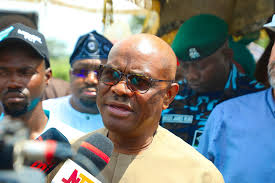
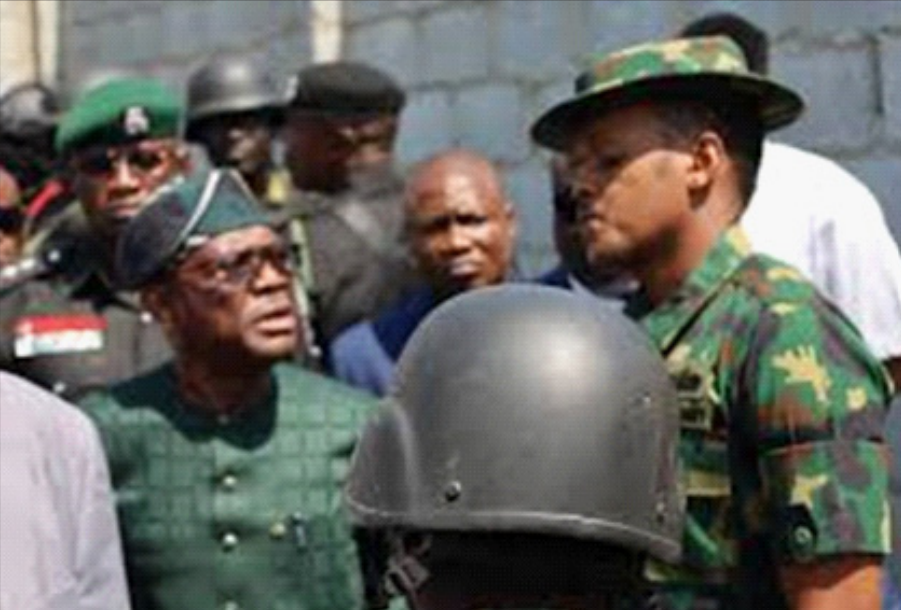
    Nyesom Wike, Minister of the Federal Capital Territory, swept through his official engagements with the air of one accustomed to unchallenged authority. His campaign to reclaim illegally acquired plots had advanced with confidence. On this fateful day the authority he carried with ease confronted a shocking obstacle.

    At a restricted site he encountered a young military officer tasked with securing the land, accompanied by a small detachment. Their assignment was precise. Enforce order. Protect the territory. Uphold procedure. What followed unsettled all who witnessed the encounter. Wike arrived with his escorts and security detail in full display. His presence carried its familiar volatility. Without hesitation he erupted into a barrage of accusations at the officer, whose only act was the faithful execution of duty.

    The Minister attempted to force his way through a lawful military operation solely on the strength of political weight. He dismissed the officer in a tone reminiscent of a bustling motor park boy, employing crude language that jarred with the gravity of his office. Wike barked at the officer, ‘You’re a fool!’ The officer in calm composure repeatedly replied, ‘I’m not a fool.’

    The exchange spread instantly through the public arena. Wike yelled at the officer to ‘get out’. In a striking reversal he eventually ‘got out’ himself, once he realised the soldier stood firm, refusing to be cowed. Calls were placed in haste to the appropriate channels only to receive no support for his aggression. His ‘gra gra’ style collapsed in full view of an astonished audience.

    A tempered assessment later emerged from the Minister of State for Defence Bello Matawalle. He explained that the officer violated no military rule. The young soldier displayed remarkable discipline showing admirable restraint under pressure.

    According to him Wike owed full respect to the uniform before him since that uniform embodies the authority of the Commander in Chief. Any insult directed at the officer went beyond personal disrespect, striking directly at the pride of the armed forces and the dignity of the nation.

    Public reaction surged. Citizens pointed to yet another outburst from Wike that fell far below the composure expected of senior national leadership. The incident deepened an already widespread perception that his conduct often fails to reflect the civility demanded by high public office.

    Matawalle further stated that Wike could have channelled the matter to the Defence Ministry for swift resolution rather than allowing it to escalate into an unnecessary confrontation. He clarified that the officer followed lawful instructions, maintaining discipline, loyalty, obedience and strict adherence to due process throughout the encounter. No punishment would follow since no regulation was breached and no duty compromised.

    In the final reckoning this encounter stripped power of its theatrics and revealed where real authority stands. The young officer chose duty over drama proving that discipline anchored in law outshines political bluster and that national honour rests not in noise but in steadfast courage. Wike entered the scene with swagger and left with a lesson written in plain sight. It is a stark warning to holders of public power. Public office confers responsibility not intimidation. True leadership emerges when authority meets humility and when uniformed duty confronts arrogance with unshifting resolve.

×