Category: COLUMNS

Featured posts

  • Oborevwori Administration Advancing Tertiary Education In Delta —Tonukari

    Oborevwori Administration Advancing Tertiary Education In Delta —Tonukari

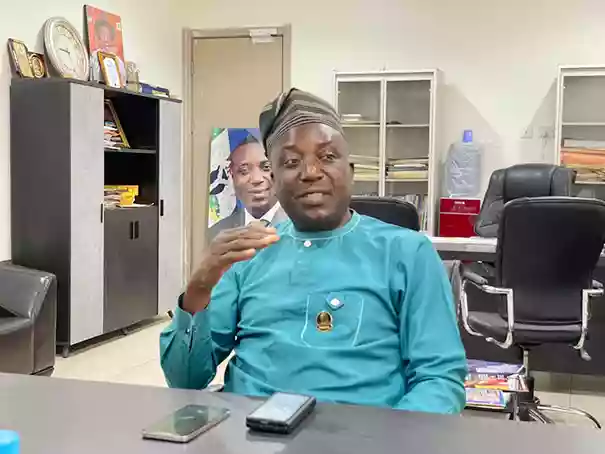
    OUR Platform this Monday is featuring the Delta State Commissioner for Higher Education, Prof. Nyerhovwo Tonukari. He is a Professor of Molecular Biochemistry. In this interview, he spoke extensively on Gov. Sheriff Oborevwori’s strides and commitment to tertiary education growth and development in Delta State, the welfare of academic/non-academic staff, their challenges, the task before the newly appointed Vice-chancellors of the three new Universities and the successes already recorded, and many more. Excerpts.

    As Commissioner, shall we have a rundown of the 2026 activities of the Ministry of Higher Education in Delta State under your watch?

    2026 is a golden year for the Ministry of Higher Education in Delta State. We have already done a lot, and would want to do quite a lot this year. When I came in as Commissioner, one of the policies Governor Sheriff Oborevwori wanted to implement was that, all the State Universities, Colleges of Education and Polytechnic’s must conduct their convocation ceremony. As of this year, we had already held three convocations and would hold more.

    Also, this year, we have gone round the institutions, on the directive of His Excellency, the Governor, to encourage students from Delta State to apply for the NELFUND. We have gone around almost all of them, except for two. We have not completed the movement yet. Those are two of the main things we have accomplished.

    However, there are still many things coming up in the pipeline for 2026.

    Recently, appointments of the Vice-Chancellors of the three new Universities elapsed. Consequently, fresh appointments were made. What informed the choice of the appointments?

    What we looked at was this: we knew that the tenure of the  Vice-Chancellors was ending in April. One ends in early May, while the other two would end in April. So we needed to plan ahead, because there should be no vacuum in the institutions.

    The outgoing Vice-Chancellors have done very well, so we were looking for people to replace them. In the university system, the Governing Council establishes a selection committee. The committee consists of three persons from the Governing Council itself and two persons from the Senate. They then go out to search for candidates. They advertise the positions, and people apply. It is not just those who apply that are considered. They can also reach out to candidates nationwide to apply for the position. That is what they do, and that is exactly what was done in all three institutions.

    We had a lot of people applying. I know that, for the University of Delta (UNIDEL), Agbor, more than 40 people applied. At Dennis Osadebay University (DOU), Asaba, about 21 people were shortlisted. So you can see the calibre of scholars that applied.

    When I discussed this with the Chairman of the Council of UNIDEL, Prof. Emmanuel Nwanze, he told me he was very happy with the calibre of the professors who applied and that Delta State has enough talented professors to serve as Vice-Chancellors in universities across Nigeria.

    But what we wanted was to pick the best of the best.

    They went through the initial selection process to shortlist the candidates. After that, they went through thorough interviews. I must tell you that His Excellency, Gov Sheriff Oborevwori requested to see the detailed report, not just a one-page summary, but the full report of the scoring.

    The interview panel, made up of members of the Council and Senate, interviewed all the candidates, scored them, and selected the three best. The names of the three best were submitted to His Excellency in a letter, along with the full report of all the interviews. By law, His Excellency could pick any one of the first three candidates. From there, he made the final decision and appointed the three persons who are now replacing the outgoing Vice-Chancellors.

    For Southern Delta University (SDU), Ozoro, as I mentioned earlier, Prof. Sunny Awhefeada was appointed. He is from Delta State University, Abraka, and currently serves as the Dean of the Postgraduate School.

    For UNIDEL. Professor Eric Eboh was appointed. He is from the University of Nigeria, Nsukka, in Agricultural Economics.

    Then, for DOU, as you mentioned, Prof Samuel Aghalino was appointed. He is from the University of Ilorin. So, they were the best candidates, and they were selected. I have interacted with some of them, and I know the quality they are made of. They are very qualified to hold these positions.

    With the conduct of first convocation ceremonies by the three “baby Universities” established in 2021, are there plans for advancing or upgrading their academic programmes, now, or in the future?

    Right now, only DELSU offers postgraduate education. So everyone who wants postgraduate studies has to go to Abraka.

    By the law of the National Universities Commission (NUC), if you do not produce graduates, you cannot admit postgraduate students. If you listened to what the Vice-Chancellor of DOU, Prof Ben Oghojafor, said during his remarks at the convocation, he mentioned that they have already set up a postgraduate school in DOU and even appointed a Dean of the Postgraduate School.

    The same thing is happening at UNIDEL and SDU. All of them are going to run postgraduate programmes.

    They plan to start by September or October, when they will begin admitting students to their postgraduate courses, at least in the first programmes for which they have already graduated students. All over the country and across the world, postgraduate education is becoming increasingly important. Many people want to go back to enhance their knowledge. So all of them are going to start postgraduate studies.

    Delta State has been commended for running and sustaining three new Universities in one go. Do you think these three “Baby Universities” can compete favourably with other universities across the country?

    You call them ‘Baby Universities”, but I will tell you this: If you go to the Faculty of Engineering in UNIDEL, Agbor, you would see that it can compete with the Engineering Faculty of any University in the whole country. So you may call them baby universities, but in terms of Engineering and equipment, they are already up there.

    In terms of equipment, they are not really that young. All of them were midwifed by DELSU. You will see many lecturers come in from DELSU and the University of Benin (UNIBEN), Edo State.

    So they are doing very well.

    In terms of ranking, the universities have already been ranked. UNIDEL is already ranked 51st in the country. I mean, this is a new university beating many older universities in the country.

    Nigeria currently has about 309 Universities. So if a new University is placed 51st in the rankings, it means it is doing very well.

    DELSU, among state universities, is always ranked second or third nationwide. So it is very highly ranked. It is also one of the universities whose lecturers are widely published in international journals, so they are doing well. I will also tell you that we are just starting. When the Governor was speaking, he was very happy that the total number of students in the three so-called new universities is now about 40,000, a little more than 40,000. DELSU alone has more than 35,000 students. But by next year, the numbers will increase because they now offer new courses.

    All of them were encouraged to establish new Faculties and programmes, which is why students intake is increasing at all three new universities. Not only Universities, but also polytechnics are experiencing an increase in number. They are introducing new programmes; programmes that people want to apply for. So they are going to do well.

    Funding for these institutions has not decreased. In fact, it is increasing from the Delta State Government. If you look at the budgets for 2025 and 2026, you can compare them. You will see that capital expenditure funding for this year is about ₦60 billion. Last year, it was about ₦30-something billion, roughly ₦32 billion. If you also look at recurrent expenditure, it has increased in all of them because we intend to employ more staff as the institutions expand and the number of students continues to rise.

    With the increasing number of Students’ enrolment and academic programmes, what is the state of available infrastructure in these Universities, and their ability to cope with the growth?

    Yes, let me address that. We have been building, and construction is ongoing. When His Excellency visited Delta State University, Abraka, for the last convocation, he promised to complete the Senate building. That project will start this year.

    During the three convocations, he also promised all three Universities new hostels, which aligns with what the Federal Government is doing.

    The Presidency has authorised the Federal Minister of Education to tell all Federal Universities to prioritise building of hostels, and we are taking that policy seriously in Delta State as well. So we are going to do the same here. We want more students to live in hostels rather than off campus.

    Facilities are coming, I tell you. A lot of facilities. If you visit the Orerokpe campus of SDU, you will see many facilities for students. It is a new campus, but it already has more than 4,000 students and many facilities.

    They are also building at Ozoro. Before the Governor attended the convocation, he commissioned several projects. They now have new buildings, classrooms, faculties and lecture halls. So the facilities are indeed there.

    There seems to be what one might call, a revolution happening with Artificial Intelligence. What is the Ministry of Higher Education in Delta State doing in this regard, particularly as regards Delta State- owned Higher institution?

    Incidentally, Delta State is planning to hold the third Education Summit, hopefully this year, and the theme will be Artificial Intelligence, the same AI you are referring to.

    AI is actually not entirely new in our Universities. Before it became widely discussed as it is today, many academics already knew about it and were working with it. Lecturers in Computer Science and the Physical Sciences, people like us, have been using aspects of AI even before I became Commissioner.

    For instance, at DELSU, Prof. Tsetimi is one of the leading AI Consultants in the country. They organise seminars across the country, and he is one of the key resource persons. He is based at DELSU, Abraka, and the University regularly organises seminars and conferences.

    At the Education Summit, we hope to bring together, not only AI experts but also University Management teams so they can adopt more technology and integrate AI more effectively into teaching.

    I must tell you that University teaching is changing. It is not like when many of us were in school. It is changing drastically. If you went to University in the 1980s, as I did, you had very limited information. We did not have enough books, and you had to memorise a lot.

    Today, the information students need is right there in front of them. Research that used to take a long time can now be done much faster. So teaching now has to be innovative, and that is where AI comes in.

    Students now must have some level of education in AI, especially through their general studies courses. AI is becoming increasingly important worldwide, and we cannot be left behind. That is why the Ministry is bringing all the institutions together in one place, not only state institutions but also Federal institutions and private Universities.

    They will all be invited. We will also bring AI experts to deliver talks.

    The newly appointed Vice-Chancellors will soon be assuming their responsibilities. As the Commissioner supervising these institutions, what challenges or tasks lie ahead for them?

    Certainly, I will sit down with them to discuss the direction the Delta State Government wants the institutions to take. The first task is quite straightforward. The government wants the universities to expand and admit more students. Secondly, the government wants the quality of education and teaching to improve even further.

    Thirdly, as the Governor mentioned during the convocation at DOU, the government wants graduates to leave the Universities with sufficient entrepreneurial skills so that they can establish themselves if they do not immediately secure jobs.

    One of the major challenges is staffing. All of them are short-staffed, particularly in professors. These are the things we are going to work towards.

    His Excellency recently approved recruitment at Southern Delta University, but they are still struggling to find some of the professors they need, especially in emerging and specialised areas. So they are still short-staffed.

    They are searching across the country to recruit some of those professors. There are still some areas where they do not yet have enough staff, and those gaps will still need to be addressed.

    These are some of the things the new Vice-Chancellors will work on to ensure that the Universities can admit more students, attract higher-quality staff, and provide students with a sound education so that, when they graduate, they can become independent individuals.

    What is the state government doing to ensure the welfare of lecturers and non-academic staff?

    Well, first of all, since this administration came on board, the government has approved the employment of approximately 1,100 academic and non-academic staff across all institutions, including the Polytechnics and Colleges of Education. That was done so that the institutions could have additional personnel. It may not be enough yet, but at least they now have more staff than before.

    Delta State is one of the leading states in the country in terms of the welfare of academic and non-academic staff. When you send your child to a university in Delta State, the child will graduate within four or five years. That is because our institutions do not go on strike, and the government pays all the emoluments.

    The Delta State Government pays all their salaries. For example, when the Federal Government approved the 25 per cent and 35 per cent salary increases in 2024 for tertiary institutions, Delta State was one of the first to implement it in its University systems. The non-academic staff received a 25 per cent salary increase, while the academic staff received a 35 per cent increase, and we implemented it immediately.

    Even today, many states have still not implemented that increase. So we take staff welfare very seriously. If you go to DELSU or any of the other State Universities, they will tell you that lecturers from Universities often want to come here to do their sabbatical or work here because the salary conditions are better. In fact, the salaries here are better than those in some Federal Universities, which is why many of them want to work here temporarily. There has also been agitation nationwide over the new salary structure for professors and lecturers. ASUU has won the case and is working to implement the new salary scale. I believe it has already been implemented in Federal Universities.

    Even if it has not yet been implemented in Delta State, our staff are not worried because they know it will be implemented and they will benefit from it. So staff welfare remains a top priority. There are also additional welfare initiatives. For instance, DELSU has a revolving loan fund for vehicles for staff members. That is another part of staff welfare. So a lot is being done in that area.

    Are you assuring the lecturers that this new FG salary scheme will indeed be implemented in the State-owned Universities?

    Yes. I have already met with the ASUU in the four universities, and they have visited me in my office. The only thing they have not yet brought is the official circular from the Federal Government.

    We cannot implement anything without proper documentation. Once the official documentation arrives, we will act on it. So they are not worried, and we are not worried either. When the document comes, we will go ahead with implementation.

    Recently, the Asagba of Asaba lamented the poor level of students’ enrolment at the Federal College of Education (Technical), Asaba. If that concern exists at the Federal level, what about the state colleges of Education? What is being done to improve enrolment in our Colleges of Education?

    Yes, that is indeed a real problem, not only in Delta State but across the country. Student enrolment in Colleges of Education has declined significantly. Many candidates no longer want to study Education.

    If you go to a College of Education, you spend three years obtain NCE certificate. After that, if you want a degree, you still need to spend another three years in a University. Most people now prefer to pursue a degree directly from the start.

    So, it is a nationwide challenge. In fact, that was one of the reasons the previous administration converted the College of Education at Agbor into a university. At the time, the number of staff there was greater than the number of students.

    However, I would say that the two Colleges of Education in Delta State are performing better than many others in the country. There are some Colleges of Education in Nigeria today where you will hardly find more than one hundred students, yet the staff remain.

    Our Colleges in Delta State are trying. For example, the College of Education, Mosogar admitted about 500 students this year alone. I doubt that many other CoE in the country, except perhaps the one in Warri, can match that number. Most of the others cannot come close. When I visited the College of Education in Warri and asked about their student population, they told me it was around 1,600 students. That is what they reported.

    Another reason you see relatively higher number of students in our Colleges of Education is that they run affiliated programmes with universities.

    For instance, Mosogar runs programmes for DELSU and also for UNIBEN. Those are affiliated programmes. So when you see the large number of students there, many of them are actually enrolled in those university-affiliated programmes.

    They even run a postgraduate programme on behalf of Ignatius Ajuru University of Education in Port Harcourt.

    Also, the College of Education in Warri runs affiliated programmes with DELSU and UNIPORT. That is why you see many students in those campuses. But if you look strictly at their NCE programme, the number is not more than 2000. Most of the students are from those affiliated programmes.

    In the future, one step being taken to ensure the Colleges of Education attract more students is the introduction of a dual mandate. In Delta State, the law has already been passed and signed by His Excellency, the Governor. We submitted it to the Federal Ministry of Education in Abuja, and they have now written to the two Colleges of Education, informing them that they may begin implementing the dual mandate, as previously approved, for both Mosogar and Warri.

    This means they can now admit students who will study for degree courses while also obtaining their NCE qualification. Within five years, the students will obtain both the NCE and a degree. The programme will run for five years. So the mandate has already been approved for them.

  • Beyond Strategy Documents: Africa’s AI Governance Crisis In Geopolitical Age

    Beyond Strategy Documents: Africa’s AI Governance Crisis In Geopolitical Age

    While reading Kingsley Moghalu and Stephen Ogundele’s article titled AI Rising: Africa’s Path, I found myself caught between the cautious optimism about what artificial intelligence could mean for a continent brimming with untapped potential and a sobering anxiety that Africa may, once again, find itself on the wrong side of a transformative technological revolution.

    The authors make their case with admirable clarity and intellectual precision, but what struck me most deeply was not how explicitly their arguments build up, but what their thought quietly implied for the continent.  Africa’s greatest obstacle to seizing the AI moment is not a shortage of talent or even technology, but the chronic failure of institutions and political will that has sabotaged every previous opportunity for structural transformation.

    Moghalu and Ogundele are careful, perhaps deliberately careful, in how they frame Africa’s digital history. They acknowledge the continent’s celebrated narrative of “leapfrogging,” the rapid adoption of mobile payments, internet connectivity, and platform-based services that allowed African economies to skip stages of development that took Western economies decades to traverse. But they are right to interrogate this narrative. Leapfrogging, as they correctly observe, was largely driven by access, not by the development of underlying infrastructure. Africans adopted the fruits of technology without building the roots.

    The mobile money revolution in Kenya, the fintech boom in Nigeria, and the e-commerce surge across the continent are real achievements and should not be minimised. But they were built on foundations that belonged to cloud servers, externally developed algorithms, and proprietary systems outside the continent’s shores. Africa used the table but never built the furniture. And now, as artificial intelligence emerges as arguably the most consequential general-purpose technology since electricity itself, the continent risks repeating this pattern at an infinitely higher cost.

    There is a sentence in the Moghalu-Ogundele piece that deserves to be engraved somewhere prominent and read every morning by every African finance minister, technology regulator, and head of state. They write that AI adoption on the continent is unfolding within a global political economy marked by “deep asymmetries in technological capability, capital, and institutional power.” What this means in plain terms is that the world’s most powerful AI systems are being built by a handful of companies in a handful of countries, and Africa with its vast population, its extraordinary reserves of critical minerals essential to the very hardware on which AI runs, and its exploding youth demographic is being positioned once again as a market rather than a maker.

    This is not a conspiracy playing out. It does not require any bad faith on the part of an external actor. It is simply the natural logic of global capital flowing toward existing concentrations of capability and geopolitics. If Africa does not act with urgency and strategic intentionality, it will wake up a decade from now to find that the AI revolution has happened to it rather than for it, that its citizens use AI tools they did not build, are governed by values they did not set, and generate profits that flow elsewhere.

    The minerals that power the semiconductors driving this revolution lie largely in African soil. The irony of a continent sitting atop the physical foundations of the AI economy while deriving the least benefit from its digital architecture is almost too painful to contemplate.

    The authors are measured and dip+lomatic in their treatment of governance, as befits serious scholars. But if one reads carefully between the lines, the diagnosis is damning. Continental frameworks exist but lack binding authority. National AI strategies have been written but sit disconnected from budgets, regulatory mandates, and implementation pathways. Regulatory capacity is thin, fragmented, and built on institutional architectures never designed for algorithmic systems.

    This is not a new problem we are facing. It is, in fact, the defining paradox of post-independence African governance, the extraordinary capacity to articulate vision and the equally extraordinary incapacity to translate vision into durable institutional reality. The African Union’s 2024 Continental Artificial Intelligence Strategy is a commendable milestone. But strategies without enforcement mechanisms, without budgetary teeth, without accountable implementation frameworks, are ultimately sophisticated expressions of aspiration dressed up as policy.

    Rwanda and Kenya stand out in the article as relatively bright spots, countries that have embedded AI within coherent digital transformation frameworks supported by actual legislation and coordination infrastructure. The difference between countries that benefit from AI and those that are merely subjected to it will not be determined by which nation has the most eloquent strategy document. It will be determined by which government has the institutional seriousness, the political will, and the regulatory intelligence to shape how AI is deployed within its borders in service of its own people.

    Africa’s youth population, the largest and fastest-growing in the world, represents a reservoir of potential that, properly invested in, could make the continent a genuine producer rather than merely a consumer of AI value. The continent’s data, generated by billions of daily human interactions across enormously diverse languages, climates, agricultural systems, and economic contexts, is itself a strategic asset if governed wisely. But seizing this moment demands something that has historically been in short supply, which is the willingness to make hard institutional choices, resist the seduction of cosmetic reform, and build the unglamorous but indispensable architecture of competent governance. Stable power supply. High-performance computing infrastructure. Data protection frameworks with actual enforcement. Cross-ministerial coordination. Investment in technical education is not just a headline but a budget line.

    “Strategy without execution will change little”, as Moghalu and Ogundele put it, is the central point of this piece. They are absolutely right, and that sentence carries the weight of African developmental history on its back. The continent has been here before at the threshold of a transformative opportunity, equipped with frameworks and rhetoric, but undone by the gap between declaration and delivery.

    AI will not wait for Africa to sort itself out. The revolution is already underway. The question is whether Africa’s leaders will find the institutional courage to ensure their citizens are on the right side of it, not as passive recipients of someone else’s technological imagination, but as active architects of their own digital future.

  • ‘’Nigerians No Longer Suffering And Smiling’’

    ‘’Nigerians No Longer Suffering And Smiling’’

    • As Nation Slumps On Global Happiness Rating 

    BY CHIKA KWAMBA/OGORAMAKA AMOS/FAVOUR PERCY IDUBOR/RITA OYIBOKA//JUDITH OBIANUA/PRINCE EJAKPOMEVI

    According to the 2026 World Happiness report, Nigeria ranked 106th position out of 147 countries, marking a steady decline on the chart from 105 in 2025 and 102 in 2024. Topping the list for the ninth consecutive time is Finland, followed by Iceland, Denmark, Costa Rica, Sweden, Norway, the Netherlands, Israel, Luxembourg and Switzerland in that order.

    Following the unfortunate development, our correspondents sought to gauge the pulse of Nigerians on the report of the survey and what is expected to improve the nation’s lot.

    Speaking with The Pointer, Benin-based, mother of two and trader, Mrs Victory Isaiah said, “To be honest, happiness in Nigeria now feels like a luxury, not something ordinary people can afford.

    ‘’As a mother, your joy is tied to the well-being of your children, and that’s where the problem starts. School fees continue to rise every term, making food a daily struggle due to unpredictable food prices, and healthcare is another significant burden. Sometimes, a child falls sick and instead of focusing on getting them well, you are calculating costs, consultations, drugs, and tests.

    ‘’As a mother, it’s painful when your children ask for certain things, and you have to say no, not because you don’t want to provide, but because things are just too expensive.

    “Then there is electricity. How do you run a home without power? No one needs to tell you how bad the electricity supply has been. You end up spending so much on fuel just to keep the generator on, and even fuel itself is expensive. At the end of the day, whatever little income you make is swallowed by basic survival.

    “For me, happiness would be a stable income, affordable food, good schools, good government, and security. But right now, everything feels like a struggle, and it’s hard to say Nigerians are truly happy when parents are constantly worried about the next bill or the next food.”

    For a 300-level Computer Science student at the Delta State Polytechnic, Ogwashi Uku, Praise Emegha, the ranking reflects the reality that young people are facing.

    “As a student, there’s a constant cloud of uncertainty hanging over your future. You are in school, but you’re not even sure what comes after graduation. Jobs are scarce, and even when they are available, the pay is not encouraging.

    “The cost of living is another major issue. Transportation alone can drain your pocket. If you live off-campus, rent is outrageous. Feeding is not easy either; what used to be basic meals are now expensive.

    ‘’Then you come back to school, and there’s no steady electricity or conducive environment to study. It affects your mental state. Socially, people try to look happy online, but in reality, many are stressed, anxious, and even depressed.”

    Meanwhile, a tailor, Mr Samuel Akirinbola, noted that as an entrepreneur, doing business in Nigeria is one of the toughest things right now, and that directly affects your happiness.

    “Running a business in Nigeria today will test your mental strength, and that has a direct impact on your happiness. The cost of doing business keeps increasing. Electricity is unreliable, so you depend on generators for beading, sewing, ironing, weaving, everything needs power, and with the high cost of fuel, your expenses keep rising.

    ‘’I have not seen the light blink since February. At the same time, customers are struggling too, so they spend less. It becomes difficult to make a profit, let alone grow. You find yourself working harder but earning less. Then there are multiple taxes and levies from different agencies, sometimes even unofficial ones. It feels like the system is working against you instead of supporting you.

    “To even restock the shop is a problem. Something of N5 today is N15 tomorrow. As an entrepreneur, your happiness is tied to stability and progress. But when you are constantly battling external challenges, it drains you emotionally.

    ‘’Many business owners are just surviving and borrowing just to not shut down. And when there is no sense of growth or security, it’s hard to feel genuinely happy. Right now, God is my only source of happiness.”

    A Civil Servant who only identified as Mrs Grace Oghenekaro said that in the civil service, the reality is that many workers are just managing, not truly living. ‘’Salaries are not keeping up with the rising cost of living. By the time you pay rent, handle transportation, and feed your family, there is little or nothing left.

    ‘’It creates a cycle where people are constantly under financial pressure. Housing is a major issue. Rent is extremely high, especially in Asaba, and many civil servants have to live far from their workplaces to afford accommodation. That means spending more on transportation.’’

    According to another respondent, Engr James Otuto, Nigeria’s ranking as the 106th happiest country reflects a mix of resilience and hardship. ‘’While many citizens remain optimistic, rising living costs continue to reduce overall well-being. Prices of food, rent, and basic goods remain high, making daily survival increasingly difficult for the average Nigerian.

    ‘’Recent economic reforms have worsened this pressure. The removal of fuel subsidies and currency devaluation led to a sharp increase in petrol prices, which in turn raised transportation and production costs. Electricity tariffs have also increased, further stretching already limited incomes.

    ‘’Infrastructural challenges remain a major concern. Unstable electricity supply forces households and businesses to rely on expensive alternatives like generators. At the same time, poor roads, limited healthcare access, and inadequate basic amenities continue to affect the quality of life across many regions.

    ‘’Insecurity is another critical issue. Recent attacks, kidnappings, and communal conflicts have disrupted livelihoods and created widespread fear. These challenges not only threaten safety but also affect economic activities, contributing to food shortages and financial instability for many Nigerians.’’

    Also speaking, a media personality, Anointing Abanum, said Nigeria’s position in global happiness rankings reflects a mix of structural, economic, and social challenges that affect everyday life. ‘’Happiness is strongly influenced by living conditions. In Nigeria, systemic challenges like economic hardship, insecurity, and poor infrastructure combine to limit overall well-being’’.

    Meanwhile, a teacher, Beatrice Erheriene, told our correspondent, ‘’For millions of Nigerians, happiness is no longer a steady state of being — it is a fleeting moment, often interrupted by the harsh demands of survival.

    ‘’In a city that thrives as the hub of Nigeria’s oil economy, there exists a deep contradiction: wealth flows through its systems, yet many residents struggle daily to access the most basic comforts of life.

    According to a Bolt driver, Chinedu Okafor, who spoke to our correspondent in Port Harcourt, “I used to enjoy driving round town. Honestly, it gave me freedom, and I could meet different people every day. But now, driving has become a struggle for survival.

    ‘’Fuel is the biggest issue. Before, I could fill my tank and work comfortably for days. Now, even ₦20,000 of fuel barely lasts. The price keeps going up, and passengers don’t understand. They complain when you increase fares, but they don’t know what we face.

    “Sometimes I wake up, and I’m already tired, not physically, but mentally, because the whole situation is draining. You are calculating everything from fuel, car maintenance, to daily target, and at the end of the day, what you have left is small.”

    “Happiness? It’s difficult to feel happy when you are constantly worried about making enough money to survive. Even when I smile with passengers, deep down, I am thinking about my next expense”

    “What makes it worse is traffic and bad roads. You spend hours on the road burning fuel and stressing yourself. By the time you get home, you don’t even have energy to enjoy life. Honestly, I think Nigerians are strong people. If not, many would have broken down completely.”

    Mrs Blessing Amadi, a food vendor, told our correspondent, “Running a food business now is not easy at all. Everything has increased — rice, beans, oil, and even pepper. Sometimes, I go to the market and come back confused because the prices have changed again. Customers complain that food is expensive, but what can I do? If I don’t increase the price, I will run at a loss. If I increase it, they stop buying.

    ‘’Electricity is another major problem. We hardly have steady light, so I rely on a generator. Fueling the generator daily is another cost. It’s like you are working just to maintain the business, not to grow. As a mother, it affects my happiness deeply. You want to provide for your children, give them a good life, but things are tight.

    Sometimes I pretend to be happy in front of my customers, but inside, I am worried. Happiness now is when I make enough sales to cover my costs and still have something left. Before, I used to feel hopeful. Now, I just take things one day at a time.”

    Emeka Nwosu, a civil servant who is based in Port Harcourt, spoke to our correspondent. “As a civil servant, salary used to be something you could depend on. But now, it cannot even cover basic needs.

    ‘’By the time you pay house rent, school fees, electricity bills, and feeding, the money is gone. There is nothing left for comfort or enjoyment. Housing is another issue. Rent is extremely high. Landlords increase rent without considering your income. You are forced to live in places you are not comfortable with.

    ‘’Happiness becomes secondary when you are constantly under financial pressure. Even weekends are not enjoyable because you are thinking about Monday and expenses.

    ‘’Another thing is insecurity. You can’t move freely at night like before. You are always cautious, always alert. Sometimes I ask myself — is this the life we hoped for? We work hard, but the reward is not there. To be honest, happiness now is a luxury, but one just tries to cope with things the little way we can to put a smile on our face.”

    For Favour Johnson, a student, the pressure is different but still heavy. ‘’Transport fare alone is discouraging. If you don’t have money, you might miss classes. And sometimes, you trek long distances just to save money.

    ‘’Electricity affects us a lot, too. You want to read, charge your phone, or do assignments, but there is no light. You depend on power banks or generators. Emotionally, it’s draining. You are trying to focus on your future, but the present is already stressful.

    ‘’Social life is almost non-existent. You can’t afford to go out or relax. Even basic things like hanging out with friends feel like a luxury. Happiness, for me, is when I don’t have to worry about money for a day.”

    Corroborating other respondents, Ngozi Eze, Hairdresser, said, “My business depends on customers, but these days, people don’t have money for hair. They prioritise food and essentials. Even the cost of hair products has increased.

    Happiness for me used to be about growth — opening a bigger salon, employing people. Now, it’s about sustaining what I have. It’s painful because you know your potential, but the environment is limiting you.”

    ‘’But despite everything going on, Nigerians still find ways to smile. That’s why the government can throw anything at us because they feel we can cope with whatever situation”

    To place these lived experiences in context, Dr Ijeoma Nwoye, a sociologist, explains that happiness is deeply tied to structural realities. “What many Nigerians are experiencing is what we call structural strain. When systems fail to provide basic needs like electricity, security, and economic stability, people shift from living to merely surviving. In such conditions, happiness becomes temporary — something people experience in moments rather than as a consistent state.”

    She notes that prolonged hardship leads to emotional exhaustion. “There is a growing level of psychological fatigue in society. People are constantly thinking about money, safety, and survival. Over time, this reduces overall life satisfaction.” According to her, inequality further deepens dissatisfaction. “When people see wealth around them but cannot access even basic comfort, it creates frustration. It’s not just about poverty — it’s about perceived exclusion.”

    As she puts it, “Nigerians are not unhappy people by nature. They are people navigating difficult systems. If those systems improve, happiness will naturally follow.”

    Similarly, the Managing Director/Chief Executive Officer of Raychannels Transport Ltd, Raymond Eboigbe, noted some major contributors to the happiness deficit in Nigeria.

    ‎According to him, poor electricity affects businesses, healthcare, and overall quality of life. The high cost of living makes it tough for people to afford basic needs, fuel prices impact transportation, businesses, and the economy, lack of basic amenities like water, healthcare, and education is a huge stressor, high house rents are pricing people out, and there is no stability.

    ‎Speaking with The Pointer in Asaba, a trader, Mrs Ruth Ozondu, reflected on the situation in Nigeria, describing it as an unbearable time for the citizens of the country. According to her, “Prices of food and basic items keep increasing. You can’t plan anymore. Right now it’s more about surviving than considering happiness.”

    Similarly, a resident in Okpanam, Mr Collins Okeke, said the cost of running his home has become overwhelming. “There is hardly any joy left in the country, as people are grappling with hardship daily. I can attest to the financial strain, having to spend significant amounts on petrol each day just to keep my family out of darkness at night. Frankly, this year is proving to be particularly challenging,” he said.

    Also, a student of Anambra State University, Miss Ukaoma Britney, lamented that the economic crisis in the country has greatly affected her academics, adding that the cost of accommodation in school is rising at an alarming rate.

    “House rents keep going up, but there’s no water, no good roads, and no steady electricity. It’s very discouraging, and when you question the landlord on the rent increase, they tell you it’s because of the economy of Nigeria,” she said.

    A civil servant in Asaba, who identified himself as Umeh Robert, expressed deep concern over the current state of the nation. “There is little to be happy about in the New Year. The North remains under constant threat of terrorist attacks, power supply across the country is still unreliable, and the recent increase in taxes has only added to the burden. It leaves one wondering whether things will improve or take a turn for the worse, because this is not how I envisioned 2026.”

    Similarly, a barber in Asaba, Mr Sunday Okonkwo, highlighted how worsening economic conditions have affected businesses and daily profit margin. “The cost of maintaining my shop, buying petrol, paying rent, and even basic supplies has gone up. Sometimes, after working all day, the profit is very small. It’s becoming harder to cope.”

    Speaking, Mrs Solomon Faith stated that there is nothing to be happy about. ‘’Nothing is working in this country, we are not happy, and it’s high time Nigerians stop pretending and face reality. For the past nine months, there has been no light in my area; we are in the dark. The same thing is applicable in other places.

    ‘’The government should look into the electricity sector and do something about this power failure. Another thing is the high cost of living. High food prices in the market are alarming. High cost of rent. The masses are finding it difficult to survive.

    ‘’Imagine a civil servant who receives less than N100,000 in a month or a private school teacher who earns N30,000; how do you think that person will survive, especially a family man? There is a need for the government to look into workers’ wages and do justice to them. The hike in fuel prices is frustrating, and transportation fares have increased as well.’’

    Speaking with Elizabeth Animeme, she said ‘’The youths are looking forward to the day a youth will rule this country. The needs of the people are ignored. Bad roads, especially federal roads, are all over the country. A journey that will take an hour will exceed four hours because of bad roads.

    ‘’There are a lot of challenges that need the attention of the government. Education is another issue. An average Nigerian cannot afford a public university’s school fees. Education is the key to success, they say, but the poor cannot afford it due to high school fees. The question is, “Is there a future or hope for this country?

  • What A Butt Lift Will Cost You

    What A Butt Lift Will Cost You

    I think everyone remembers the first time they saw a BBL in real life. Or maybe I am the only one. Mine happened on Nnebisi Road, near the Interbua roundabout, while I was riding in a tricycle. The ride was ordinary until… I saw it.

    You don’t need anyone to tell you what a BBL is; it announces itself long before you ask questions. It was enormous, almost architectural, like a perfectly rounded sculpture hewn from marble. It sat just below a delicately sculpted, impossibly tiny waist on an almost-white woman who walked with the slow confidence of someone very aware that all eyes were on her.

    In Nigeria today, BBLs have become a kind of currency, a form of social and aesthetic capital, especially in the entertainment and influencer economy. They are not just about curves; they are about visibility, validation, and in some cases survival in an industry where the “banging body” is rewarded almost as much as, and sometimes more than, talent.

    The tragedy of Elena Jessica, known to her fans as Leenah Doll, recently forced this conversation into the open. The Nigerian socialite and TikTok influencer reportedly underwent a second revision BBL in early 2026. Her first procedure had initially been successful, but like many who enter the cosmetic cycle, satisfaction proved temporary. She sought more.

    But the human body has limits. Clinics reportedly turned her away because her skin had become “too tight” for another safe fat transfer. What followed was a series of complications. She developed severe pain. There were financial struggles tied to the surgery and its aftermath. Post-operative care was reportedly inadequate. Eventually, sepsis set in.

    She died.

    Social media exploded. Grief mixed with anger. Tributes poured in alongside criticism. Her twin sister’s emotional viral video served both as a memorial and a stinging indictment of the system that allows these surgeries to proceed with minimal oversight. And yet, despite moments like this, the BBL train shows no real signs of slowing down.

    Many Nollywood actresses and influencers openly celebrate, or quietly undergo the procedure. Names like Uche Ogbodo, Angela Okorie, Bam Bam, Tonto Dikeh, and Onyi Alexx frequently appear in conversations about cosmetic enhancement. Some later reverse their procedures. Others embrace them openly, presenting their curves as symbols of confidence and empowerment.

    The debate surrounding BBLs is therefore not as simple as critics versus supporters.

    On one side are those who warn about bodily risk, financial ruin, and the psychological toll of chasing an artificial ideal. On the other side are those who insist on bodily autonomy, the argument that a woman should have the right to modify her body if she wishes. In industries where appearance directly affects career opportunities, they argue, cosmetic surgery can function as a professional investment.

    Both arguments carry weight.

    Nigeria’s cosmetic surgery industry operates in a grey zone. Regulation is weak. Oversight is inconsistent. Clinics appear overnight, advertise aggressively, and compete for clients in a market driven by aspiration and insecurity. The result is a cosmetic economy where risk is sometimes downplayed, and profit takes centre stage.

    I tread carefully here because I am not an expert. But one thing is obvious: almost every woman, at some point, has looked in the mirror and imagined adjusting something about their appearance. A smaller waist. Lesser weight. Fuller hips. Smoother skin. Cosmetic surgery simply monetises that universal impulse.

    And the ecosystem around it is booming.

    Beyond surgery itself lies an entire marketplace of supplements and shortcuts. Herbal teas promise “miracle waist trimming.” Pills claim to redistribute fat to the hips and buttocks. Injectable concoctions circulate quietly among beauty enthusiasts, marketed as subtle body enhancers.

    Perhaps the most striking thing about the BBL trend is not just its popularity but its uniformity. Walk down a Nigerian street, scroll through TikTok, or spend five minutes on Instagram, and the pattern becomes obvious. The curves are nearly identical. The hips swoop in the same dramatic arc. The waists shrink to the same improbable size.

    It is almost like an assembly line.

    If your BBL looks exactly like the ten that came before it, it becomes difficult to argue that the procedure is purely about self-expression. Do we all just want to look like each other? There are also valid arguments that BBLs are mainly for the male gaze and a necessary weapon in the arsenal of ladies of the night. If we start to talk that one, we fit nur comot for here.

    Perhaps the most disturbing aspect of the BBL industry is the surprising levity surrounding it. For a procedure that involves cutting, fat extraction, transplantation, and manipulation of living tissue, the casualness with which it is marketed is astonishing.

    Influencers advertise clinics as though they were promoting hair extensions. Promotional deals circulate online, discount packages, referral bonuses, and even incentives that resemble “bring one friend and get it free” offers. It begins to sound less like a serious medical decision and more like a beauty sale.

    You would never see heart surgery or a kidney transplant advertised this way, if at all. Those procedures carry an aura of gravity, caution, and professional restraint. Cosmetic surgery, particularly BBLs, often does not.

    Yet medically speaking, BBLs still involve invasive surgical risk.

    That contradiction is frightening. The seriousness of the procedure is pushed quietly into the background because the aesthetic outcome is glamorous. The dangers are treated as footnotes. But the truth is simple: BBLs can kill.

    At the end of the day, however, BBLs are likely here to stay. Clinics have been booked far into 2027. For those considering the surgery, the best advice may be the simplest: pause. Research. Reflect.

    Read about the procedure. Ask about the supplements. Listen carefully when doctors warn about risk. Your body is not a trend, and trends have a habit of fading long before their consequences do. Even more importantly, try to love yourself and your body.

    And if someone ultimately decides to ride the BBL wave, it should be done with information, self-awareness, and a great deal of caution.

    Because, despite the glamour, the BBL is no joke. It can boost confidence. It can open doors. It can certainly make jaws drop. But it can also cost lives.

    And the cruel irony of the entire industry? For many people, the reward for one BBL is simply the desire for the next one.


  • At 88: Not Enough Words To Thank God – Obi Efeizomor 11

    At 88: Not Enough Words To Thank God – Obi Efeizomor 11

    BY CHARLES EMENI

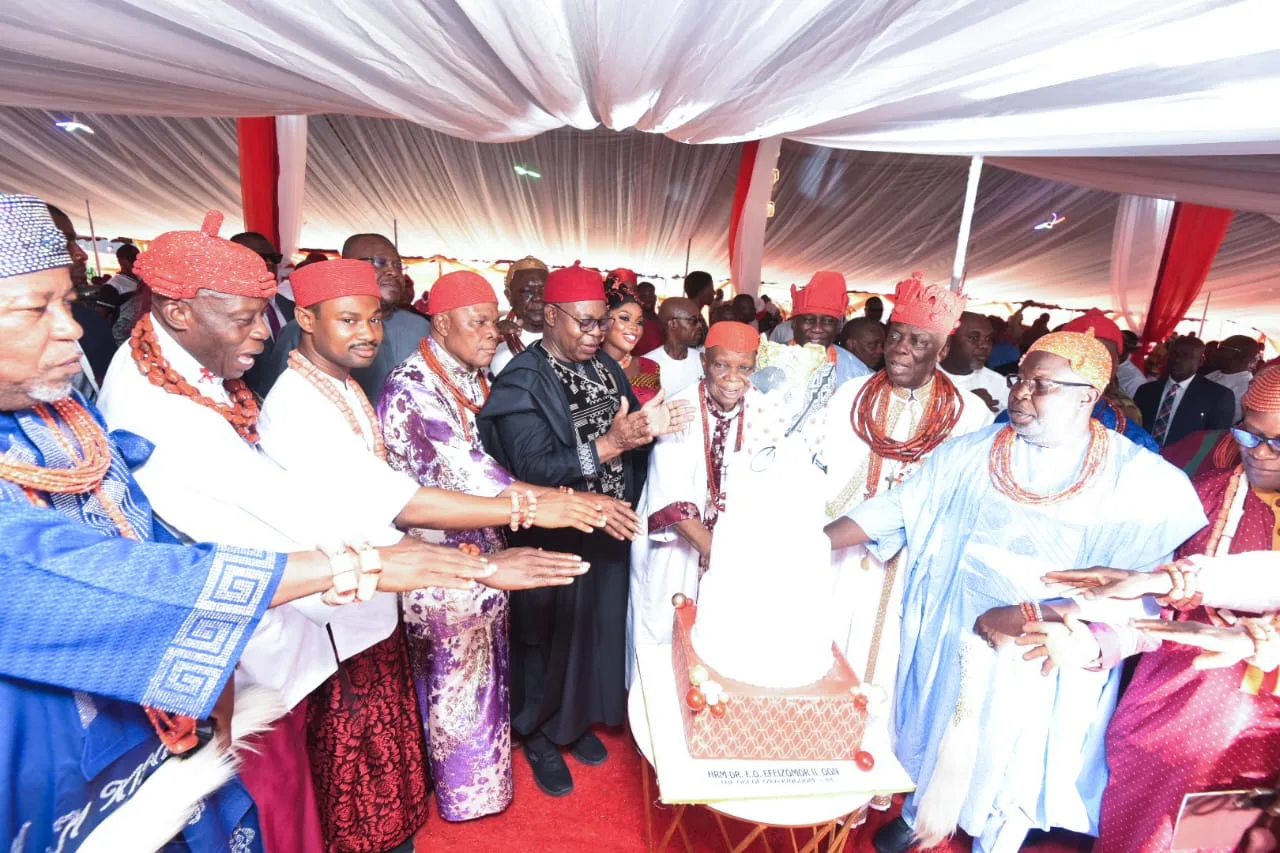
    This week, I am respectfully dedicating this page to the Obi of Owa Kingdom in Ika North East Local Government Area of Delta State as he celebrates his 88th birthday. He is HRM (Dr) Emmanuel Onyeike Efeizomor 11.

    A few years ago, when I had a challenge at my place of work, he taught me courage. When I stood alone, and everyone turned against me, he stood in the gap for me. “Your Majesty, you showed me fatherly love, and you made me know that love was more powerful than bullets from those who were against me, and those who masked up, pretending to be with and for me. Thank you so much”.

    The Holy Writ declares, “To everything there is a season, and a time to every purpose under the heavens”. On Thursday, March 12, 2026, that season and time came, when children, Kings, friends, relatives, and admirers came out in their large numbers for the purpose of celebrating and honouring His Majesty, Obi Efeizomor 11- an Iconic, and one of the longest reigning monarchs in Nigeria, having spent 66 years on the throne.

    Obi Efezimor means different things to different people. Aside from being a much respected monarch in Delta State and beyond, he is a reliable, dependable and resourceful father; a monarch with a very rich reservoir of the culture of the Owa people, and the history of Nigeria, defunct Bendel and through to Delta State.

    His vast and rich knowledge of the culture of the Owa people is, perhaps, better captured in the words of the Inneh of Owa Kingdom, Chief (Engr) Okwuokenye Nkenchor (JP), when he said, “I’d known and been with His Majesty, Obi Emmanuel Efezimor, for over 66 years, and I make bold to say that all that we know about Owa Kingdom is centred around him. He is a living encyclopaedia of the Owa people’s history and culture”.

    Before the D Day, March 12, the birthday celebration began with a novelty football match, titled: “Obi of Owa Unity Football Tournament Cup”, between the eight communities that make up Owa Kingdom; followed by awards to deserving and distinguished sons, daughters and friends of the Kingdom for their social-economic and cultural contributions to its growth and development; the cutting of His Majesty’s 88th birthday cake, Owa Cultural Day, which saw various cultural groups from within and outside Owa Kingdom; and the paying of traditional homage to His Majesty by sons and daughters of the Kingdom, as well as well-wishers and friends; and a praise and Thanksgiving service on March 14, at the Owa Royal Palace ground.

    Speaking on how he feels turning 88, HRM Efeizomor, looking visibly calm, but emotionally grateful to God, has this to say: “I’m 88 years old today and still kicking strong. It is indeed a thing of joy to me, but more essentially, it has reinforced my conviction that there is God. If not for God, I wouldn’t be 88, and if it were the wish of man, I wouldn’t be here today.

    “I don’t know how best to appreciate God for His grace of keeping me alive in the past 88 years. Nobody, born of a woman, would have done what God has done for me. I had faced disappointments, humiliations, and betrayals in the past 88 years of my life. People I trusted, worked for, and took it upon myself to defend their interests, turned around to disappoint me. But God, whom I have not done anything for, has done so much for me. He has been faithful to me and kept me alive till today, when I am 88 years old. I give Him all the glory and praise.

    “Many of my schoolmates and co-traditional rulers have died, yet it has pleased God to keep and sustain me. For this, I say Thank You, Sir, my God, my Father and my Maker”.

    Emphasising why people should trust and give their life to God, Obi Efezimor said, “When I became a king, 66 years ago, within the first four years, I had no bicycle, but now I have a beautiful palace, and cars, one of which runs into millions of naira, courtesy of His Excellency, Rt. Hon Sheriff Oborevwori, the Governor of Delta State. What have I done for him to deserve this, but I know it is the grace of God upon my life”.

    He added, “In the face of the disappointments from man, if not for God, who gave me some friends who remembered me during my low moments, who stood by me, and had remained instruments of trust, where would I have been today? “

    Further reflecting on the goodness and grace of God in his life, Obi Efezimor said, “Many persons in this country – leaders, and even kings did not live up to my coronation years – 66. They have died. I do not rejoice about that, but I’m saying so to tell of God’s grace upon me, and for keeping me alive till 88.

    Every night, at bedtime, he said, “I pray to God, saying, My Father and my Maker in Heaven, I am here before you. The day you gave me is over. I have nothing to give you in return, but praise and thanks. Please accept my praise and thanks. I beg you, keep me protected and safe; let me see tomorrow.

    In the morning, when I wake up, I go on my knees in prayer again to God, saying, ‘My Father in Heaven, thank you for watching over me and for keeping me alive’. And while in the bathroom, I pray to Him again, saying, ‘Father, thank you for giving me the grace to bathe myself unaided by anyone, even at 88’. And, as I put on my dress, I also pray to my Father in heaven, saying, “My Father, thank you for making me move my hands and legs freely, and for putting on my clothes unaided by anyone. It can only be you who has made this possible. THANK YOU, SIR’’

    Looking back at the journey of life, he says, “I thank all those who helped me along the way, too numerous to mention. God used you as instruments to help me rise to where I am today. I thank you all.”

    And from me, Your Royal Majesty, “as you turn 88 today, I pray for continued strength, wisdom and good health for you. I hope that your voice will remain active in fighting for the oppressed and reign over your people. May we gather again to celebrate you at 89, 90 and more in Jesus name. Amen.

  • Nigerian Businesses Suffer Middle East War

    Nigerian Businesses Suffer Middle East War

    BY CHIKA KWAMBA/JUMAI NWACHUKWU/OGORAMAKA AMOS/PERCY IDUBOR/GRANDBALL CHOICE/PAUL EGEDE

    For many Nigerians, the recent increase in the price of Premium Motor Spirit (PMS), popularly known as petrol, has become one of the most pressing economic challenges in recent times. Across the country, petrol prices have continued to fluctuate following ongoing reforms in the petroleum sector, with many filling stations selling between about ₦1,200 and ₦1,350 per litre in several cities.

    For small businesses, petrol is not just another commodity; it is a lifeline. It powers generators, drives transportation and logistics, and keeps production activities running in the absence of a stable electricity supply.

    In many parts of the country, where small and medium-scale enterprises dominate the local economy, the rising cost of petrol has created a ripple effect across different sectors. Traders, artisans, transport operators and service providers say they are now spending a significant portion of their income on fuel alone.

    Many entrepreneurs have been forced to increase the prices of goods and services to survive, while others say declining purchasing power among customers is reducing their sales.

    In Delta State, residents have expressed growing frustration over the continued rise in the price of PMS, popularly known as petrol, saying the persistent increases are worsening the cost of living and putting further strain on already stretched household budgets.

    Residents who spoke with The Pointer in parts of the state, including Asaba, Warri and Ughelli, lamented that the recent fuel price adjustments have triggered increases in transportation fares, food prices and other essential commodities.

    A commercial driver in Asaba, Mr Monday Efe, said the rising cost of petrol has made it difficult for transport operators to sustain their businesses without increasing fares.

    “We buy fuel at about N1,300 per litre, which is very high. Before, when the price was lower, we could manage, but now if we don’t increase transport fares, we cannot meet our daily expenses,” he said.

    A tricycle (keke) rider, Mr Friday Chukwuma, described the situation as unbearable for many Nigerians. “Just when Nigerians were praising the government over the reduction in fuel scarcity, the price of PMS increased again, without considering how people are struggling to afford three square meals,” he said.

    According to him, transportation fares have already gone up significantly. “For instance, a trip from Stadium to Midwifery that used to cost N300 now goes for N400 or N500. The fare to Okpanam Roundabout, which was N400 before, now ranges between N500 and N600 depending on the driver.

    “As a parent and a tricycle rider, I can imagine what people are going through in their homes. Increasing transport fares is necessary because of the situation, but it is difficult when you know that people are already suffering, especially schoolchildren who travel long distances to school,” he added.

    Similarly, a trader at the popular Ogbogonogo Market in Asaba, Mrs Blessing Okafor, noted that the rising cost of transportation has affected the prices of food items and other goods in the market. “Everything is going up because of fuel. Transporters charge more, and we also have to adjust our prices. Customers complain, but we have no choice,” she said.

    In Warri, residents said the situation has forced many households to cut down on non-essential spending as they struggle to cope with daily expenses. Mrs Pamela Oghene, a business owner, described the development as “very difficult,” adding that the fuel hike has affected nearly every aspect of daily life. “Transportation to my shop is now more expensive, and food prices are also rising. The government needs to find ways to ease the burden on the people,” she said. She also appealed to the Federal Government to introduce measures that would cushion the impact of the fuel price increase on citizens, including improved public transportation systems.

    Expressing similar concerns, Mr Peters Edem, a public servant, called on the state government to address what he described as the arbitrary increase in transport fares. “As you can see, transport fares across the state have doubled almost overnight. How do you expect us to make ends meet when things continue to get worse? Even with the new minimum wage, our salaries are not enough,” he said.

    According to him, the rising cost of living has made it difficult for workers to cope. “Our salaries can barely take us home. If you have to spend about N800 daily on transport alone, imagine what it amounts to at the end of the month,” Edem added.

    Meanwhile, a stay-at-home mother, Mrs Patricia Chukwurah, expressed frustration not only over the fuel hike but also over persistent power outages. She lamented that businesses are struggling because many people can no longer afford to buy fuel to power generators.

    “The suffering is too much. Everything seems to be happening at the same time. Just when we think things are getting better, another difficult situation comes up,” she said.

    Speaking on the development, a Senior Special Assistant to the Delta State Government on Project Monitoring and economic analyst, Hon. Onyinye Joseph, said sustained increases in fuel prices could continue to drive inflation and negatively affect small businesses that rely heavily on transportation and energy.

    He urged policymakers to implement strategies aimed at stabilising fuel supply and improving local refining capacity to reduce dependence on imported petroleum products.

    Speaking with our correspondent in Port Harcourt, a food vendor, Mrs Chinyere Okafor, said the hike in fuel prices has eaten almost half of her earnings. According to her, the recent increase in petrol prices has drastically increased the cost of running her small restaurant.

    “I depend on a generator to power my freezer to cool drinks, preserve things and sometimes to cook, especially when electricity is not available,” she said. She explained that petrol currently sells around ₦1,150 to ₦1,300 per litre in many filling stations.

    “Every two days, I buy about five litres of petrol for my generator. At the current rate of about ₦1,150 per litre, that is almost ₦6,000.” According to her, “When you combine that with the cost of food items like rice, pepper, tomatoes and meat, the profit becomes very small.”

    She added that she recently increased the price of a plate of rice from ₦800 to ₦1, 500-₦2,500. “But customers complain because they are also struggling with the economy, plus the fuel matter is not helping at all”

    Another respondent, Blessing Douglas, a hairdresser who owns a small salon, said the rising cost of petrol has made running the business much more expensive. “In this salon we use hair dryers, clippers and other electrical equipment, so we must run a generator when there is no electricity,” she explained.

    According to her, she buys about four litres of petrol daily. “At about ₦1,200 per litre, which is almost ₦6,000 every day. It really hasn’t been easy because I must use light for my equipment, and I can’t chase customers. Now I charge washing of hair ₦1,200; that’s if they are going to dry the hair with my generator. Some customers just come to wash and go. They don’t dry their hair; they would say the sun will dry it for them. Honestly, I don’t blame them. Everyone wants to save costs.”

    Similarly, Mr Emeka Nwankwo, a foodstuff seller who sells cartons of sachet tomatoes, Spaghetti, noodles and cooking oil at Rumuokoro, said the fuel price hike has increased transportation costs for traders. “Most transporters now buy petrol at around ₦1,250 or ₦1,300 per litre, so they have increased transport fares,” he said.

    He explained that moving goods from wholesale markets now costs much more than before. “Transporting foodstuffs from Mile Three to this shop used to cost about ₦3,000. Now it can cost ₦6,000 or more.”

    According to him, traders often have no option but to add the cost to the price of goods. “I had to add the cost of transportation to the goods because, honestly, the gain is not much. I really pray that the price of fuel returns to normal because it’s really affecting the business.

    Also, a dispatch rider, Samuel Etim, said, “I buy about five litres of petrol daily for my motorcycle,” he said, adding that dispatch riders have had to increase delivery charges slightly. “I had to increase my charges for delivery depending on the area in Port Harcourt. I charge from ₦2,500 upwards. Before, I used to charge ₦2,000. But some customers complain because they are also facing financial pressure.”

    Mr Kingsley Wobo operates a barbing salon in Rumuodomaya. In his words, “The electricity supply in the area is irregular, and this has forced me to rely on a generator to do my business every day”.

    He said, “Some barbers have slightly increased haircut prices to cope with the rising cost because it’s really not fair for us at all. How much do we go home with when we spend almost everything on fuel?”

    An economist, Dr Timi Aliye, explained that increases in fuel prices often have widespread consequences across the economy because petrol is a major driver of transportation, production and energy supply in Nigeria.

    According to him, the heavy reliance on petrol-powered generators by businesses makes them particularly vulnerable to fluctuations in fuel prices. “In an economy like Nigeria, where electricity supply is inconsistent, petrol becomes an alternative source of energy for most businesses,” he said. “Once the price of fuel increases, the cost of running generators also increases, and this automatically raises the cost of doing business.”

    Dr Aliye noted that the impact is particularly severe for small businesses and entrepreneurs who operate with limited capital. “Small and medium-scale enterprises usually operate on very thin profit margins. When fuel prices rise, they have two options—either increase the price of their goods and services or absorb the cost and make less profit.”

    He said the situation also affects consumers. “When businesses increase prices to cover fuel expenses, consumers end up paying more for goods and services. This leads to inflationary pressure within the economy.”

    According to him, the rising cost of fuel also affects transportation and logistics, which further increases the prices of goods in markets. “Transporters spend more money buying petrol, so they increase fares. Traders also pay more to move goods from one place to another. All these costs eventually reflect in the final price paid by consumers.”

    Dr Aliye added that improving the electricity supply would significantly reduce the dependence of small businesses on petrol. “If Nigeria can achieve a stable electricity supply, many businesses will rely less on generators. This will reduce their energy costs and improve productivity.”

    In Asaba, an Accountant at Hotel Victoria Plus and Suites, Ms Faith Abiola, said the recent increase in fuel prices is affecting the masses, not only small business owners, adding that high operating costs are forcing many small businesses to scale back operations, postpone expansion plans, or shut down totally.

    ‘’To keep the business going, many entrepreneurs are forced to reduce their workforce, leading to layoffs and increased unemployment. This has gradually reduced productivity; time spent in the fuel station reduces the time available for production, directly hitting output. Lastly, to gain balance, coupled with the high cost of living, little service is rendered, but high financial input.

    ‘’Currently, my financial plans for the month have been tempered, especially transportation. The workplace has gradually increased prices on things because of light breakouts, and our standards of service have been affected, even though serving our customers is our priority, but the cost is much higher.’’

    In the words of a public servant, Ubaka Okoro, based on recent reports from early March 2026, Nigerians are experiencing severe economic strain following a sharp increase in fuel prices, with petrol surging past ₦1,000 per litre in many parts of the country. This hike, driven by global supply chain disruptions and adjustments by the Dangote Refinery to align with international crude oil prices, has prompted widespread outcry, inflation fears, and a crisis in the transportation sector.

    ‘’Every Nigerian, regardless of your occupation, whether in small businesses or as entrepreneurs, is affected in general. Firstly, there is widespread frustration and hardship, which has been described as unbearable, with the high cost of living forcing people to cut down on basic needs.

    ‘’It has reduced movement: Transport fares have doubled in many areas, leading to fewer cars on the road as residents opt to stay home or use public transportation to save money. At this point, we are calling for intervention; demanding that the government intervene and that the Nigerian National Petroleum Company Limited (NNPCL) boost local refining to stabilise prices.

    Similarly, Treasure Bafuere submitted that Nigeria isn’t the only affected, but the impact is much greater on us. That’s why we are complaining. Yeah, it’s a global thing because of Iran and the USA.

    ‘’This has led to an increase in the prices of commodities. I think for certain goods, demand might drop, but then my concern is the transport sector, as this is going to affect the masses negatively. For entrepreneurs, SME owners might be affected in different ways.’’

    From the diaspora, an anonymous respondent confirmed that the fuel scarcity and hike in prices are not only happening in Nigeria. According to her, ‘’I saw a fuel queue for the first time here in the USA. The fuel prices also went up; the fuel issue is also linked to the current war happening in and around the Middle East.

    Also, a Customer Care Representative and entrepreneur, Mary Chizabo, suggested that the hike in fuel price is now becoming like the alternate times of the day and the change of weather.

    Meanwhile, residents living in Agbor and environs in Ika South Local Government have reacted differently to the current hike in the price of fuel. Mr Samson Dada, a business owner, said that the hike in petroleum products is a global problem. ‘’Unless there are alternatives to oil, everyone will feel the spill-over effect of the war between the US, Israel and Iran.’’ He added that the four government-owned refineries are not working; they are only active on paper. There are a lot of mafia in the oil sector. Dangote has some battles to fight with the US, too. He therefore advised that having multiple streams of income is the solution to the hardship in Nigeria; life will only get worse.

    Another resident, Mr Dominic Ewere, a laundry owner, said the recent fuel price hike is definitely a tough pill to swallow, especially for small businesses and entrepreneurs.

    Mr Sunday Ndidi, a barbing salon operator, has decried the current hike in petroleum products, saying that it has affected his take-home, as he runs his business solely on petrol due to the continued light outage across the state. He said customers are not willing to pay a new price for a haircut. Another resident, Mr Eso Okoma, noted that the fuel price hike is a result of the ongoing war between the United States… Israel and Iran. ‘’It is affecting Nigeria because we are part of OPEC, and the only functional refinery working in Nigeria is Dangote. It affects us more because Dangote buys Nigerian crude oil at the international price.

    Furthermore, the Agbor Nta Community Youth Leader, Amb. Anthony Abanimoro said categorically that it is not palatable that what is happening in another country could affect the price of petroleum products in Nigeria. This is abysmal.

    Mr Anthony said small businesses and entrepreneurs are the most affected in this whole thing. It has reduced motivation for increased productivity, caused a decline in patronage, and production costs will now be more expensive. The most affected are the micro businesses at the grassroots level, as some would hardly find business coming forth for them to be able to feed themselves.

    Mr Osamwonyi Friday said, “In fact, this shouldn’t have happened at this time. Just recently, we protested in Benin City due to the epileptic power supply by BEDC. Now, the price of fuel has gone up. It feels like a nightmare. How do they want us to survive this kind of dilemma? This is a double tragedy.

    ‘’As a business owner, experiencing a total blackout and sudden fuel hike severely limits operations and chokes profitability. It has transformed the operational landscape from a focus on growth to a desperate struggle for survival, with daily fuel costs sometimes consuming 30–40% of income.

    The impact on us is enormous. From increasing Operational Costs, to an increase in transportation and logistics, to an increase in prices of raw materials and reduced purchasing power. The situation is so frustrating. Sometimes I feel like sitting back at home. But the question remains, will that put food on my table? struggling continues. Naija, my country, I hail thee.

    Another respondent, Beatrice Okosun, a Hair Stylist, said the increase in fuel prices drives up the cost of living, and customers now spend on things that matter most. Sometimes, after spending money on transport to get to your shop, you will not get any patronage. I called one of my customers who always visited every week to know why she didn’t come this week. Her answer was “na who chop de fine”.

    Another challenge is that while costs have soared, customers often complain or cannot afford to pay higher prices, forcing business owners to absorb the costs and lose profit.

    I’m making plans to install Solar panels to be free from BEDC today, Fuel increase tomorrow. It’s only God that can help us in this country.

    Motorists have raised an alarm over the per-second emergency fuel hike in Ughelli North Local Government Area, following the crisis between Iran and Israel.

    The continued increase had critically affected the cost of transportation and food items in Ughelli North.

    Speaking to our correspondent, Mr Gabriel Osekene berated the federal government for giving excuses for the experience. He said, “The nonstop increment of fuel is killing, and our movement has been curtailed because of the increase without mercy.

    “On a normal day, even if there is a fuel hike, you cannot buy in the morning at one rate, in the afternoon another rate and the evening for a different price if it is not pure wickedness.

    “About three days ago, I bought fuel for N850 in the morning, and in the afternoon, when I wanted to buy a gallon, it was increased to N1,030, and in the evening of that same day, it was again increased to N1,180.

    “The next morning, when I was travelling, it had skyrocketed to N1,300, but later in the afternoon, it was reduced to N1,200, and when we asked, they said the price of crude oil had increased.

  • IWD: Fight For Women’s Rights, Justice Rages

    IWD: Fight For Women’s Rights, Justice Rages

    BY RITA OYIBOKA/OGORAMAKA AMOS/JUDITH OBIANUA/ AMAYINDI YAKUBU

    When the roots of a tree are watered, the branches flourish. Neglect those roots, however, and the entire structure slowly weakens. Societies operate in much the same way. Women, who nurture families, sustain communities, and contribute immensely to economies, form a critical foundation of human development. When their rights, opportunities, and voices are strengthened, societies thrive. When they are constrained by inequality, discrimination, or violence, the consequences ripple across generations.

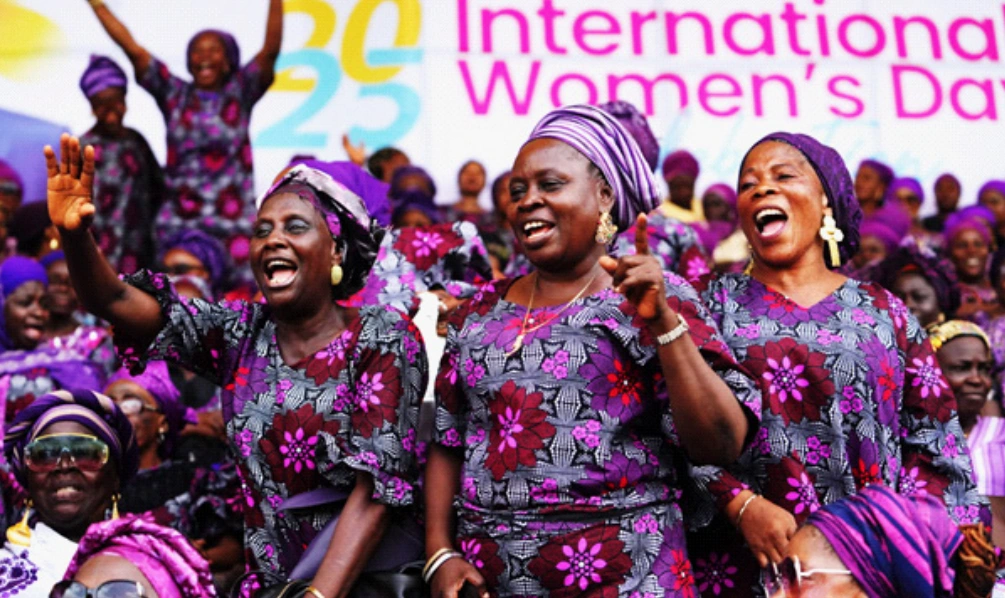
    This central truth lies at the heart of International Women’s Day, which in 2026 is marked under the official theme “Rights. Justice. Action. For All Women and Girls,” complemented by the global campaign “Give To Gain.” The theme underscores an urgent reality: achieving gender equality requires more than policy declarations and symbolic celebrations. It demands structural change, enforceable rights, and concrete action that dismantles the barriers preventing women and girls from fully participating in society.

    Observed annually on March 8, International Women’s Day serves as both a celebration of women’s achievements and a reminder of the persistent inequalities that remain. According to the United Nations, women globally possess only 64 per cent of the legal rights available to men. Even where laws exist on paper, weak enforcement and limited access to justice often prevent women from benefiting from them in practice. The 2026 theme, therefore, calls for stronger legal protections, decisive measures to end gender-based violence, equal pay for equal work, and greater representation of women in leadership and decision-making.

    Moving beyond rhetoric

    In an interview with The Pointer, the Delta State Commissioner of Women Affairs, Community and Social Development, Hon. Pat Ajudua, underscored the invaluable contributions women make across all spheres of life, political, economic, social, and cultural. Yet, she warned that discussions alone are no longer sufficient. She stressed that the time had come for decisive action.

    According to her, gender equality cannot be achieved through speeches and policy statements alone. Instead, governments, institutions, and communities must take concrete steps that genuinely transform the lives of women and girls.

    The Commissioner also commended the Delta State Government under the leadership of Rt Hon Sheriff Oborevwori, acknowledging what she described as the administration’s visionary approach to women’s empowerment. She equally praised the First Lady and founder of the You Matter Charity Foundation, Deaconess Tobore Oborevwori, for championing programmes aimed at strengthening opportunities for women across the state.

    “These efforts,” she noted, “have not only opened doors of opportunity but have also created platforms for women to excel, lead, and inspire the next generation.”

    Highlighting the ministry’s ongoing mandate, the Commissioner reiterated that the ministry remains committed to accelerating action towards a society where women and girls can thrive without fear of discrimination or violence.

    She explained that the ministry is determined to eliminate structural barriers that limit women’s participation in development, even amid the persistent socio-economic challenges facing the country.

    Addressing women directly, she urged them to recognise their power and pursue their aspirations with determination. “On this special day,” she said, “I urge every woman to recognise her worth, pursue her dreams relentlessly, and support one another in creating a future filled with opportunity and dignity.”

    She also acknowledged the role of men as partners in the pursuit of gender equality. “To our men and partners in progress,” she added, “we value your dedication in championing the cause of equality. Together, we can build a Delta State where no woman is left behind, and where the contributions of every woman are recognised, celebrated, and fully realised.”

    Cultural patterns and changing narratives

    Despite increasing advocacy and policy reforms, gender inequality remains embedded in many social structures.

    A certified educator, theologian, and advocate for United Nations Sustainable Development Goals 4 and 17, Dorcas Enitan Ajayi, believes Nigeria has made gradual progress but still has a long journey ahead.

    According to her, traditional cultural patterns historically prioritised male children over females. “Nigerian culture generally doesn’t really give equal opportunities for girls and boys in education and career paths,” she explained. “Based on the tradition that the female children’s certificate ends in their husband’s house, and the male ones are the ones who will be the heir of the family.”

    She noted, however, that the situation has slowly improved over time. “Things are actually taking shape, but not a perfect change; things have actually been improved over time,” she said. “We now have girls having access to education, even though it might not be of equal quality, for both genders, though.”

    Ajayi observed that access to opportunities today is influenced not only by gender but also by merit and social connections. “People tend to have access based on merit, while some have access based on connection, maybe somebody knows somebody,” she explained.

    While acknowledging that gender disparities still exist, she noted that opportunities sometimes vary depending on the sector. “Some sector provides better opportunities for females than males, while some prefer male than female,” she said.

    She reflected a cautious optimism about Nigeria’s evolving social landscape. “I would rather say that the Nigerian society provides opportunities for both genders, depending on the sector, the gender I want to fit into.”

    The fight for justice and a fair hearing

    When asked about women’s legal rights and the broader struggle for gender justice, Ajayi clarified that her advocacy is not necessarily about competition between men and women. “What I’m fighting for, I as a person, I’m not actually fighting for equality per se,” she said. “What I am fighting for is that what belongs to me should not be denied.”

    She emphasised that women deserve access to opportunities that rightfully belong to them, whether earned through merit or granted through social benefits.

    Ajayi also spoke about her involvement with Voices Against Rape and Sexual Harassment, an organisation dedicated to supporting victims of abuse. “In this organisation, what is being done basically is to help women, women, ladies, girls, older and young, who face harassment, rape and maybe discrimination or sort of social vices like that,” she explained.

    The organisation provides legal support, amplifies survivors’ voices, and assists victims in pursuing justice through the courts. Beyond advocacy, Ajayi believes awareness of legal rights is critical. “I’m aware of my legal rights as a woman or girl child,” she said, adding that she hopes to help more women understand their rights and learn how to defend them.

    Justice, investigation, and accountability

    Ajayi also emphasised the importance of fair legal processes. “Since we want justice for the female gender, I would want a situation whereby the legislature can pass a law that the judiciary system should uphold,” she said. Such laws, she explained, would ensure that women can voice their concerns without fear of discrimination or intimidation.

    She stressed that both genders face harassment, but women often experience it more frequently in certain contexts. Ajayi believed grassroots-level reforms are necessary to encourage victims to speak out.

    “If there is enough fair hearing, people will have the confidence to say their displeasure about harassment,” she explained. However, she cautioned that justice must also include a thorough investigation. “The fair hearing should be well investigated so that suspects would not be punished illegally,” she said.

    According to her, emotional reactions can sometimes complicate cases, making it important for authorities to approach such matters carefully.

    Education and early awareness

    One of Ajayi’s strongest recommendations centres on education, particularly early awareness of harassment. She believes girls should be educated from childhood about the different forms of harassment that can take. “Parents should teach their female children different methods or different ways in which they can be harassed,” she said.

    Harassment, she explained, is not limited to physical contact. “It’s not only when somebody is touching or when somebody is trying to… although those are the common ones. Other ones are not common, but they are actually harassment.”

    She stressed that girls must learn to say no before situations escalate. “It should not get to the point that the person is forcefully lying on them before they now consider it as rape,” she said.

    Drawing from personal experience, Ajayi explained that harassment often begins subtly. “From my experience, the harassment started in the form of words, whereby people around me did not really pay attention to it.”

    What eventually empowered her to confront the situation, she explained, was access to information. “I got access to a piece of information that helped me to challenge the predator,” she said.

    She believes that providing such information, particularly in grassroots communities, could significantly reduce cases of abuse.

    Government’s evolving response

    Government institutions have also expanded efforts to promote women’s rights. A senior officer with the Rivers State Ministry of Social Welfare and Rehabilitation, Mrs Blessing Nwankwo, said gender equality is increasingly integrated into development programmes. “Over the years, the government has recognised that women play a critical role in social and economic development,” she said.

    Because of this recognition, she explained, several policies have been introduced to protect and empower women and girls. One key focus area has been combating gender-based violence.

    “Rivers State has domesticated the Violence Against Persons (Prohibition) Act, which criminalises several forms of abuse, including domestic violence, harmful traditional practices, sexual exploitation, and emotional abuse.” The ministry collaborates with police authorities, health institutions, and non-governmental organisations to support victims.

    “When victims report cases, they can access counselling, legal referrals, and sometimes temporary shelter depending on the severity of the situation,” she said.

    Economic empowerment as protection

    Beyond protection measures, the ministry also prioritises economic empowerment. “We run skill acquisition initiatives for women across various communities,” Nwankwo explained. These programmes provide training in areas such as tailoring, catering, soap making, hairdressing, agricultural production, and small-scale entrepreneurship.

    Some initiatives specifically target widows, unemployed women, and single mothers. “When women have the means to earn income, they become less vulnerable to exploitation or abuse,” she said.

    Economic independence, she added, enables women to make decisions about their lives with greater confidence.

    Structural barriers remain

    Despite these programmes, structural challenges persist. Policy analyst Samuel Briggs believes deeply rooted cultural expectations continue to limit women’s opportunities.

    “In many communities, girls are raised with the expectation that their primary role will revolve around family responsibilities,” he said. While family life is important, such expectations sometimes discourage women from pursuing leadership positions or demanding careers.

    Briggs also highlighted economic disparities. “Many women operate within the informal sector, selling goods in markets, running small shops, or engaging in small-scale farming,” he explained. Although these activities are vital to the economy, they often lack financial security and access to formal credit.

    He added that women’s underrepresentation in politics further complicates the situation. “When women are absent from decision-making spaces, issues affecting them may not receive adequate attention.”

    The role of civil society

    Civil society organisations have played a major role in raising awareness about women’s rights.

    Gender advocate Ifunanya Okeke noted that public attitudes toward domestic violence have changed significantly over the past five years. “In the past, many cases of domestic abuse were treated as private family matters that should not be discussed publicly,” she said.

    Today, however, more people recognise gender-based violence as a serious human rights violation. Advocacy campaigns, including school workshops, community outreach programmes, and media engagement, have helped change perceptions. “Victims are now more willing to speak out,” she added.

    However, she warned that support infrastructure remains insufficient. Shelters, counselling centres, and legal aid services are still limited in many communities.

    Voices of young women

    For many young women, progress has been noticeable but incomplete. Tonia Alabo, an engineering student, believes stereotypes still influence educational choices. “In many classrooms, there is still a perception that science and technical subjects are better suited for boys,” she said.

    However, she acknowledged that more girls are entering fields such as engineering and technology. “Universities and professional organisations are also creating mentorship programmes that encourage female participation,” she explained.

    Yet balancing career ambitions with societal expectations remains a challenge for many women.

    Legal protections and the reality gap

    From a legal perspective, Nigeria’s constitution provides several protections for women. Barr Ngozi Iheduru explained that the Constitution of the Federal Republic of Nigeria 1999 guarantees equality before the law. She cited Section 42, which prohibits discrimination based on sex, religion, ethnic group, or place of origin.

    “This constitutional provision clearly establishes that women and men are equal before the law,” she said.

    Section 17(2) further emphasises equality of rights and opportunities. However, she noted that enforcement challenges remain significant. “Many women do not pursue legal action because of financial constraints, social stigma, or lack of awareness,” she explained.

    Bridging law and justice

    Human rights lawyer Faith Opara emphasised that legal guarantees alone are insufficient. “The Nigerian Constitution provides equality before the law, but justice can only be achieved when legal processes are accessible, affordable, and efficient,” she said.

    She referenced Section 34 of the Constitution, which guarantees the right to dignity and prohibits degrading treatment. Acts such as domestic violence and sexual assault violate this constitutional protection.

    Opara believes cases involving gender-based violence should be fast-tracked in courts. “Lengthy court processes can discourage victims from pursuing justice,” she explained.

    Persistent cultural bias

    Other observers point to ongoing cultural bias. A public school teacher, Mrs Ijeoma Obiora, noted that gender discrimination can be seen even within educational institutions. “In schools, especially in mixed schools, the boy is made the senior prefect while the girl supports him,” she said.

    She explained that leadership roles are often automatically assigned to male students. “I have not seen where the boy is an assistant even in the church,” she added.

    According to her, cultural perceptions of men as natural leaders continue to influence decision-making.

    The strategy of “Give to Gain”

    Amid these challenges, global advocates emphasise strategic investment in women. UN Eminent Ambassador and Gender Priority Strategist Ogochuku Okekpolo highlighted the significance of the “Give to Gain” campaign.

    “Across the world, especially in Africa, the needs of women are not uniform,” she explained. “Some require fundamental support, food security, clean water, safety, access to healthcare, and education. Others need opportunity, access to finance, enterprise platforms, leadership inclusion, and mentorship.”

    Yet the principle remains consistent. “Every intentional investment in women produces exponential returns,” she said. When girls gain access to education, she noted, the benefits extend far beyond academic achievement. “They improve their health, increase their earning capacity, and strengthen the future of their children.”

    Similarly, empowering women economically can transform communities. “A rural woman with clean water gains time for enterprise, family, and community leadership,” she explained. “A female entrepreneur with capital creates jobs and strengthens local economies.”

    IWD: The unfinished journey

    International Women’s Day 2026, therefore, arrives as both a celebration and a challenge. The celebration lies in the undeniable progress that has been made, greater awareness of women’s rights, expanding educational opportunities, stronger legal frameworks, and a growing network of advocates.

    Yet the challenge remains equally clear.

    From cultural expectations and economic inequality to gaps in legal enforcement and limited political representation, structural barriers still prevent millions of women from fully exercising their rights.

    The message of this year’s theme is therefore unmistakable. Rights must be protected.

    Justice must be accessible.

    And action must follow words.

    Only then can the roots of society be properly nourished, ensuring that women and girls everywhere can grow, lead, and flourish.

  • Evang Tonto And Her Camera

    Evang Tonto And Her Camera

    One thing that has always unsettled me in modern-day churches is those large cameras that sweep across the congregation and project people’s faces onto giant screens. I have often wondered what my own face would look like if it ever appeared there. Watching others on those screens has always been a curious experience.

    Some people smile shyly when they realise they are on camera, some quickly look away, while others suddenly become very serious, almost as if they are aware they are now part of a public moment.
    Eventually, one Sunday, my face did appear. What was on it was pure shock, simple, unfiltered shock. I did not even recognise my own expression. Before I could fully process that the startled face staring back from the screen was mine, the camera had already moved on. The moment was brief, but it left me thinking about something deeper: how much the presence of a camera changes behaviour.

    Many people have quietly voiced discomfort about cameras in churches. Worship, which is supposed to be intimate and personal, suddenly feels like a stage performance. People become conscious of their posture, their facial expressions, even how passionately they worship. Some temper down their emotions; others seem to amplify them. The camera, whether intentionally or not, introduces an audience.
    That uneasy thought brings us to a more recent situation that has sparked conversation across the internet: the viral deliverance video involving Nollywood actress turned evangelist Tonto Dikeh.

    Over the past few months, Tonto Dikeh has publicly embraced a dramatic spiritual shift. Once known for her bold “King Tonto” persona and headline-making controversies, especially “40 seconds man”, she recently announced that she would no longer use that nickname. Instead, she asked to be addressed as “Evangelist Tonto Dikeh”, “Woman of God”, or simply “Auntie Tonto”.

    Her social media pages have since been filled with videos of prayers, church volunteering, and spiritual reflections. But on March 6, 2026, something new happened, something that instantly caught the attention of the internet. During an evangelism outreach at a public secondary school in Abuja, she and her team conducted what she described as a deliverance session for a female student whom she believed was under a “spirit of death”.
    The moment was intense. Tonto laid hands on the girl, prayed in tongues, and commanded the spirit to leave. The student, pinned down by several hands, appeared shaken and visibly reacting during the prayer. The entire event was filmed and later posted online by Tonto herself, who described it as the beginning of God’s work in her ministry and promised to continue following up with the girl spiritually.
    Within hours, the video spread across social media like wildfire.

    The reactions were sharply divided. Some Christians applauded her openly. For them, it was a powerful testimony, proof that God can transform anyone and use them for His work. To these supporters, the same woman who once lived loudly in the world is now living just as loudly for Christ.
    But others were far less convinced.

    Critics questioned the ethics of filming such a moment, especially because a minor was involved. Actress Doris Ogala reportedly called for an investigation and raised concerns about whether the girl’s parents had given consent for the video to be shared publicly. Meanwhile, social media commentator VeryDarkMan strongly condemned the act, accusing Tonto of staging “fake miracles” and warning her not to involve vulnerable children.
    Beyond the specific arguments for or against Tonto, the incident has opened a broader conversation about faith, performance, and the power of the camera.

    One only needs to look at certain patterns in modern Pentecostal spaces. Pastors wave their hands, and entire rows of congregants fall backwards. Dramatic testimonies emerge, stories of marine spirits, generational curses, mysterious enemies. Sometimes the accounts are shocking, sometimes they are strange, and occasionally they are unintentionally funny.
    Why do these things happen so often in front of cameras?

    One reason is simple: visibility. In the digital age, churches no longer compete only within neighbourhoods; they compete online. Viral moments attract attention. Attention brings followers. Followers bring influence, and influence can eventually bring resources.
    Once cameras and money enter any environment, whether politics, entertainment, or religion, the ecosystem changes.

    That does not automatically mean everything becomes fake. But it does mean the incentives shift. Dramatic moments travel faster online than quiet ones. A spectacular deliverance clip will always generate more engagement than a silent prayer in the corner.
    And so, sometimes consciously, sometimes unconsciously, religious experiences begin to move in the direction of what is most watchable.

    This is where the discomfort many people feel begins to make sense. Worship was traditionally understood as something deeply personal, something between the believer and God. Yet in the age of livestreams, LED screens, and viral clips, even the most intimate spiritual moments can suddenly become public content.

    It raises uncomfortable questions. Why does Tonto Dikeh so often pray in front of a camera? Did Jesus not warn that acts of giving, fasting, and worship should be done quietly, away from the applause of men, lest the reward come from people rather than from God?

    But the conversation is not so straightforward. If the internet is flooded daily with vice, vanity, and excess, should faith completely retreat from that same space?
    This tension becomes even clearer when one looks at the phenomenal rise of Jerry Eze and his now-famous prayer platform, New Season Prophetic Prayers and Declarations. What began as a daily online prayer meeting has grown into one of the most-watched religious broadcasts in Africa. Millions tune in each morning, testifying to healings, breakthroughs, and renewed faith. At the same time, the platform has elevated its founder into one of Nigeria’s most influential and financially successful digital ministers.

    For supporters, this is evangelism evolving with the times. Just as missionaries once used radio and television to spread the gospel, livestreams now serve as the modern pulpit. Which raises a fascinating thought experiment: if Jesus were physically present in the 21st century, would he livestream his sermons? Would the Sermon on the Mount appear on YouTube or TikTok? Or would he still retreat to quiet hillsides, speaking to crowds without cameras, unconcerned about algorithms, followers, or trending hashtags?
    No one (at least not me) can answer that question with certainty, and none of these questions has easy answers.

    Faith itself has always been expressive. In African Pentecostal culture, especially, loud prayers, dramatic declarations, and emotional worship are not unusual. They have existed long before social media arrived. But the presence of cameras has undeniably added another layer to the experience.

    A worshipper might now wonder: How do I look on screen? A preacher might wonder: Will this moment go viral? And viewers online might wonder: Is this genuine, or is it theatre?
    The truth probably sits somewhere in between. I guess at the end of the day, we all have to ask ourselves, when the camera comes on, who is our audience, God or the world?

  • ‘Kuhodu?’

    ‘Kuhodu?’

    First of all, one must deeply appreciate my editor for accepting the title of this piece. It sounds funny, even to me. But then, it was thoughtfully chosen as the most appropriate way to drive home the point being made. In Ika language (one of the minority languages in the world), it is borne by some people as a name. And can be interpreted to mean; “minimize your talkativeness”, “be careful with words in communication”, “mind your language” and so on.

    Though the idea to apply the word for an illustration such as this was muted several months ago, it began to make stronger meaning recently with happenings in Nigerian communication space, especially among politicians, their supporters and critics alike.

    According to an American clergy man, Yehuda Berg; “Words are singularly the most powerful force available to humanity. We can choose to use this force constructively with words of encouragement, or destructively using words of despair. Words have energy and power with the ability to help, to heal, to hinder, to hurt, to harm, to humiliate and to humble”. Some time ago, the Governor of Edo State, Senator Monday Okpehbolo was quoted as warning Mr. Peter Obi not to step into Edo state without his permission, stressing that failure so to do will put him (Obi) in danger.

    Given the governor’s poor communication skill as was reportedly exhibited during his last governorship campaigns, 2025 annual budget presentation to the house of Assembly and the recent opening ceremonies of the Niger Delta Sports Competition, the senator’s statement may have meant a different thing to him. But the recent attack on the former Labour Party (LP) presidential candidate, Mr. Peter Obi and other politicians who gathered in former Governor John Odigie-Oyegun’s house for a meeting is now offering a meaning to that statement.

    Unfortunately for the governor, a young man, who probably was acting communicatively ignorant when he went to his social media handle to proclaim that what Peter Obi saw in Edo state will be minor compared to what awaits him in Rivers State soon spoke as if the evil perpetuators acted on his (Okpehbolo’s) instruction. He has thereby landed himself in police net for a chance to explain the link between him and Okpehbolo if any. Chances are that whatever statement he gives to the police may never tally with the stance of the originator of the threat.

    Still on communication, many politicians who had opportunities to offer clues that could help the police in tracking down the masterminds of the attack as they fielded questions from journalists rather chose to take the path of the lowest level of political campaigns – hammering on what the president of the country has done or failed to do for Nigeria. They chose to criticize President Tinubu for borrowing to run his administration, failing to offer security for Nigerians, particularly in the North (not even in Benin City), removing fuel subsidy, floating of the currency exchange rate and so on.

    Even if they were right to have chosen the path of turning the occurrence to a campaign issue, their stance do not automatically translate to how they want to ameliorate the plight of citizens come 2027.  Political actors like Dr. Oby Ezekwesili have used similar I-know-better attitudes in the past against President Jonathan who was seen as not being able to rescue the Chibok girls from the Den of the Boko Haram insurgents.

    She even defected from the ruling People’s Democratic Party (PDP) to the All Progressives Congress, APC and formed her NGO, “Bring Back Our Girls”. Till date what Jonathan did not do have not been done.

    When former President Obasanjo was seeking to become a civilian president in 1999, he blamed the military for the poor electricity supply in the country at the time. He followed up with a promise that he would do something that is akin to extracting water from the rocks by getting a ‘capable’ hand to run as power and energy minister. He, indeed appointed a no-nonsense administrator, late Chief Bola Ige to the position. Today, the situation is worse than OBJ met it in 1999.

    In a null share, Nigerian politicians have continued to dwell on the simplest levels of irrelevance in their campaigns for elective positions. While those in power struggle to convince the populace on the reasons they want to remain there by explaining away their achievements, no matter how useful they are to the country, those wishing to come in relish on critical objections to what government have done, no matter the necessity of such lines of actions in modern politics and economic thinking.

    Therefore, unlike the position of some Nigerians who believe that the 2027 elections will be contests between the people and APC, the contests will be between Nigerians and politicians, not just APC. Their poor communication skills and careless deceitful pronouncements prior to that year will make or mar the chances of many them who rely on ethnicity, family tree, religious bigotry, godfatherism, moneybagism and election manipulations to harmfully adjust the destinies of the people. It is dawning on the citizens that their destinies still rest on their palms.

  • Corps Members Seek Special Attention For Colleagues With Disabilities

    Corps Members Seek Special Attention For Colleagues With Disabilities

    For decades, national service represented unity, sacrifice, and equal opportunity. However, for corps members with impairments, the voyage is frequently marked by quiet exclusions in some camp activities. That reality may be changing now as the NYSC indicates a willingness to implement a more inclusive structure for corps members with special needs.

    In this interview with MIRACLE KALU, Mr Bless Ibe and Miss Timi Bripin, who are serving corps members in Delta State, reflect on personal encounters and camp experiences. They also spoke on their stay and hospitable experiences in Delta State, thanking Governor Sheriff Oborevwori for support to corps members so far.

    Excerpt

    First to speak was Mr. Bless Ibe

    Are you aware of NYSC’s plans for better support to corps members with disabilities and inclusion in all camp activities?

    Yes, it should be encouraged.

    What does the policy mean to you personally?

    For me, the inclusion of such corps members is obviously involving them in the NYSC camp activities. These are people with malfunctioned body parts, like the legs, hands and others. It is going to be a welcome development because it gives all the opportunity to serve the nation.

    During your camp orientation, did you notice corps members with disabilities?

    Yes, I saw some, but, they really need special care and attention.

    So, how were they accommodated in terms of camp facilities, activities and welfare?

    I think, to the best of my knowledge, people like that should be treated differently with care; should not be given the same level of strictness when it comes to doing some activities, and be permitted from activities that they are not able to do. And concerning their welfare, normally the welfare is paid to everybody.

    Have you personally interacted or worked with a corps member with a disability during service?

    Yes.

    Do you think the NYSC environment is welcoming to such corps members?

    Except for some of the activities that are stressful and demanding for everybody, I think it is fair for them.

    How do other corps members generally perceive colleagues with disabilities?

    For me, I think perception should differ from person to person according to their ideologies. But, you know, most times we look at people with disabilities with a sense of pity and sometimes tender favour, but generally it is based on personal perception.

    Would inclusion change how corps members relate, collaborate, or support one another?

    Yeah, obviously it will change a lot. You know, anything that is new to a system requires some level of change in the outcome. So, definitely it will change in the sense that not everybody will be performing all the tasks. So, there are certain people that are having disabilities, you know, and should be limited to some tasks. And then, in a way, it limits their interaction with certain people. Yeah, because at that time they will be required to, you know, give space for people that can perform certain tasks. And it’s just normal that the people that you do certain tasks with regularly become used to them with time. And then, most likely, the people that are with disabilities might be used to relating with themselves. But then, a disability is just a limitation. It will just bring about a limitation in interaction.

    What challenges do you think disable corps members may face in camp?

    I think participation. The first thing is participating in the normal routines in camp. They can be stressed. The training processes are stressful. And then secondly, I’ll talk about timing. People with disabilities need more time to manage the whole programme, but then time is not on anybody’s side. So, they will need to have more time to meet up with their demands. That’s just for the orientation camp. For the place of primary assignment, they might not be able to meet up with the requirements from their PPAs; you know, people that are posted to places that require them to work with their hands or probably with their legs might be limited. They have a limitation in performing their task generally. And then some places might not want to accept them.

    What about team work, can they contribute?

    Talking about teamwork, in a case where we need manpower to do certain activities, and then due to the fact that some of these people have disabilities, they will not be able to actively participate. Secondly, aside from the fact that they might require them to offer physical assistance in teamwork, I also think that their intellect can actively play a part in some projects that are not manually orientated.

    What practical steps would you suggest the NYSC take to improve inclusion?

    Talking about practical steps now, the whole process for NYSC registration is online, so certain people cannot be properly observed, and certain conditions cannot be properly observed. So, I was thinking, for this inclusion to work, aside from the medical reports, I think there should be a physical, pictorial submission for the cases. Yeah, because, let’s say, inasmuch as there are inclusions for disability, I personally do not think that every disabled person will have the ability to participate in this case. So, it’s only disability to some extent that might be given allowances for, but then how do you assess this, not just by medical reports, because medical reports alone cannot guarantee these cases? So, I just feel pictorial submissions for the cases could go a long way for the registration.

    How can fellow corps members contribute to creating an inclusive environment?

    For me, it is by embracing love, compassion, especially for those with disabilities. There’s the usual sense of neglect and, to some extent, low self-esteem of disabled people. So, the more we can show love, the more we can interact, and the more we can show compassion to these people, it will help a long way to accommodate this situation.

    What role should host communities and employers play?

    The first role they should play, I suggest, is that they should accept these people. That’s number one. Just the mere feeling of rejection, PPA rejection, is a whole lot. It’s a whole lot to them. There’s no need to create a scheme where these people cannot be accepted fully. So, first of all, they should be accepted, and then they should be considered, even while distributing duties.

    Will their inclusion in all camp activities make any impact in their lives?

    I think there is a positive impact. It makes everybody have a sense of belonging, and people with disabilities will not feel neglected by the system. So, it’s more like everybody is accepted, irrespective of the challenges they are facing.

    In the same vein, Miss Timi Bripin another corps member has this to say on the issues.

    How do you see the new plan by NYSC?

    It’s not welcoming at all to members with disabilities. I don’t think it is.

    How do you see them?

    For me, I feel we see them as normal humans, like fellow corps members. Personally, I won’t look at them differently, because we are one.

    Is the NYSC Camps comfortable for them?

    Yes, I think so. I think the facilities vary from camp to camp; it’s not every camp that does have the same infrastructure. So, depending on the disability, depending on the infrastructure…

    Do you think this will affect them psychologically and emotionally?

    Yes. A disabled person can become psychologically unstable and emotionally drained.

    Do you think inclusion of corps members with disabilities in strenuous camp activities will affect unity among them?

    The inclusion of corps members with disabilities will affect collaboration and performance of the team. The NYSC officials are also going to be very stressed while trying to manage the situation.

    What positive impact do you think this policy could have on the larger society?

    I feel it will cause more harm than good. It’s not easy to serve this country with everything going on these days. It will be too hard for the disabled. I’m not saying that they should not have the opportunity. They can register for NYSC, but it is not necessary for them to go for the orientation camp.

    In your opinion, what attitudes need to change to make inclusion successful?

    ‘Considering the inclusion of corps members with disabilities, I would think the NYSC officials have to be more patient and have to be more considerate when it comes to people with disabilities.’  I think the PPAs should be very; very welcoming to those disabled corps members and give them the necessary things needed.

    What message do you like to share with policymakers and NYSC officials about this inclusion?

    I want to plead that certain plans should be made to make this policy work. Orientation should be given to the NYSC officials and the directors of the different departments of assignments regarding this so that the scheme or the new inclusion does not look like a joke but looks like something that was properly prepared for. And then, we should embrace everybody as equal.

    What do Corps members have to say about your experiences in Delta State?

    Delta State is amazingly hospitable and good to us; it has been a safe environment for corps members. Especially the remote areas, it is peaceful and calm. The people are very accommodating. The only issue will be the high cost of living especially for accommodation in its major cities like Asaba and Warri. Some corps members struggle with getting accommodation for those who’s PPAs could not provide accommodation. Aside this, Delta State Government has been very supportive to corps members. The law enforcement agencies respect corps members in Delta State. Their actions are very commendable. Our stay has been a very wonderful experience positively. Hence we must thank the Delta State Governor, Rt. Hon Sheriff Oborevwori for assistance so far.

    Generally, any other advice for NYSC and government?

    As the NYSC signals readiness to embrace inclusion, the intentions must be matched with actions. While peers are becoming more understanding, there are still obstacles in camps and postings. The NYSC’s new inclusion guidelines give some hope, but real change will only happen if these rules are properly put into practice. For inclusion to mean more than just words, the guidelines need to result in accessible facilities, fair policies, and daily practices that respect differences as part of national unity.

    As you may know, the new protocols released by the NYSC, inclusion of corps members with disabilities will be guided by principles of dignity, empathy, and equal participation. The provisions span the entire service year, from orientation camp to primary assignment and passing-out parade, with measures aimed at improving physical accessibility and providing necessary devices that can assist them.

    It should also emphasise inclusive communication through formats such as sign language, Braille, and large-print materials, alongside tailored training and support systems based on individual needs.

    In addition, NYSC must address digital accessibility concerns, particularly around registration and online information portals, while encouraging camp officials and staff to engage corps members with disabilities using emotional intelligence.

    With the new protocols now in place, corps members remain cautiously optimistic that inclusion within the NYSC will move beyond policy to practice, creating an environment where every corps member can serve with dignity and fairness, they said.

×