


BY OGORAMAKA AMOS/RITA OYIBOKA
She stepped into the market, a mother of four with a list and a mission. The aroma of foodstuffs, mingled with the dust of worn stalls, and her mind raced with the stew she needed to make for her hungry children. First, the tomatoes, the red peppers, tatashe, onions, and garlic.
Bag full, she began scanning the familiar corners of the market, searching for that roar of machines grinding away, the sound that promised her ingredients would be ready for the pot in minutes.
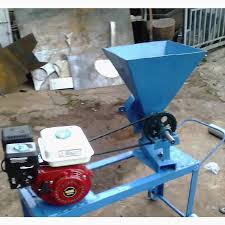
Handing over her bounty, the tomatoes and peppers, to the boys who washed the vegetables with practised hands, she watched them drop the produce into the machine. It roared to life, a metallic growl that crushed and pulsed, turning the leafy vegetables into a thick, red slurry.
Water splashed, flecks of pulp flew, and the mixture shimmered in the sunlight as it was poured into flimsy nylon bags. Clutching them close, she was unaware of the danger lurking in what she carried home. The stew she would make would taste the same, look the same, but it could be poison.
The Federal Institute of Industrial Research, Oshodi (FIIRO), recently raised a red flag that has unsettled households and market communities across Nigeria. According to the institute, rising cases of organ failure and cardiovascular diseases may be linked to foods processed with locally fabricated grinding machines, the familiar engines of daily life in open markets.
These machines, commonly used to grind pepper, tomatoes, crayfish, ogbono, melon, and other staples, are reportedly found to contain unsafe levels of metals such as iron, zinc, lead, copper, chromium, nickel, cadmium, and manganese. The danger, experts say, is heightened by poor maintenance practices and prolonged wear of machine parts, which may release metallic particles into food.
In Rivers State, where open markets remain the heartbeat of food supply, the warning has sparked debate, anxiety, and defensiveness in equal measure. From Mile 1 and Mile 3 markets in Port Harcourt to the busy Oil Mill axis and Rumuokoro, grinding machines hum from dawn till dusk. For many, they are not just tools; they are economic lifelines.
To understand how this revelation is being received on the ground, Sunday Digest spoke with patrons, operators, and health practitioners. Their responses paint a deeply human picture, one that sits at the intersection of poverty, convenience, public health, and regulation.
In an interview, Mrs Blessing Wobo, a trader in Rumuokoro, said: “I patronise the grinding machines because honestly, what choice do I have?” She continued, “I leave my house by 6 am every day to sell at the junction. When I come to the market, I buy everything at once: pepper, crayfish, ogbono, and I grind it immediately. I don’t have a blender at home, and even if I had one, there is no guarantee of light.”
She emphasised that the machines are fast, affordable, and accessible. “You pay between ₦200 and ₦500, depending on what you’re grinding. In five minutes, you are done. If I carry these things home, I will waste time and transport money.”
When asked about potential contamination, she admitted, “To be honest, no. I never thought about metal entering food. I only worry if the machine is dirty or smells bad. But metal? That one is scary. We are just trying to survive. Everything cannot be fear. If we fear everything, how will we live?”
Similarly, Mr Tare Okoro, a civil servant, explained his preference for market grinding. “There’s a difference between market-ground pepper and blender pepper,” he said. “The texture is smoother. My mother insists on it. Even when I try to blend at home, she says it doesn’t taste the same.”
Before the warning, he had never considered health implications beyond hygiene. “I’ve seen rusty machines before, but I assumed heat from grinding would kill germs. I didn’t think about metal particles.”
The revelation, he admitted, unsettled him. “If it’s scientifically proven, then it’s serious. Heavy metals like lead and cadmium are not small things. But I would want proper testing and public awareness, not just an alarm. Government agencies should inspect these machines regularly instead of telling us to avoid them. Because honestly, most people use these same grinding machines daily, they’re everywhere in the street and market.”
Mrs Ibinabo Peters, a caterer who processes food in large quantities, relies heavily on industrial grinding machines in the market.
“I use the grinder at market because it’s easier and faster for the large quantity of ingredients I use: tomatoes, peppers, onions, and moi-moi. I can grind 10–15 bowls of pepper at once. That’s not something I can do in my kitchen,” she explained.
She admitted noticing sparks and metallic sounds during grinding but never associated them with contamination. “During grinding, sometimes I see these small sparks from the machine. Sometimes the operator will say, ‘Madam, the blade needs sharpening.’ I didn’t think beyond that.”
Now, she says she is reconsidering. “I cook for weddings and events. I can’t grind large quantities at home, and if something happens, people will blame me. This information is serious. I will start asking operators about servicing before I grind anything.”
Miss Endurance Chukwu, a student at the University of Port Harcourt, affirmed that affordability drives her choice. “We live in hostels with no proper kitchen space. The market grinding service makes life easier, and we don’t even have access to blenders in the hostel,” she said.
She confessed that she rarely checks the condition of the machine. “You just queue and wait. It’s busy. Nobody is inspecting anything; at times, we don’t notice anything.”
Upon hearing about the risks, she reacted strongly. “If this is true, it’s frightening. Organ failure? Heart disease? That’s not small. Young people like us eat these foods that are ground at the market daily. With this information, one has to be careful, but right now, as a student staying within the school premises, we don’t have any alternative.”
School teacher and mother of four, Mrs Chinyere Okonkwo, echoed the dilemma of many households.
“I won’t lie, convenience is the main reason we use those grinding machines. In many homes like mine, especially where both parents work, nobody has the time or strength to grind pepper or tomatoes manually anymore. The local grinding points in the market are fast, affordable, and everywhere. You can buy fresh ingredients and grind them immediately for stew or soup. That freshness is important because Nigerians prefer freshly blended food rather than packaged alternatives.
“Also, buying an electric blender that can handle large quantities is expensive, and a constant power supply is not guaranteed, so the market grinders have become part of our daily cooking culture. Before now, I honestly never thought about health risks from the machines themselves. We worry about dirty water or spoiled food, but nobody ever mentions metal contamination. Seeing operators rinse the machine between customers, you assume it is clean enough. Hearing that metals like lead or cadmium could mix with our food is frightening because these are things we feed our children every day. Many families depend on these services without questioning what happens inside the machine.
“This information will definitely make me more careful. I may not completely stop using them because, realistically, there are limited alternatives, but I will start observing which operators maintain their equipment properly. If possible, I would reduce how often I grind large quantities outside or invest gradually in a stronger home blender. Government agencies also need to step in because ordinary customers cannot test machines for safety. We rely on authorities to certify what is safe. Right now, it feels like we have been exposed to a danger we didn’t even know existed.”
From Lagos, Mr Samuel Akinrinbola shared similar views. “To be honest, most people patronise locally fabricated grinding machines because they are practical and economical. If you live in Lagos or any busy city, you know time is money. After work, you just want to stop at the market, grind your pepper mix, and go home. The service costs very little compared to buying industrial kitchen equipment. It’s also a shared community system; everybody uses the same machines, so there’s a level of trust built over the years.
“I was not aware of any danger before hearing about this report. At most, people complain that sometimes the pepper tastes slightly metallic if the blades are old, but nobody connects that to long-term health problems. The idea that metals like chromium or nickel could accumulate in food and gradually affect organs is shocking. Many Nigerians already struggle with hypertension and kidney problems, so knowing that everyday cooking practices might contribute to these illnesses is worrying.
“Will this change my behaviour? Yes, but cautiously. Awareness alone is not enough; there must be regulation. If authorities inspect and certify grinding machines regularly, customers will feel safer. Otherwise, people may panic but continue using them because there is no viable alternative. Personally, I will start asking operators when their machines were last serviced and avoid visibly worn equipment. Consumers need information, but solutions are more important than expecting individuals to solve a public health issue alone.”
Operators, however, express frustration at the narrative of contamination.
Mr Sunday Baridam, 47, an operator at Mile 1 Market, has been in the trade for five years. “We no dey poison anybody,” he said firmly. “These machines na local welders dey do am, and they are strong. If you maintain them, they work well.”
On servicing, he hesitated. “We dey service the machine. Last servicing? Maybe six months ago. But we sharpen blades regularly.”
Asked about metal contamination risks, he admitted, “I don hear small-small talks, but nobody from government don come tell us anything. If there is danger, they should train us. We are feeding our families from this work.”
He added that customers’ expectations complicate matters. “Customers want sharp-sharp. They don’t want to pay more. Servicing costs money. If we increase the grinding price, they complain.”
According to Emeka Onyekachi from Okpanam Market, “I have been running this grinding machine for over 10 years. Like many of us, I learnt the trade as an apprentice. People rely on us every day, so we do our best to keep the machines working. Honestly, we only fix them when they break or start giving trouble. There’s no formal inspection or proper technical training for operators. We depend on local technicians to repair worn parts or change blades. The main concern has always been that the machine works, not really health and safety, because nobody ever taught us about contamination risks.
“I didn’t know the machines themselves could be dangerous beyond normal hygiene. We do wash the grinding chamber and rinse it with water before customers, because keeping things clean helps attract business. But the idea that metal particles could mix into food is new to most of us. Most machines are locally made, and spare parts differ in quality depending on what we can afford. Sometimes, cheaper metals are used because proper industrial parts are too expensive.
“If these health risks are real, operators need help, not blame. We are mostly small business owners just trying to survive. Servicing regularly costs money, and without financial help, it will be hard to comply. What we need are subsidised parts so we can upgrade safely. Customers trust us with their food, and we eat it too. Nobody wants to harm anyone, but awareness and support must work together to make these machines safe for everyone.”
Mrs Ngozi Emenike, 38, an operator at Oil Mill Market, insisted hygiene is her priority. “I wash the machine every day. I remove leftover pepper and clean it.” But she admitted internal metal parts are not frequently replaced. “To change the shaft or blade is expensive. People don’t pay much for grinding.”
When informed about heavy metals, she expressed concern. “If truly metal is entering food, then we need better machines. It’s really not good for everyone’s health. The government can subsidise stainless steel ones. We are not experts in metal science.”
Medical experts confirmed the risks. A Consultant Physician in Port Harcourt, Dr Amadi Douglas, explained that chronic exposure to heavy metals can damage organs.
“Lead, cadmium, and chromium are known toxins. Long-term ingestion can affect the kidneys, liver, and cardiovascular system,” he said.
“We are seeing more chronic kidney disease and heart conditions, but linking them directly to grinding machines requires laboratory confirmation. It’s plausible, but causation must be scientifically established.”
He emphasised that cumulative exposure is the danger. “It is not one plate of soup; it is repeated ingestion over years. Public health agencies should test food samples from markets. If contamination is confirmed, policy action must follow.”
Dr Douglas highlighted maintenance issues. “Locally fabricated machines may not meet food-grade safety standards. When metals corrode, microscopic particles can enter food. If blades are rusty or worn out, friction can release metallic debris.”
However, he cautioned against panic. “Let’s not create fear without data. The solution is inspection, certification, and education, not shutting down livelihoods overnight.”
Another expert and a medical doctor in the Federal Medical Centre, (FMC), Asaba, Dr Ifeoma Nwosu, added further weight to these concerns.
“In clinical practice, we are seeing increasing cases of kidney dysfunction, cardiovascular disease, and unexplained chronic inflammation. These conditions have multiple contributing factors; diet, genetics, lifestyle, environmental exposure, and poor healthcare access all play roles. However, the possibility of heavy-metal contamination from food processing equipment is medically plausible and should not be dismissed.
“Heavy metals such as lead, cadmium, and nickel are known to accumulate gradually in the body. Unlike some toxins that cause immediate illness, these substances build up over time, affecting organs like the kidneys, liver, heart, and nervous system. Long-term exposure has been associated globally with hypertension, heart disease, reduced kidney function, and even developmental problems in children. When locally fabricated machines are poorly maintained, friction between worn metal components can release particles into food, especially during grinding of acidic ingredients like tomatoes and pepper, which may accelerate metal leaching.
“From a medical perspective, the claims are concerning and credible enough to warrant urgent investigation. We may not immediately trace a patient’s illness to a grinding machine, but public health risks often come from cumulative exposure rather than a single source. What is needed now is structured research, laboratory testing of food samples, monitoring of metal levels in frequently used machines, and stronger food safety regulations. Prevention is always cheaper than treatment. If contamination is confirmed on a large scale, this could represent a silent contributor to Nigeria’s rising burden of non-communicable diseases.”

