


BY RITA OYIBOKA/AMAYINDI YAKUBU/PRINCE EJAKPOMEVI
As Nigeria inches toward another electoral cycle, the battle over how votes are counted and transmitted has once again taken centre stage. At the heart of the storm is one deceptively simple question: when Nigerians cast their ballots in 2027, will the results travel instantly and transparently from polling units to a central server, or will they once again be vulnerable to the long shadows of manual collation?
The Independent National Electoral Commission (INEC) has approved electronic transmission of results for the 2027 presidential election, a move widely described as a milestone in the country’s quest for credible polls. The system enables results from polling units to be uploaded directly to INEC’s Result Viewing Portal (IReV), theoretically reducing opportunities for tampering as physical result sheets are transferred from one collation centre to another.
On paper, it is a technological leap. In practice, it is a national debate.
What Electronic Transmission Really Means
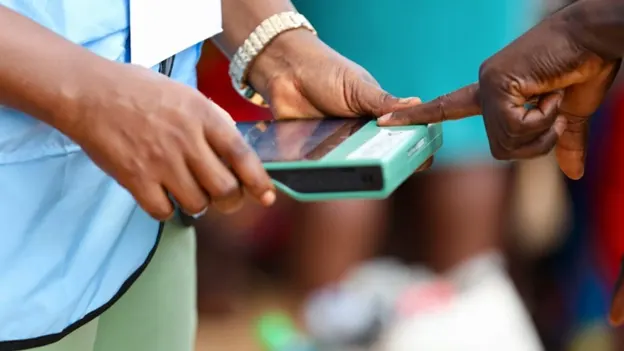
Electronic transmission of election results refers to the digital upload of polling unit results to a central server, primarily through INEC’s IReV platform. The system is powered by tools such as the Bimodal Voter Accreditation System (BVAS), introduced to authenticate voters and upload results.
The legal backbone of this framework lies in Section 60 of the Electoral Act 2022, which permits INEC to prescribe the method of transmission, including electronic means. However, crucially, the law does not make real-time electronic transmission mandatory. It allows room for manual backups where network failures occur.
That caveat has become the battlefield.
The concept itself is not new. Since at least 2010, electoral reform advocates have pushed for greater technological integration into Nigeria’s voting system. INEC piloted result-viewing technology in the 2020 Edo governorship election, where IReV was first deployed. The aim was straightforward: increase transparency and reduce post-election disputes.
Yet, the 2023 general elections exposed cracks. While BVAS and IReV were deployed nationwide, technical glitches delayed uploads of presidential results, sparking widespread allegations of irregularities. The European Union Election Observation Mission later observed that, although the Electoral Act permitted electronic transmission from collation centres, it was not fully implemented, which contributed to disputes that spilt into courtrooms.
The Road to 2027: A Legislative Tug-of-War
The debate intensified in early 2026 as lawmakers revisited Clause 60 (formerly Section 60) in the proposed Electoral Act Amendment Bill.
In February 2026, reports emerged that the Senate had rejected mandatory real-time electronic transmission, opting instead to allow manual collation in areas with poor network coverage. The backlash was swift. Opposition parties, civil society organisations, and labour unions accused lawmakers of weakening safeguards against manipulation.
Protests followed. Public figures, including Peter Obi, mobilised demonstrations around the National Assembly, demanding the retention of mandatory transmission provisions.
Under pressure, the Senate recalibrated. It eventually approved electronic transmission, but “subject to the availability of telecommunication networks.” Where networks fail, Form EC8A, the manual results sheet, would serve as backup.
Senate Chairman Adeniyi Adegbonmire clarified that the reform does not amount to e-voting and that INEC lacks the capacity for fully real-time implementation without transitioning to electronic voting. The compromise was harmonised with the House of Representatives, which had earlier passed a stronger version mandating real-time uploads.
The result: progress with a proviso.
The Arguments: Transparency vs. Feasibility
Supporters of mandatory real-time transmission argue that a verifiable digital trail reduces manipulation, enhances trust, speeds up results, and potentially curbs post-election violence. They contend that if criminals in remote areas can upload videos and transact digitally, then INEC can certainly transmit election results.
They also argue that manual backups create loopholes, and in Nigeria’s political climate, loopholes rarely stay theoretical.
Opponents, however, insist that network coverage across Nigeria remains inconsistent. Real-time transmission, they argue, is simply not feasible everywhere and may risk disenfranchising voters in remote communities. They note that advanced democracies such as the United States, the United Kingdom, and Germany do not rely on real-time digital transmission for credibility. Instead, they use mail-in ballots and manual processes supported by institutional trust.
Another point of caution: electronic transmission is not electronic voting. Nigeria still uses paper ballots. Results must first be manually counted in public before any upload occurs.
Voices from the Ground
Away from the heated exchanges in legislative chambers and the polished arguments on television studios, the real pulse of the debate beats in markets, offices, and street corners. To capture that mood, The Pointer went on ground, speaking directly with citizens to collate their views on electronic transmission and what it could mean for the credibility of future elections.
Mr Jude, a civil servant, expressed confidence in the system.
“If results are transmitted directly from the polling units, it will be difficult for anyone to interfere, so that alone will give voters more assurance in the upcoming elections,” he said.
For him, technology equals trust.
But Mr Ifeanyi Okonkwo, a businessman, sees the innovation through a more cautious lens.
“I actually applaud INEC’s initiative in ensuring a free and fair election, but let’s not forget the issue of network problems Nigeria has faced over the years. So they will not find a solution to tackle the situation,” he said.
His concern reflects a broader anxiety: what happens when the network drops mid-upload?
Another civil servant, Mr Godwin, believes transparency must go beyond technology. “For this system to work, it must be open to scrutiny, and when voters understand how results are uploaded, it reduces tension and election disputes,” he noted.
Mrs Charity, a shop owner, framed it in simpler terms. “People want an election that reflects their voice and choice. If the electronic transmission works as promised, then it could mark the beginning of a new democratic era.”
The Infrastructure Question
Senior Project Manager at OCU Group, Nwabueze Adiuku, approached the issue from a systemic angle. “I understand the argument for redundancy and safeguarding the process. However, we also need to step back and look at the broader systemic issue,” he said.
He pointed out that Nigeria spends millions of dollars conducting elections, yet public trust remains fragile. Post-election litigations, disputes, and reruns drain public finances and destabilise politics.
“If less than 10 per cent of the country still experiences significant network challenges, then perhaps the long-term solution is not to dilute electronic transmission, but to strategically invest in fixing that infrastructure gap,” he argued.
Adiuku believes strengthening network reliability would benefit not just elections, but commerce, education, healthcare, digital governance, and national productivity.
“Rather than repeatedly budgeting for crisis management after elections, the Senate could channel part of those funds into upgrading digital infrastructure in underserved areas. Sustainable infrastructure investment builds trust more effectively than procedural compromises.”
The Legal Mind
A law graduate of Taraba State University, Omanga George, commended the National Assembly for advancing the Electoral Act amendment, particularly the reinstatement of mandatory electronic transmission under revised Clause 60(3). He described it as “a vital stride toward enhanced transparency, immediate public verifiability, and the substantial curtailment of electoral malpractices.”
However, he was unequivocal about the proviso allowing Form EC8A to serve as the primary basis for collation where electronic transmission fails.
“This conditional fallback, though presented as pragmatic, reintroduces the very vulnerability the 2022 Act and subsequent reforms aimed to eliminate,” he argued.
George maintained that network coverage deficits are no longer insurmountable obstacles. With INEC proposing a ₦1.01 trillion budgetary allocation for 2026 electoral operations, he believes the commission can partner with satellite broadband providers such as Starlink and domestic telecom operators.
“Deployment of portable satellite terminals, solar-powered redundancy systems, and dedicated election-day bandwidth prioritisation could guarantee reliable connectivity in even the most isolated villages,” he said.
His conclusion was emphatic: “Electronic transmission mandatory, full stop.”
The Counterpoint: Are We Ready?
Not everyone shares that urgency.
Former INEC National Commissioner Mustapha Lecky stated bluntly that Nigeria is neither legally nor technically prepared for real-time digital transmission.
Speaking on Channels Television, he argued that calls for instantaneous transmission are misplaced. “It doesn’t make sense because we don’t do electronic voting anywhere,” he said.
According to Lecky, digital transmission logically follows digital voting — a system Nigeria has not adopted. “Are we doing electronic voting? We are very far away from it,” he added.
He stressed that elections are still conducted manually with paper ballots. Results must be counted publicly, one by one, before Form EC8A is filled and signed by party agents. “For electronic transmission, we are not ready. We are not technically ready,” he warned.
Lecky also raised concerns about cyber risks in a country with fragile digital resilience and urged INEC to focus on making existing tools like IReV and BVAS work perfectly before expanding expectations.
Similarly, Senator Seriake Dickson, a member of the Senate Committee on Electoral Matters, had argued that real-time transmission alone does not guarantee transparent elections.
“The word ‘real-time’ is not what will give us a transparent election,” he said during an interview on Arise Television.
He noted that since 2023, INEC has already required presiding officers to photograph and upload results to IReV after polls close, even without explicit legislative backing. The current amendments, he explained, are meant to provide a legal framework to safeguard that practice.
Beyond Technology: The Trust Deficit
At its core, the debate over electronic transmission is not just about bandwidth or software. It is about trust.
Nigeria’s elections have long been plagued by allegations of rigging, violence, and judicial controversies. Billions are spent on organising polls, yet billions more are spent litigating their outcomes. Every cycle deepens voter apathy.
Electronic transmission promises transparency. But transparency is not merely a technological function; it is a cultural one.
If implemented without loopholes and backed by robust infrastructure, it could reduce disputes and boost international credibility. Investors watch political stability closely. So do citizens decide whether their vote matters. But if implemented half-heartedly, with caveats that invite manipulation, it may simply digitalise old problems.
The Road Ahead
As of February 2026, the amendment bill awaits presidential assent. INEC’s proposed budget signals significant technological investment. Pressure from civil society remains intense.
The question now is not whether electronic transmission will feature in 2027; it will. The real question is whether it will be implemented as a non-negotiable rule or as a conditional preference.
For many Nigerians, the answer will determine not just the credibility of the next election, but the trajectory of the country’s democracy.
Electronic transmission stands today as both symbol and test, symbol of reform, test of political will. Whether it becomes a watershed moment or another missed opportunity will be decided not in press conferences or television debates, but on election day, when the final results are uploaded, or delayed.
And in that moment, Nigeria will find out whether its democratic future runs on stable networks or unstable compromises.

