


By Emmanuella Oghenetega
With oil and gas identified as critical enablers of industrial growth, peace, and shared prosperity across Africa, the Federal Government has outlined a renewed strategy, to reposition local content as a catalyst for cost competitiveness, indigenous capacity development, and sustainable value retention in the energy sector.
The strategy was articulated at the session titled “Local Content Beyond Compliance: Building African Industrial Powerhouses” during the 9th Nigeria International Energy Summit (NIES 2026), convened under the theme “Energy for Peace and Prosperity: Securing Our Shared Future.”
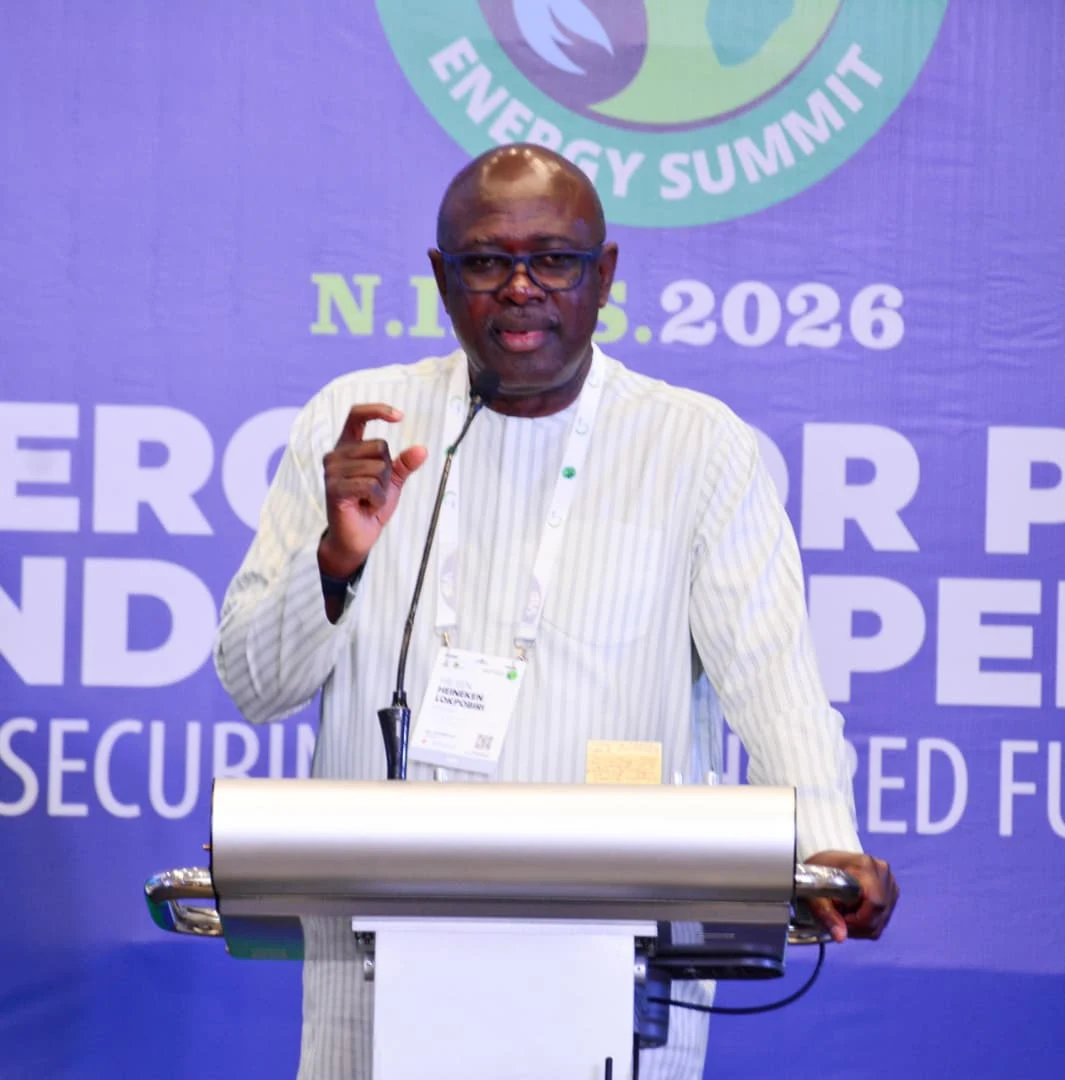
Delivering his address at the summit, the Minister of State Petroleum Resources (Oil), Senator Heineken Lokpobiri, described local content as central to Africa’s energy growth, but noted that its misapplication over the years had contributed to inflated project costs and limited capacity development for indigenous companies.
The Minister recalled that one of the first challenges he confronted upon assumption of office was the paradox of oil and gas projects being more expensive in Nigeria than in comparable producing jurisdictions.
He explained that this was largely traced to an ineffective application of the Nigerian Oil and Gas Industry Content Development (NOGICD) Act, which shifted emphasis from genuine capacity building to transactional compliance.
Senator Lokpobiri stressed that the original intent of the Act was never to displace international Engineering, Procurement and Construction (EPC) companies, but to foster structured collaboration between EPC firms and capable indigenous companies.
Such collaboration, he said, was designed to introduce competition, reduce project costs, and grow sustainable local capacity.
He added that the Federal Government is strengthening strategic oversight of local content financing mechanisms to ensure that available funding supports companies committed to long-term growth, value creation, and regional competitiveness, rather than short-term rent-seeking.
In his opening speech, the Minister of State for Petroleum Resources (Gas), Ekperikpe Ekpo, represented by the Permanent Secretary, Ministry of Petroleum Resources (MPR) Mrs. Patience N. Oyekunle described natural gas as the backbone of Nigeria’s industrialisation drive and Africa’s most immediate, scalable, and inclusive pathway to economic diversification and shared prosperity.
He noted that gas occupies a central position in Nigeria’s Energy Transition Plan, serving both as a transition fuel and a foundational industrial feedstock.
According to him, the gas value chain, spanning power generation, clean cooking, fertilisers, petrochemicals, methanol, compressed natural gas (CNG) for transportation, and gas-based manufacturing, offers vast opportunities for job creation, industrial clustering, and regional integration.
Ekpo emphasised that for gas to effectively deliver peace and prosperity, Nigeria must deliberately build indigenous capacity across the entire gas value chain. This includes engineering and project execution, gas processing, pipeline construction, operations and maintenance, fabrication, LNG and FLNG services, as well as downstream utilisation.
He stressed that Nigerian and African companies must not only participate in gas projects, but must become productive, innovative, bankable, and export-ready.
He noted that performance-driven local content in the gas sector requires a new compact among stakeholders. “Government must provide clear, stable, and coordinated policy signals that reward long-term investment and capability development. Industry operators must embed local capacity building into project design from inception, while financial institutions must innovate to de-risk gas projects for indigenous firms”, he emphasized.
He also highlighted the critical role of training and research institutions in aligning skills development with the technical, digital, and operational requirements of a modern gas industry, noting that without deliberate investment in skills, technology, and governance standards, gas-led industrialisation would remain unrealised.
Speaking earlier and providing a policy and institutional perspective, the Permanent Secretary, MPR, Mrs. Patience N. Oyekunle, represented by the Director of Midstream and Downstream in the Ministry Mrs. Ikenma Irene described local content as a strategic national instrument for industrialisation, economic resilience, national security, and inclusive growth.
She highlighted the measurable gains recorded since the enactment of the NOGICD Act in 2010 and the leadership of the Nigerian Content Development and Monitoring Board (NCDMB), including reduced import dependence, expanded indigenous participation, strengthened in-country service provision, and increased domestic value retention.
However, Mrs Oyekunle stressed that compliance alone is no longer sufficient, noting that true local content must be assessed by outcomes rather than percentages. She outlined four strategic imperatives: strengthening indigenous capability and competitiveness; accelerating technology transfer, innovation, and industrial upgrading; expanding high-quality employment and sustainable career pathways; and deepening in-country value creation and ownership across the energy value chain.
She added that effective local content development transforms energy resources into social stability, skilled employment, and long-term industrial capacity which are key enablers of peace and prosperity, and aligns with Nigeria’s commitment to Africa’s collective industrial rise under the African Continental Free Trade Area (AfCFTA).

