


BY CHIKA KWAMBA/OGORAMAKA AMOS/FAVOUR PERCY-IDUBOR/RITA OYIBOKA/JUDITH OBIANUA/PRINCE EJAKPOMEVI
When internationally-acclaimed author Chimamanda Ngozi Adichie alleged that hospital negligence was responsible for the death of her son, Nigeria paused, if only briefly, to confront a tragedy that is painfully familiar to countless ordinary families. Her voice, amplified by global recognition, gave expression to a grief that many Nigerians carry quietly, often without justice, closure, or acknowledgement.
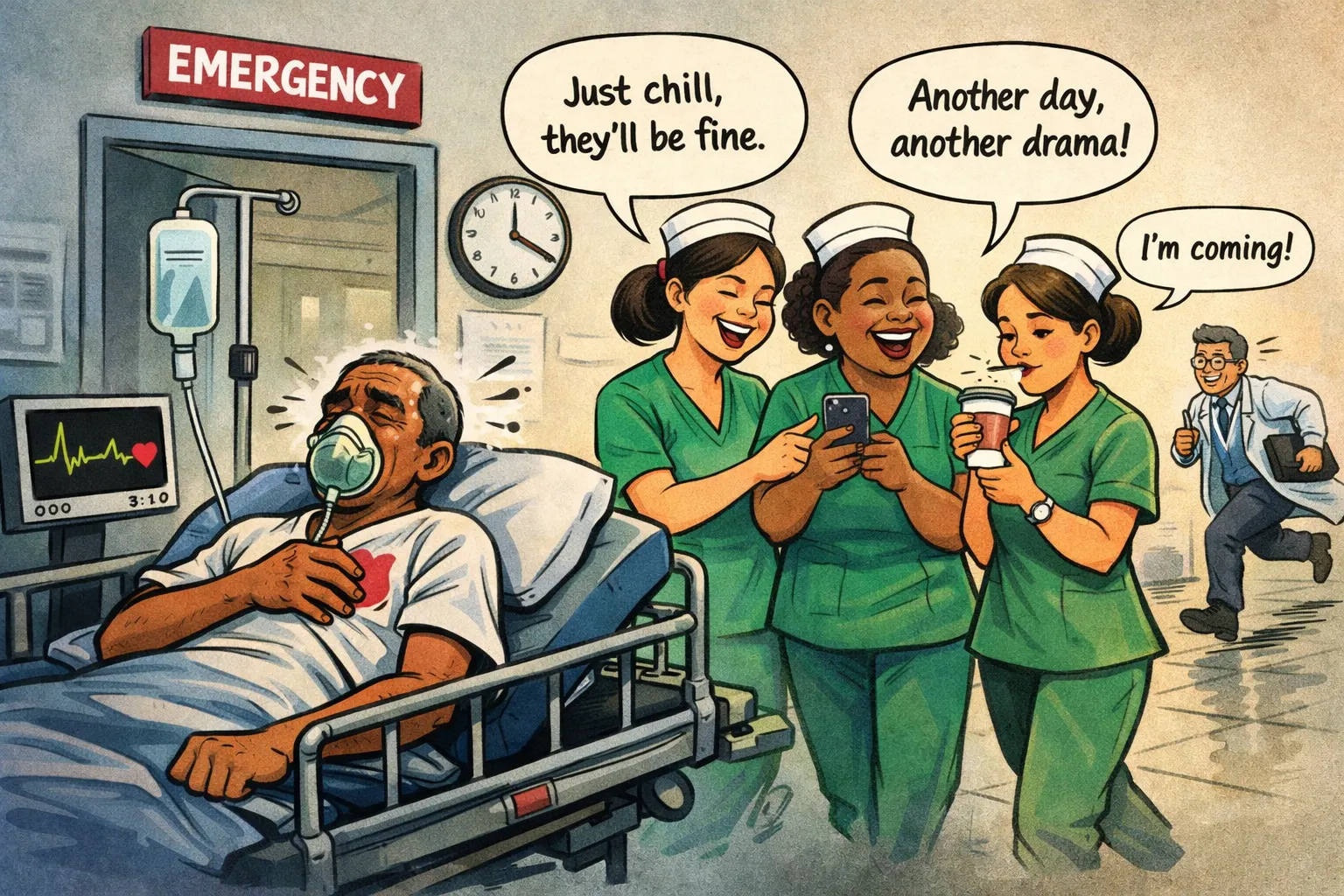
Behind hospital walls, both public and private, are tales of delayed treatment, dismissive attitudes, misdiagnosis, poorly administered drugs, lack of emergency preparedness, and a culture of silence that shields negligence from scrutiny. These encounters do not always end in death; sometimes they leave survivors with permanent injuries, lifelong trauma, or deep mistrust of the healthcare system meant to protect them.
Sunday Digest examines encounters with negligent health workers through the lived experiences of men and women whose lives were altered by moments of carelessness, inattention, or systemic failure. Their stories are complemented by expert opinions from medical professionals, legal practitioners, and civil society actors who explain why negligence persists and what must change to make hospitals places of healing rather than fear.
Port Harcourt boasts some of the most prominent health institutions in the Niger Delta, including tertiary hospitals, state-owned facilities, mission hospitals, and hundreds of private clinics. Yet access does not always translate to safety. Overcrowding, understaffing, poor regulation, commercialisation of care, and weak accountability mechanisms have combined to create an environment where patients often feel powerless.
For many residents, going to the hospital is no longer an act of reassurance but one of calculated risk, especially for the poor, elderly, and those without connections.
A respondent, Blessing Tamuno, who is a trader at Mile 3 Diobu, recounted her ugly experience in the hands of negligent health workers, which took her brother’s life. “Peter had a seizure at home, and we rushed him to the hospital. We were told to pay before they would attend to us. We had to keep him on a wooden bench and my brother lay there groaning in pain. He kept holding his chest and saying something was tearing inside him,” she recalled.
Despite obvious distress, Samuel was not treated as an emergency. “The nurse said we should wait because they had to give us a hospital card before the doctor would attend to us. There was no urgency in their voices.”
As the hours passed, Peter’s condition worsened. He vomited repeatedly, his breathing became laboured, and his body went cold. “We begged. We pleaded. They said we were impatient.”
No vitals were taken, no pain relief administered. No doctor examined him until several hours later, when he started coughing. Peter died the next morning. “Nobody explained anything. Nobody apologised. They just wrapped his body.”
Another respondent, Emeka Nwankwo, a civil engineer who spoke with The Pointer in Port Harcourt, recalled his experience. “When I recall my wife’s death, it pierces my heart deeply. My wife never missed antenatal. She trusted that hospital.”
‘’When complications arose after my daughter was delivered, nurses were running around, contradicting each other. Blood was unavailable. There was no emergency plan. How can a hospital that delivers babies daily lack blood?”
‘’Chidinma bled to death while waiting. I watched her fade away. As a man, I cried like a baby watching my wife slip before my eyes. I screamed. Nobody could save her. They kept saying they were bringing the blood’’.
Unlike Nwankwo, Kelechi Okorie, 29, a media practitioner, his mother was reduced to a stereotype. “They kept saying, ‘At her age, it is normal.’” even though I had told them something was wrong with my mom.”
No proper tests were conducted.“ They treated symptoms, not the person.” When she collapsed, blame shifted to the family. “They asked why we didn’t bring her earlier. We had been there all day.”
Kelechi believes ageism is deadly. “Old age should not mean disposable life.”
Tamunonengiye Briggs is a 38-year-old commercial farmer who describes it as open hostility. “They shouted at us instead of helping”, he told The Pointer. Despite bleeding, his cousin was told to wait “They were seeing an emergency patient”
“When I remember the way the nurses were hostile to us that day, I get so upset. They didn’t even act like we deserved any emergency response despite seeing my cousin bleeding. It wasn’t until I caused a scene which attracted the doctors before a response was given to my cousin”
According to a medical doctor, Sotonye Abam, negligence thrives where systems are broken. “Fatigue, poor supervision, and outdated practices contribute to the whole situation. Nobody likes to watch another human being die before their eyes. We, medical practitioners,s feel the pain of one losing a loved one.”
But he condemns silence, “Covering up errors kills learning. We don’t have adequate equipment to give proper care, and the system doesn’t help matters. The treatment of health workers by the federal government is so poor. Every day there’s a strike here and there, yet the government has refused to do the proper thing. If we are treated poorly, it would also affect our services. We are human beings too, and we have families we take care of.
“The negligence should be blamed on the government and not the nurses and doctors because if there is a good working environment, we can disburse our services seamlessly.”
Speaking with The Pointer in Asaba, Delta State capital, a nurse at the Federal Medical Centre (FMC), Eki Omozuwa, pushed back against the popular narrative that negligence in hospitals is always born out of cruelty or indifference.
According to her, what patients often experience as “wickedness” is frequently the visible outcome of an invisible system failure. “The good doctors, the real ones, not the careless ones, don’t rest,” she said. “Some of them don’t go home for two days. They eat poorly, work around the clock, and function under chronic exhaustion.
“In Nigeria, we work under intense pressure. You rush a patient into Accident and Emergency. Immediate attention is needed. You want to take blood pressure, but there is no functional sphygmomanometer. You need gloves, but there are none. There are no emergency drugs. Yet relatives are shouting, ‘Do something!’”
According to her, this is one of the most dangerous moments in Nigerian hospitals, not only for patients, but for health workers themselves. “There are real risks: Hepatitis B, Hepatitis C, HIV. Universal precautions exist for a reason. But when the government does not provide the tools, the nurse is forced into a cruel calculation: the patient’s life versus her own safety. If she exposes herself and gets infected, who takes care of her family?”
She said what looks like negligence is often paralysis inside chaos. “So the nurse pauses, not because she doesn’t care, but because she is trying to source gloves or equipment. To the onlooker, it becomes: ‘She stood there and watched someone die.’ The narrative is sealed. The health worker is labelled wicked. But most times, you are judging without wearing the shoes.”
Omozuwa also addressed long-standing public complaints about the harsh treatment of patients, especially in labour wards, noting that some practices grew out of an older, survival-first medical culture.
“During my community posting at Central General Hospital, Esan, it was free delivery. Women came in droves. You could conduct several deliveries in one hour. You would see a 15-year-old girl already having her third child, exhausted, at the pushing stage. At that critical point, a matron might slap her leg and shout, ‘Open your legs and push!’ Not because she is cruel, but because she is trying to prevent a stillbirth, brain damage, or lifelong nerve injuries.”
She quickly stressed that this does not justify such behaviour. “I am not saying it is right. Medicine has evolved. That is why we now emphasise TLC, tender loving care. But back then, it was urgency over empathy.”
She believes safer hospitals will come from structural reform. In her words, “Provide functional equipment. Enforce reasonable shifts. Prioritise workers’ welfare. Train continuously on patient communication and modern care standards. When health workers are protected, supported and properly resourced, patient safety automatically improves.”
A patient who pleaded anonymity also shared her story. According to her, “Some years ago, I fell seriously ill and had to be rushed to a major private hospital in Asaba. I was admitted to their VIP ward. However, the VIP ward was not on the ground floor. When I entered the room, the lights were dim, the walls were damp and peeling, and mould was beginning to grow. The wallpaper was coming off, and there was no running water in the bathroom. That was the VIP ward. When the doctors came to check on me, they said they found nothing wrong.
“At one point, I was on a phone call when a doctor came in to administer an injection. It was not a scheduled injection, so I asked, “Can I finish my call, or is this urgent?” The doctor said, “Finish your call. I’ll be back in 30 minutes.” I waited 30 minutes. Then an hour. Then two hours. After about two and a half hours, I was in so much pain and very weak. I grabbed my IV pole for support and slowly made my way out of the ward, stopping every few steps to rest against the wall. Eventually, I found the doctor and asked, “I’ve been waiting for my injection. Am I not taking it anymore?” ‘’Mind you, during that entire time, no nurse or patient care assistant had checked on me. The doctor simply said, “Okay, let’s go.” He walked ahead of me, while I, still weak, struggled to follow. A nurse was also present but did not offer to assist me.
“Neither the doctor nor the nurse found a patient care assistant to help me. The doctor hurried on ahead and then turned back to find me still struggling. When I finally reached the room for the injection, I asked, “Can you see me struggling to walk, and yet you did not offer any help?” At that point, I used all my energy to speak. After a while, I just stopped responding and walked back to my room. The next day, I asked to be discharged and went to a different hospital, a public one, where I received better treatment,” she said.
According to a laboratory scientist, who once worked at Central Hospital Agbor and National Hospital Abuja, Mr Stanley Nwafor, revealed some of the challenges affecting the health sector, mostly in his area of service. ‘’One of the major challenges we encounter is the lack of blood in the blood bank. As a result, patients are often required to come with a donor most of the time, and in cases of emergencies, these patients don’t have the time to immediately look for donors with a matching blood group.
‘’Staff are also short-paid or owed salaries, which is also a reason why government hospitals are always on strike, and more than 80 per cent of the average Nigerian can’t afford private hospitals, thereby putting the lives of people in danger since they can’t access the public health system whenever it goes on strike.’’
Also, a student in the College of Nursing Sciences, in Eku, Asaba, Ms Drusilla Asakpa stressed the need for innovation among Nigerian health workers. ‘Health personnel should be up to date with the latest trends in their organisations.’’
She advised that there should be periodic training and workshops for all staff for effectiveness and efficiency in service, as well as the evaluation of loopholes, and ensuring adequate motivation for health workers.
Similarly, an Assistant Chief Nursing Officer in FMC Asaba, Ngozi Urhobotie, expressed her dissatisfaction with the incompetence displayed by some medical personnel while discharging their duties.
She said, “The issue of negligence in today’s medical world could be described as a case of apathy in the place of empathy and more. Most medical personnel, I must confess, do not work with empathy; they rather treat individuals with apathy, which often is a reason for medical errors.
‘’Another major cause for negligence is a lack of experience among medical staff. These days, you see health personnel who graduate from schools with beautiful results but cannot handle simple procedures. Our academic system has failed.
‘’However, some senior medical personnel, on the other hand, are not diligent in their duties to supervise and instil the right knowledge/practices in these youngsters who will take over the practice tomorrow. Unfortunately, the young ones are not eager to learn, especially with cases of those who were forced into the profession against their will.
‘’The case of lack of medical tools and inadequate manpower as a cause of negligence cannot be ruled out either. In most cases, medical staff are required to work with improvised equipment to carry out their duties, which often leads to poor outcomes. Inadequate staffing leads to burnout, and consequently, poor performance’’ she said.
Similarly, a staff member at a hospital in Delta State, Ubaka Okoro, said, ”It is heart-breaking to think that hospitals, meant to be places of healing, can sometimes become death-traps due to negligence.
‘’Patients are often left unattended, leading to delayed responses to emergencies. Healthcare providers sometimes fail to clearly explain procedures, risks, and treatment options to patients and their families. Many hospitals lack basic medical equipment, making it difficult to provide quality care.
‘’And to address these issues, it’s crucial to promote transparency and accountability. Hospitals and medical professionals should be held responsible for their actions.
According to a concerned citizen, who preferred to remain anonymous, she blamed the government for the negligence experienced in hospitals. ‘’Most hospitals are understaffed, lack basic infrastructure/medical equipment for proper treatment and procedures. Healthcare providers are underpaid, so most of them work without empathy. There is also minimal supervision, and sanctions for misconduct.’’
An anonymous respondent from Edo State said, ‘’The reason medical negligence is thriving in this country is that we don’t hold people accountable for their actions. Some of these medical practitioners do all they do without a human face. I heard a nurse ‘vomit’ nonsense from her mouth when her attention was drawn to an emergency. She was like, “Please let me be. Is it today that we started having emergency cases? Is it today that we started seeing people die?”
‘’So many of our Nigerian medical practitioners genuinely do not care about patients. I know people who were at the mercy of nurses who did not care, so many pregnant women have lost their babies and sometimes their lives because of nurses’ negligence. I know of someone who had a caesarean section and was abandoned by the nurses. They were not dressing the wound nor giving her any attention; she eventually got infected and passed on. We can go on and on.
‘’Is it the issue of wrong diagnosis? So many people have died as a result of wrong diagnoses and wrong medications. I know of someone who was wrongly diagnosed with having HIV, and truly, out of fear and confusion, the person started emaciating and became a shadow of himself. It took God’s intervention through someone who suggested that they do another test in another state, and it turned out to be negative. When they returned and confronted the previous medical practitioner, the response was ‘sorry, it’s like there was a mix-up somewhere’’
‘’It’s high time we start holding our health workers accountable for their misgivings. Yes, we’re advocating that they get better equipment, better salary and more, but they shouldn’t use that as a yardstick for negligence towards patients.
A public health physician who spoke to The Pointer on condition of anonymity said medical negligence often results from delayed treatment, diagnosis or poor patient supervision. ‘’In any emergency, every minute counts and any delay or lack of proper medical attention towards a patient can be very fatal or lead to untimely death.’’
A Civil Servant, Mrs Charity Innone, recounted her experience with her late mother’s death that could have been avoided if the medical staff had attended to her. ‘’My mother was complaining of chest pain for over an hour, but no one attended to her, believing it was just a minor issue, then all of a sudden she slumped and died,’’ she said.
A mechanic, Mr Emmanuel Osawe, narrated how his friend lost his life due to negligence by the hospital. According to him, ‘’My friend was treated for severe asthma, but the nurses didn’t change the oxygen tank, leaving him with an empty one. By the time they realised their mistake, it was too late’’.
In Okpanam, Oshimili North Local Government Area of Delta State, a shop owner, Mr Chukwudi Nwoye, described an incident that recently happened to him. ‘’My brother was supposed to undergo emergency surgery, and the doctor didn’t attend to us on time. Had it not been the intervention of another doctor who came in at the right time, my brother would have lost his life’’.
Furthermore, when asked by our correspondent how the trust between the public and the health system can be rebuilt. He said trust can only return when people see accountability, better communication, improvement of hospital equipment and infrastructure and respect for human life. He added that health authorities and the hospital involved should take responsibility for their mistakes and offer a public apology and compensation to the affected families.
According to a pharmacist who preferred anonymity, ‘’Doctors feel they know better than other professionals in the field. They want to do the work of the pharmacist and that of the nurse at the same time. There is this power tussle in the medical field.’’
‘’There was this case I encountered when I was working with the Federal Medical Centre (FMC). A young man (patient) in my unit who has Gangrene and his leg was already decaying. I noticed it, and I drew the attention of my unit head. Did you know that it took him time before he (doctor) admitted it? I bought the drug with my money because the patient could not afford it. I bought it on a Thursday, the doctor did not give him (the patient) until Monday morning, and by then, the infection had eaten him up; he died. I wept bitterly that day.
‘’Doctors want to do their work, and that of the nurses, but they are not available to do it. It is painful when you try to save lives, and because of the doctor’s negligence, the person dies. If it were when nurses were administering drugs, it wouldn’t have happened.
‘’They (doctors) have now turned the government hospital into a place where they recruit patients for their own benefit. I can’t remember when they did surgery in most public hospitals, rather it has been turned now to a centre where doctors recruit patients for their own pockets. Sometimes, patients come to my pharmacy to buy drugs, and they tell me. “My doctor said I should take it the way he prescribed it.” When I see cases like that, I simply tell them I no longer sell that drug, especially when the prescription is wrong.

