
BY OGORAMAKA AMOS/RITA OYIBOKA/JUDITH OBIANUA
Nigeria’s long-anticipated Tax Reform Acts, including the Nigeria Tax Act and the Tax Administration Act, have officially taken effect, aiming to streamline fragmented tax laws into a unified system and modernise how Nigerians pay, report, and comply with taxes.
From celebrated tax exemptions to controversial provisions that critics warn could broaden the tax net too far, this is arguably the most consequential fiscal overhaul in a generation.
In Port Harcourt, reactions have been as diverse as the city’s populace. The Pointer sets out to understand how people and businesses are adjusting to these reforms, and whether there’s panic in the banking system. What measures (legitimate and otherwise) are being discussed to navigate the new tax terrain?
The government has argued that the reforms are not designed to raise taxes but to broaden the base fairly and efficiently. Yet implementation has not been smooth. Opposition lawmakers have filed a legal challenge, and public criticism has been intense.
To understand how individuals and institutions are adjusting, our correspondent spoke with some financial and industry experts based in Port Harcourt. From seasoned accountants to business leaders, their insights reveal a mix of resilience, anxiety, and cautious optimism.
Dr Chinedu Ikem, a Financial Accountant and Lecturer who spoke with our correspondent, says, “For years, Nigeria’s tax structure was fragmented, unpredictable, and compliance was weak. This reform changes that. But it also forces every individual and business to sit up and pay attention.”
Ikem said many workers and small business owners reached out to his firm in December, attending workshops to understand how the new progressive tax bands affect their annual returns.
“The exemptions for those earning under ₦800,000 have brought relief to many people,” he noted. “But there’s confusion about abolished allowances and how rent relief works. Most people don’t understand how to calculate these things, and so they come to us, which is exactly what a modern tax system should encourage: information, not avoidance.”
Mrs Funke Akintola, a banker who spoke to our correspondent on the recent panic concerning the tax reforms, said, “Rumours have swelled on social media that Nigerians are withdrawing cash to avoid bank taxes tied to transaction monitoring’’ adding that she hasn’t seen a dashboard run — but she has seen increased inquiries. “We’ve had more people asking if bank narrations can affect taxes. There’s a lot of misconception about that,” she says.
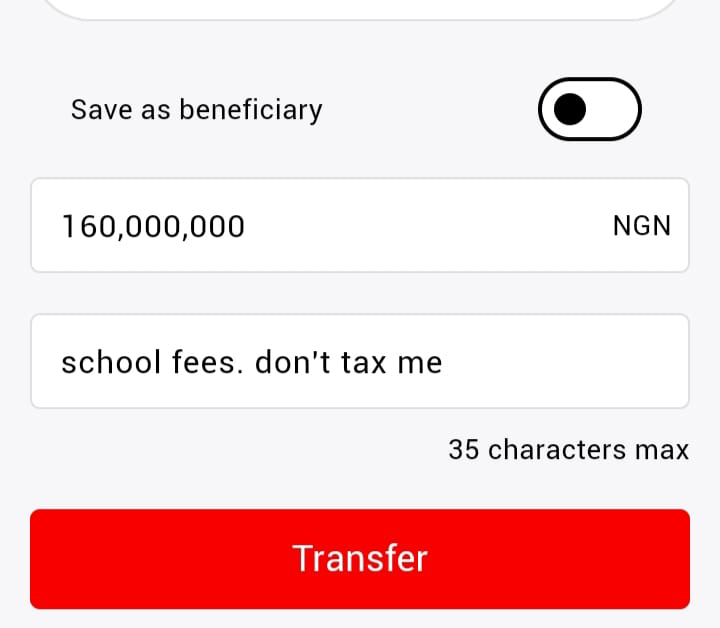
‘’These rumours went viral online, implying that narrations could be taxed to trace transactions — and that changing these narrations might help evade taxes. That’s false. Narrations are a recordkeeping tool and won’t exempt transactions from legitimate tax obligations.
“Customers sometimes ask if we can help them in altering narrations,” she said, “We explain that doing so could put them in legal trouble. And no — we haven’t seen cash withdrawals spiking dramatically yet.”
Her assessment dispels panic narratives, though she concedes that the lack of clarity has heightened nervousness among everyday bank users.
Mr Emeka Udo, a finance consultant, represents a group of small and informal enterprises, from fashion designers to small enterprises.
“In the past, many informal operators didn’t think they needed formal tax IDs or regular filings. That’s no longer tenable,” he says with a sigh. “People are asking us: ‘How do I register for tax?’ not ‘How can I evade it?’ That’s a positive shift.”
Udo’s members are attending” tax clinics” and using financial apps to start digital recordkeeping — an uncommon measure previously rare among informal traders.
“It’s not about evading taxes now. It’s about knowing what you owe. If tax education had started in 2025, not December, we might have faced less fear and more readiness.”
Another respondent, Mrs Blessing Ode, who is a Chartered Accountant based in Port Harcourt, has spent the last week fielding calls from worried individuals asking if there are “loopholes” or ways to avoid being taxed on every bank transfer, especially those below certain thresholds.
“I tell every single client the same thing: tax evasion is a crime. Planning within the law is not.”
She said some people misuse the idea of narrations, believing that vague descriptions like “gift” or “family support” will exempt money from scrutiny. “That kind of strategy is risky and misguided because the law looks at the substance of a transaction, not the fiction in a narration.”
Odey adds that smart compliance — such as keeping accurate records, using digital invoicing, and consulting tax professionals early — is the legitimate measures that help cushion the impact of reform.
Also, another respondent, Mr Tunde Lawson, Head of Tax and Advisory at the International Consulting Firm in Port Harcourt, said some taxpayers have asked about unconventional or obscure methods — not to evade tax but to optimise fiscal outcomes lawfully.
“People are asking: ‘Can I shift expense recognition? Can I use carry-forward provisions? What about tax credits?’ These are sophisticated planning questions, not ‘How do I hide money?’”
He highlights incentives embedded in the reform — such as tax credits for capital investment — which many business owners have overlooked. “If you invest in priority sectors or qualify for development incentives, you can reduce effective tax burdens without dodging obligations.”
This reflects provisions in the reform that replace older incentives with newer, more targeted ones. Lawson warns, “Don’t confuse tax planning with evasion — one is smart financial management, the other is illegal.”
For Matthew Adams, who works for a finance company, “The biggest challenge isn’t the tax law itself — it’s the misinformation swirling around it. People think this is all about new taxes. It’s not. Some things went down, some went up, and many were reclassified,” he explains.
He points to the government’s own clarifications, stating that the tax reforms were not meant to arbitrarily raise taxes but to reset a broken system.
Local businesses, he says, are responding with mixed emotions — anxiety about compliance costs on the one hand, and confidence that a modern framework could attract investment on the other.
“People are not emptying their vaults. They are seeking clarity,” says Adams. “Bank transaction narrations do not determine tax liabilities. The tax authorities assess taxes based on actual economic activities and reported income — not simple text descriptions in banking entries, using inaccurate narrations to disguise the nature of transactions could expose taxpayers to penalties rather than exemptions.”
Matthew Adams emphasised education and planning — not evasion, He listed some legal and uncommon strategies being adopted by SME Owners: Digital bookkeeping from day one accurate records make compliance easier; Early engagement with tax professionals accountants and consultants help interpret reforms; Using available incentives — some investments attract credits under the new law; Learning VAT e-invoicing requirements early — because digital compliance is now central.
Speaking with The Pointer, a financial analyst and businessman based in Asaba, Mr Emmanuel Orumgbe, criticised what he described as the government’s persistent lack of accountability, particularly in its handling of funds sourced from ordinary Nigerians.
According to him, “They have been taking money from the people, especially those you can classify as extremely poor, and yet they have been unable to properly account for these funds. I recently came across a document detailing how much the Federal Government generated from electronic charges deducted through banks, running into billions of naira. The critical question is: what has this money been used for?”
He argued that funds collected from citizens have continually been mismanaged, adding that proceeds from the fuel subsidy removal have also not been transparently accounted for. “Up till now, there is still no clear explanation of how the money from the so-called first subsidy removal has been expended,” he said.
Orumgbe warned that the continued extraction of resources from impoverished Nigerians to sustain what he described as the lavish lifestyle of the political class could have dangerous consequences. “What we are seeing is not hierarchy but anarchy. When people are pushed to the wall for too long, human nature takes over, and they will react. I sincerely hope this does not degenerate into full-blown anarchy,” he cautioned.
Addressing the widespread social media narrative that adding a narration to a bank transfer, such as “gift’’, will exempt a transaction from being taxed, Orumgbe was categorical: that belief is misleading and oversimplified.
He acknowledged that Nigerians have been sharing tips online, urging people to use terms like “gift” or “family support” to avoid being taxed under the new tax regime, especially after the government announced sweeping tax reforms set to take effect from January 1, 2026.
Orumgbe explained this nuance: “No law says you won’t be taxed simply because you typed the word ‘gift’. What matters in the law is whether the funds represent taxable income, not what you wrote.” He pointed out that gifts, loans, personal transfers, and family support are not generally statutory income, but these must be demonstrably distinct from business or pay-for-service income to avoid misclassification.
He explained that while the government claims that poor Nigerians will not be taxed, the criteria being used contradict internationally accepted standards. “Statistically, based on World Bank and IMF benchmarks, people living below $2 per day, roughly ₦1 million annually at current exchange rates, are considered extremely poor. Many Nigerians fall below this threshold,” he said.
According to him, the government’s assertion that only those earning ₦800,000 and above would be taxed is deceptive. “Even with the government’s ₦800,000 threshold, the vast majority of Nigerians remain below the poverty line. So, when the government says the poor will not be taxed, that is misleading. Let us be clear: the poor will be taxed. We should not deceive ourselves,” he said.
He disclosed that he had sought professional advice from the Federal Inland Revenue Service (FIRS) and tax experts to better understand the framework.
“From my discussions, it appears that this largely concerns limited liability companies. These are the entities that will be required to submit detailed financial records for tax purposes,” he explained. “For individuals operating personal accounts or small enterprises, it is not quite the same.”
He clarified that enterprises are often treated as extensions of the individual owner. “In my case, my company is registered as an enterprise. I was told there is no real difference between me and my enterprise. Even if I open an account in the enterprise name, it is still me. I am my enterprise, and my enterprise is me,” he said.
He added that issues such as transaction descriptions, salary payments, and deductions require clearer public understanding. “You pay yourself a salary, and it is from that salary that tax applies. These things are still alien to many Nigerians. Even with the little knowledge I have, there is still so much to learn,” he noted.
Orumgbe stressed the need for broad-based public education on taxation and financial compliance, particularly as Nigeria transitions into new fiscal practices. “This is something we are just starting as a country. Nigerians need proper education to understand it clearly,” he said.
He concluded by noting that detailed transaction narrations primarily concern, but are not limited to, limited liability companies, especially when making payments for diesel, staff salaries, and operational expenses, while government workers are already taxed at source.
In an interview, Jessica Emegha, a hairstylist, expressed her discontent with the recent tax measures, saying, “The tax is not really a welcome development for Nigerians. The government should be supporting us, providing for our basic needs, not the other way around, feeding itself from our pockets. We struggle every day with insufficient power supply, poor roads, and a lack of basic amenities, yet we are being asked to pay more taxes. It feels as though the ordinary person is carrying the burden of running the country.”
Echoing similar concerns, Agbor-based businesswoman Mrs Joy Ozour remarked, “If you listen to what people are saying about these new tax laws, there is a lot of anxiety. For instance, if the deductions from my bank account become too heavy, I might just withdraw my money altogether. Every month, I keep checking, and if I see that the tax being taken is excessive, I will have no choice but to move my funds elsewhere. And I do think about those who have substantial savings, perhaps tens of millions in their accounts, where will they move their money to?”
She continued, “The reality is, for most people, avoiding taxes is almost impossible unless you have no business or no bank account. What we are really hoping is that this tax reform will benefit the masses, that it will improve living conditions and not just line government coffers. Many Nigerians are not happy with what they see as an increasing focus on revenue collection over meaningful development. It seems the government is becoming more enthusiastic about taxing its citizens than about providing the infrastructure, services, and opportunities that people actually need to thrive.”
Speaking with a staff member of Fidelity Bank in Asaba, Mrs Blessing Edema, explained that the new tax law is an annual deduction from the profit an individual makes in a business. ‘’The tax is annually, not monthly; there is no cause for alarm. Though we have not been given a directive on how it’s going to be, we are waiting for the implementation.
‘’We had a seminar this morning (Wednesday) on the same issue of the new tax law, and a lot of questions were asked, for which no answer has been given up till now. Even as I’m talking to you, no answer is given. We are still waiting for the answer. Banks are not the ones to deduct the tax charges; it will be done by the Nigerian Revenue Service (NRS) themselves, and banks wouldn’t even know.
‘’From the little I know, farmers and low-income earners are exempted, it will be mainly on high-income earners, that is where the narration thing comes in. Now, to avoid being taxed on every transaction you make with the Bank, you must state reasons for it, for every money you send. For example, if you are paying your children’s school fees, it must be stated, “School fees’’, so it won’t be seen as profit. The tax will be charged in January 2027, not 2026. All the business transactions in 2026 will be charged in January 2027. Particularly on your profit, not Capital.’’
Also, a staff member of the United Bank of Africa (UBA), Tokubor Ope, who spoke with our correspondent, said the new tax law charge will not be implemented immediately, but that of stamp duty will. ‘’The stamp duty charge is still ongoing, but the difference is that it will no longer be on the receiver but the sender starting from January 2026. ‘’There is not much to say regarding the new tax law, because there is no direction from the Central Bank of Nigeria (CBN) yet. The tax depends on the profit made from your business transactions. There is no registration for it. The National Identification Number (NIN) remains the individual’s tax number, while the Registration Number (RC) is for Business owners because it is a unique identifier assigned to businesses that are incorporated as a separate legal entity from their owners.
‘’There has been no authentic way of tax collection in the country before; this is a way for the government to receive from the citizens. The tax rate is not going to be high; I believe it is for the best.
‘’Tax was on salary earners only, but the government decided to extend it to business owners as well. Nigeria have not gotten it right before, and the government is now trying to make it right. Citizens of other countries do pay tax. It’s not a big deal, but the good news is that the charges on you when you receive money from someone (that is, when money is sent to your bank account) will now be on the sender and no longer on the receiver. Whenever you receive money, the bank charges you a certain amount, right? That has now been shifted to the person sending it.
Speaking with Mr Christian Onuorah, a customer at the Stanbic IBTC Bank, he said there is tension. ‘’We don’t know the direction they are coming from. We are complaining of charges on every transaction made in the bank, and another one is coming up. There is a need to enlighten the public.’’
Another customer in the same bank, Mr Cletus Akpa, said ‘’Time is coming when people will start pulling their money from the bank and save it in the house because of the many laws and charges.’’
Speaking with our reporter, Mr Patrick Uwajieh, a customer in First Bank, said ‘’I see it as part of an economic advancement and to also check mating financial security. It will help to reform the taxation system. Salary earners shouldn’t be the only ones paying tax; business owners have to. There is tension now because it has not been implemented; once it swings into action, people will adapt to it. I remember the time of the cashless policy, when it was newly started they were complaints, and later people adapted to it. With time, Nigerians will get used to it.